
Lieferung heute & morgen

Qualitätsgarantie

Willkommens-Angebote freischalten: KOSTENLOSE Lieferung | Bis zu 80 % RABATT | Kostenlose 30-Tage-JoyPlus-Testphase
App herunterladen
Musical toys for babies combine sounds, colours, movement and simple cause-and-effect experiences. However, choosing the right product is not always easy for parents and relatives. Many products advertise numerous features without clearly highlighting important details such as volume control, age suitability or cleaning requirements.
The following buying criteria will help you assess marketing claims and find a musical baby toy that suits your child’s stage of development, your home environment and how you plan to use it.
A toy with piano keys, drums, lights and shape sorters sounds versatile. However, what matters is whether a baby can actually use the functions. For children under one year, large, easy-to-reach buttons and simple responses are usually more suitable than complex learning content.
Check the manufacturer’s recommended age range. A product for 6 to 36 months may initially be used as a floor toy with its detachable legs removed, and later as a baby activity table. Small parts or cards containing small pieces, on the other hand, are not suitable for babies.
Musical toys with lights and sound can quickly seem loud in small rooms. Not every model offers volume control or a quiet mode. This is particularly relevant in flats, during nap times or when travelling.
Adjustable volume makes it easier to adapt the toy to its surroundings. However, it does not replace supervision: the toy should not be used directly next to a child’s ear and should not be played at a high volume for extended periods.
Rounded edges and BPA-free materials are useful details, but they are no substitute for checking the product thoroughly. Before buying, also check:
With musical soft toys, the music module must remain out of the baby’s reach. It may only be used inside the closed toy.
For plastic toys, ABS plastic, rounded edges and a surface without visible moulding burrs are useful points to check. Claims such as “BPA-free” should come from the product description or the manufacturer’s information. A non-slip or wide base can improve stability for drum toys and activity tables.
The CE marking indicates that the supplier declares compliance with the relevant EU requirements. It is not an independent quality seal and should always be considered alongside the age recommendation, safety warnings and manufacturer details.
For a baby learning toy, large buttons, clearly recognisable play areas and an immediate response to pressing, turning or tapping are helpful. When buying, check whether:
A toy that combines several ways of interacting can appeal to different interests. However, the number of functions alone says little about how practical the toy will be in everyday life.
A compact sensory toy is more suitable for travelling or use in the changing area. An activity table, on the other hand, needs enough space and should be placed on a level surface. For families with limited storage space, detachable legs or a carrying handle may be important.
With plush musical soft toys, a removable music box is practical because it allows the fabric body to be cleaned according to the manufacturer’s instructions. Before washing, always check the zip, mechanism and care instructions.
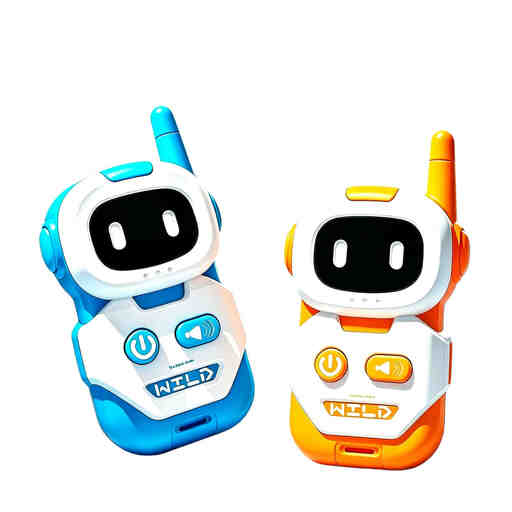
Why this product suits the profile: This compact play centre combines drum surfaces, light effects, animal sounds and shape and colour sorting. According to the product information, it is suitable for 6 to 36 months; batteries are not included.
The play areas are designed for simple actions such as tapping, pressing and inserting. The product description specifies BPA-free ABS plastic, rounded edges and a non-slip base.
Four combined types of play in one product; shape and colour sorting adds another dimension to musical play.
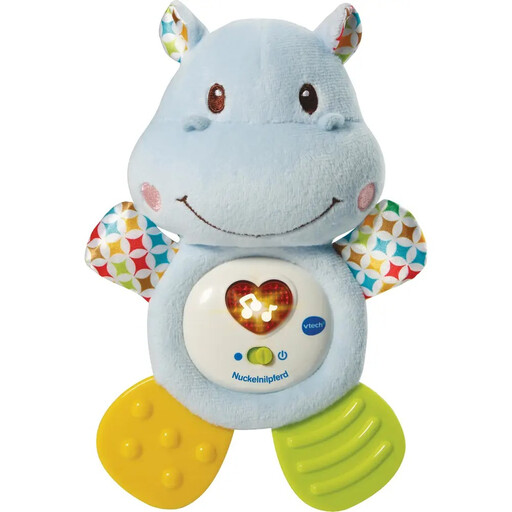
Why this product suits the profile: According to the product information, this plush toy is aimed at children aged 0 to 2 years and combines different textures with songs, melodies and a light-up button.
The product details list volume control, automatic shut-off and a child-safe battery compartment. However, the toy should still be used under supervision.
Soft teething feet and a variety of materials; batteries are included according to the product information.
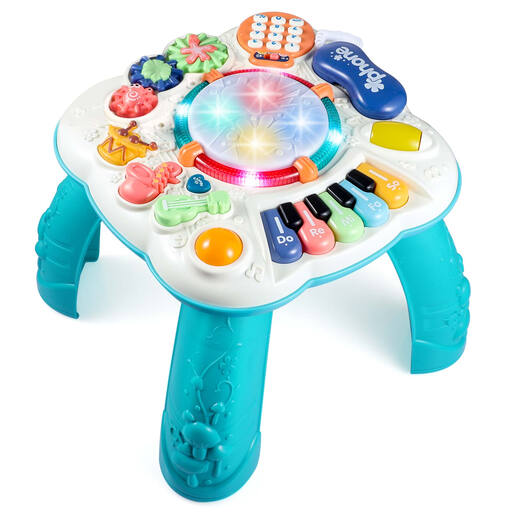
Why this product suits the profile: This table offers six play areas featuring a piano, drum, gears, telephone and instrument buttons. According to the product description, its detachable legs also allow it to be used as a flat floor play panel.
Built-in volume control and a quiet mode help manage sound levels. The detachable legs also make the toy suitable for more than one stage of development.
Two ways to play and six clearly defined activities; dimensions of approximately 30 × 30 × 31 cm according to the product information.
As a new baby gift, soft musical soft toys are usually more suitable than a large instrument set. For a first birthday, baby motor skills toys and compact music centres may be a more practical choice.
We have put together a complete, regularly updated list of products that fully meet these strict selection criteria and the safety regulations applicable in the EU.
It is not possible to give a general volume limit without measuring the specific product. Where possible, choose a model with a volume control, select a moderate setting and do not place the toy directly next to the child’s head. Short, supervised play sessions are easier to manage in everyday life than sounds that play continuously.
Battery life depends on the battery type, duration of use, light functions and volume. Check whether batteries are included, whether the toy switches off automatically and whether the battery compartment can only be opened with a tool. With frequent use, rechargeable batteries can reduce running costs, provided they are suitable for the device.
Musical toys can encourage grasping, pressing, turning, visual tracking and early cause-and-effect experiences. They do not have a therapeutic or medical effect. The key consideration is that the toy is suitable for the child’s age and that adults accompany the child as they sing, tap and explore together.