
Lieferung heute & morgen

Qualitätsgarantie

Willkommens-Angebote freischalten: KOSTENLOSE Lieferung | Bis zu 80 % RABATT | Kostenlose 30-Tage-JoyPlus-Testphase
App herunterladen
Musical toys for babies combine sounds, movement and simple interaction. This makes them appealing to parents, grandparents and relatives looking for educational toys for babies or a suitable new baby gift. However, there are clear differences between musical mobiles, rattles, drums and activity toys when it comes to age recommendations, volume, cleaning and ease of use.
Lights, melodies, animal sounds and buttons may seem varied at first glance. However, an overloaded control panel can be confusing for a baby. What matters is whether the child receives a clear response to their action: pressing, shaking or tapping should trigger an understandable reaction.
A simple baby musical toy with easy-to-reach controls may therefore be more suitable than a product with numerous functions that are difficult to use independently.
‘From 6 months’ and ‘for 6 to 36 months’ do not describe the same usage situation. A baby who still plays on their tummy needs different features from a toddler who can already stand or sort objects deliberately. Small parts, detachable modules and cords are also particularly important for younger children.
With a musical toy for babies, you should also ensure that the musical mechanism cannot get into the child’s hands. With a baby rattle or electronic educational toy, check that the battery compartment is securely closed.
Musical toys can quickly seem loud in small rooms. A volume control or mute function is therefore practical for everyday family life. With plush products, it is also important to check whether the music module can be removed for cleaning and whether the zip can then be closed securely.
For baby toys from 6 months, large, easy-to-grip buttons, stable bases and a clear layout are useful. A drum toy for babies should also be within reach when the child is playing on their tummy. From around one year old, shape sorters, rotary mechanisms, toy telephones or a small piano can offer additional ways to play.
Look out for:
Plastic toys often specify ABS, rounded edges and BPA-free materials. These details should be verifiable in the product description and labelling. The CE mark indicates the manufacturer’s declared conformity with applicable EU requirements. The EN 71 series of standards covers safety requirements for toys, including mechanical and physical properties.
The mark alone is not a substitute for everyday checks. Before each use, inspect the toy for cracks, loose elements, sharp edges and damaged cables or battery compartments. Statements such as ‘CE- and EN 71-compliant according to the manufacturer’ should be understood more objectively than blanket safety claims.
Electronic sensory toys for babies often require batteries, which are not always included. Before buying, check:
Why this product suits the profile: This compact musical toy combines drum surfaces, lights, animal sounds and five geometric shapes and colours. It is suitable for families looking for several play prompts in one product.
The large controls are designed for immediate interaction. According to the product details, they are made from BPA-free ABS with rounded edges; batteries are not included.
Five sorting shapes, two drum surfaces, light effects and animal sounds; according to the product details, it is intended for 6 to 36 months.
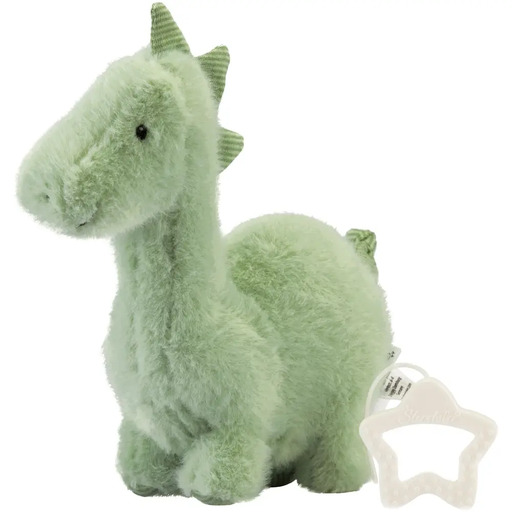
Why this product suits the profile: This fabric musical toy is specified for children from 0 months and is suitable as a classic new baby gift. The focus is on tactile appeal, portability and a single melody.
According to the product description, the music module can be removed before washing via a zip. It must be kept out of babies’ reach.
Soft plush and cotton materials, removable musical mechanism and machine-washable cover according to the care instructions.
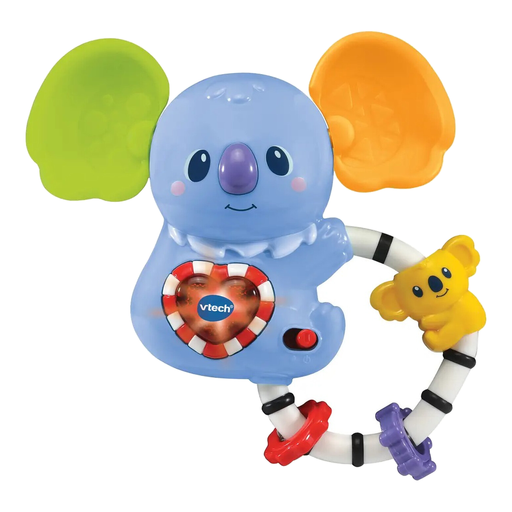
Why this product suits the profile: According to the product details, this rattle is suitable from 3 months and combines gripping, movement, music and light effects. Its format is ideal for short play sessions at home or on the go.
The product description states that it has a child-safe battery compartment and automatic shut-off. Nevertheless, use should be supervised and the toy checked regularly.
Three songs, 15 melodies, a motion sensor and illuminated heart; according to the product details, one AAA battery is included.
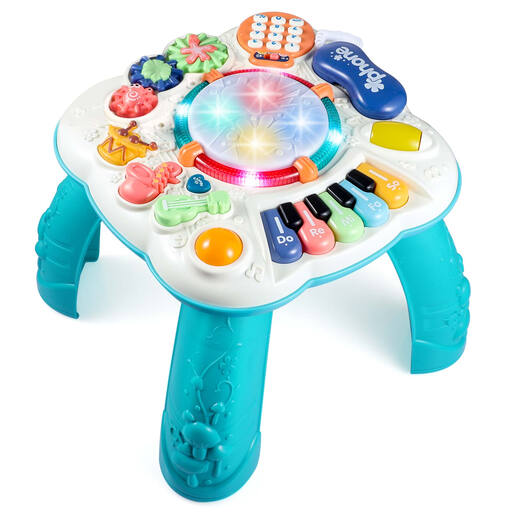
Why this product suits the profile: This table is designed for households where one toy is expected to accompany a child through different developmental stages. According to the product details, the detachable legs allow it to be used as a floor play board.
A volume control and quiet mode address the common noise pitfall. Before buying, check the batteries, assembly and the space available.
Six play areas with piano keys, a drum, gears and sound panels; according to the product details, it is made from BPA-free ABS with rounded edges.
We have put together a complete, regularly updated list of products that fully meet these strict selection criteria and the safety regulations applicable in the EU.
It depends on the type of product. According to the product details, some soft musical toys are suitable from 0 months, while electronic rattles are often intended from 3 months and sorting or drum toys from 6 months. The age recommendation and warning notices for the individual product are always decisive.
There is no single ideal volume, as it depends on the distance, room size and length of play. Do not place the toy directly next to the child’s ear and favour products with a volume control. With drum toys or electronic musical educational toys, short, supervised play sessions are advisable.
Their useful life depends on the material, level of use, batteries and the child’s stage of development. A musical toy can remain a familiar companion for a longer period, while a baby activity toy with sorting shapes or buttons is most likely to remain interesting when its new functions are appropriate for the child’s age. Regularly check seams, zips, casing, battery compartment and loose parts.