
Lieferung heute & morgen

Qualitätsgarantie

Willkommens-Angebote freischalten: KOSTENLOSE Lieferung | Bis zu 80 % RABATT | Kostenlose 30-Tage-JoyPlus-Testphase
App herunterladen
Baby musical toys combine sounds, colours and movement. Even so, choosing the right product can be confusing for parents and relatives. Many products promote Montessori-inspired play, early development or an especially wide range of functions. What matters, however, is not the number of buttons, but whether the toy is suitable for the child’s age, environment and stage of development.
An activity cube baby with a piano, gears, telephone and light effects may seem versatile. However, if too many stimuli are presented at the same time, the child may quickly lose interest. A combination of clearly distinguishable play modes that can be explored individually is a better choice.
‘From 6 months’ does not mean that every six-month-old baby can use all the functions independently. An activity table baby with removable legs can initially be used on the floor, while a child who can stand can later use it at table height. The age recommendation is still only a guide. Motor skills and supervision are equally important.
Electronic baby activity toys can be disruptive in everyday life if they do not have volume control or a mute function. Batteries are also often not included. With fabric toys, check whether the musical mechanism can be removed before washing. These details have a greater impact on practical use than marketing terms such as ‘learning centre’ or ‘early development’.
For babies in their first year, easy-to-reach elements are suitable for tummy time, grasping and pressing. A baby crawling toy should move slowly and in a controlled manner, without small parts that are difficult to reach. From around one year old, more complex combinations of turning, sorting, tapping and role play may become interesting.
Pay attention to the specific manufacturer’s recommendation, such as 6–36 months or 1–3 years. A toy for 1-year-olds should also stand securely when used in a standing position.
With plastic toys, rounded edges, a sturdy construction and securely fitted parts are important checks. Information such as ABS plastic or BPA-free describes the material, but does not replace checking the individual product. The CE marking is a legally required manufacturer’s declaration for certain product groups, not an independent quality seal. EN 71 refers to European safety requirements for toys.
Before buying, check the following:
Even with toys explicitly described as safe, children should be supervised while using them. Damaged products should be removed from the play area.
Musical learning toys should have adjustable volume. An off function is practical in flats, when travelling or during quiet periods. With a baby drum or electronic drum kit, a wide, non-slip base is also helpful. Mechanical music boxes do not require batteries, but only play for a limited time after being wound up.
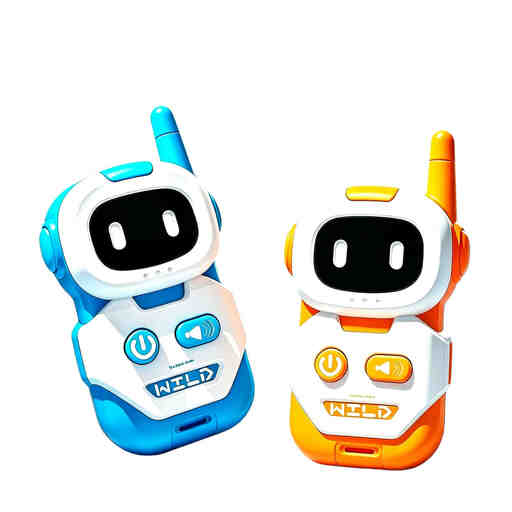
Why this product suits this profile: The combination of drum surfaces, shape and colour sorting, and animal features offers several ways for babies from six months old to play, without taking up the space of a large piece of furniture.
The product description mentions a non-slip base, rounded edges and no loose parts. Batteries are not included and need to be purchased separately.
Four play areas, lights and animal sounds, plus geometric shapes for varied grasping and pressing activities.
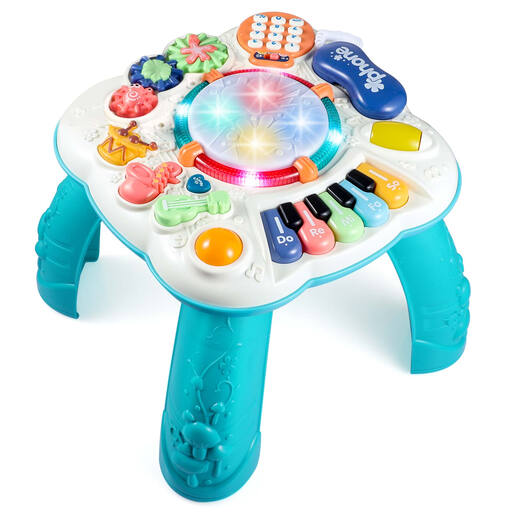
Why this product suits this profile: According to the product description, the activity table baby can be used with its removable legs as a floor play panel or as a standing table. This makes it an appealing option for households looking for a toy that grows with their child.
A volume control and quiet mode address the often-overlooked issue of noise. The age recommendation is 6–36 months; the standing function should only be used when the child can stand securely.
Six play zones, removable legs, piano and drum functions, plus a telephone feature for role play.

Why this product suits this profile: The compact cube with carry handle is ideal for families looking for a range of motor skills and musical activities in a portable format.
The eight play modes are spread across several sides rather than being concentrated in a single source of stimulation. Before buying, compare the dimensions of 23 × 23 × 24 cm with the available space.
Piano, guitar, gears and telephone play in one cube; according to the product details, it is made from BPA-free ABS with rounded edges.
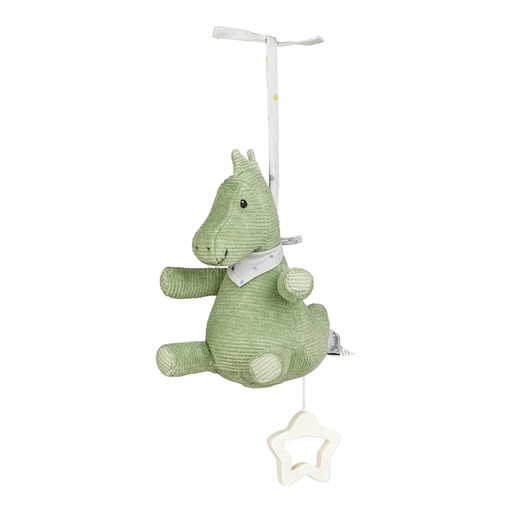
Why this product suits this profile: According to the product details, the mechanical music box needs no batteries and can be attached to a pushchair, car seat or cot with its ribbons.
There are no ongoing battery costs. The musical mechanism can be removed for machine washing; the fastening ribbons should be checked regularly to make sure they remain secure.
Soft corduroy fabric, 15 × 8 × 19 cm, a weight of 84 g and use without batteries. Suitable as a birth gift.
We have put together a complete, regularly updated list of products that fully meet these strict selection criteria and the safety regulations applicable in the EU.
For a birth gift, quiet, battery-free or easy-to-clean products are often the simplest choice. For a baby’s birthday present, consider the child’s age at the time the gift is given. A toy for babies from 6 months is not automatically suitable for a newborn, while an activity cube baby usually only becomes useful from around one year old.
As a Christmas present for a toddler, a musical activity table, baby drum or versatile learning toy for toddlers may be suitable. The key considerations are volume, space requirements and the opportunity to play together with the child. Terms such as Montessori baby toy, sensory baby toy or baby motor skills toy should be understood as descriptions of the way the toy is played with, not as promises of a particular developmental outcome.
That depends on the specific product. Some soft music boxes are listed as suitable for 0–3 years, while electronic drums and activity toys are often intended for 6–36 months or 1–3 years. The manufacturer’s recommendation, the construction and the child’s stage of development are the deciding factors.
It is not possible to give a general assessment without a measured value. Choose products with volume control and do not use them directly next to the child’s ear. With electronic toys, a low volume setting and a break are recommended if the child shows signs of discomfort.
Their lifespan depends on the materials, batteries, mechanism and frequency of use. Check the edges, fastenings, battery compartment and controls regularly. With fabric music boxes, a removable musical mechanism can make cleaning easier. If a product becomes damaged or loose parts appear, it should no longer be used.