
Lieferung heute & morgen

Qualitätsgarantie

Willkommens-Angebote freischalten: KOSTENLOSE Lieferung | Bis zu 80 % RABATT | Kostenlose 30-Tage-JoyPlus-Testphase
App herunterladen
Baby muslin cloths are a staple for many families. Use them as burp cloths during feeds, changing mats, lightweight blankets or baby flannels. But not every cotton cloth is right for every job. Material, size, number of layers, care instructions and how well a cloth works in everyday life all matter.
An 80 x 80 cm cloth can be used for changing, as a nursing cover or as a lightweight mat. It may be awkward, though, for a quick wipe after a burp. Smaller burp cloths, around 30 x 50 cm, sit neatly over your shoulder and fit more easily in a changing bag.
Softness depends on factors such as the weave, material and washing process. Specific details are more helpful, such as 100% cotton, double-layer muslin or a stated number of layers. Care instructions matter too: a cloth that can only be washed at low temperatures may be less practical for frequent use than one that’s easier to care for.
It’s hard to judge what “highly absorbent” means without details about how the cloth is made. More layers can absorb more liquid, but may also take longer to dry. Breathable muslin cloths with a loose weave often dry more quickly. For milk and food spills, make sure the washing temperature follows the manufacturer’s instructions.
For baby cotton cloths, 100% cotton is a clear and useful description of the material. Muslin is a lightweight, loosely woven fabric. It can work well for everyday use as a breathable muslin cloth, provided the construction and care instructions suit the way you plan to use it.
If a product has a certification, check the exact details in its description. For example, the LaLoona model is described as having been tested for harmful substances in accordance with OEKO-TEX Standard 100. This certification relates to the specific testing requirements stated, so you should still check the washing instructions, condition and age guidance.
Swaddling cloths and larger muslin cloths must never be used in a way that covers your baby’s face or airway. Follow the manufacturer’s safety instructions when swaddling. Take particular care when your baby is sleeping: loose blankets and cloths should not be left in a cot with an unattended baby.
A 3-pack of baby cloths is a good starting point or a handy option to keep in one place. A 5-pack of baby cloths gives you more spares if several cloths get soiled each day during feeding, burping or changing.
Check:
Store baby flannels and muslin cloths separately according to how you use them. It’s also a good idea to wash new textiles before they come into contact with a newborn’s delicate skin.
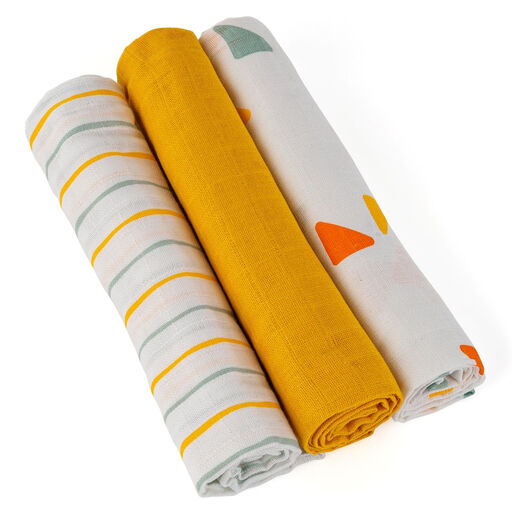
Why this product suits this profile: The three 70 x 70 cm cloths cover everyday needs at home and on the go, without requiring you to buy a large multipack.
The product description specifies the material and size, says the cloths can be washed at 40 °C, and lists several uses rather than relying on vague claims about softness.
100% cotton; three cloths in the same size; according to the supplier, machine washable at 40 °C and suitable for tumble drying at a low temperature.
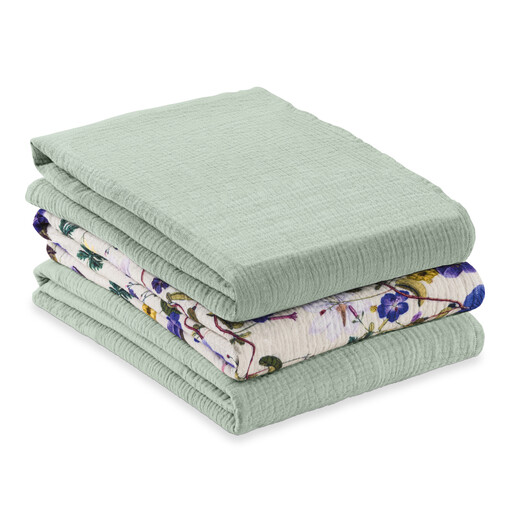
Why this product suits this profile: These 80 x 80 cm cloths are a good choice for families looking for larger muslin cloths for changing, feeding and outings.
The size and maximum washing temperature of 60 °C are clearly stated, making it easier to judge whether these cloths will suit frequent washing.
100% cotton muslin; 80 x 80 cm; 3-pack; according to the product details, machine washable at up to 60 °C.
We’ve put together a complete, regularly updated list of products that meet these strict selection criteria and the safety requirements in force in the EU.
Three cloths may be enough for occasional spit-ups. If you use them every day for feeding, changing and outings, five or more are more practical, as you can collect soiled cloths and wash them together. The number you need depends on how often you do laundry, how long the cloths take to dry and whether you also use them as muslin nappies or baby flannels.
The terms overlap. Muslin cloth describes the material and weave, while burp cloth refers to what it’s used for. A larger 70 x 70 cm cloth can also be used as a changing mat, while a 30 x 50 cm cloth is often more convenient as an absorbent burp cloth over your shoulder.
There’s no set lifespan. What matters is their condition and hygiene. Check the cloths regularly for thinning, loose threads, damaged seams and stubborn discolouration. If they show visible signs of wear, don’t use them for direct contact with your baby’s skin. (^(1) || ^1)