
Lieferung heute & morgen

Qualitätsgarantie

Willkommens-Angebote freischalten: KOSTENLOSE Lieferung | Bis zu 80 % RABATT | Kostenlose 30-Tage-JoyPlus-Testphase
App herunterladen
Muslin cloths are an essential for many families. They can be used as baby muslins for dribbles and spills, a lightweight changing mat, a nursing cover, a swaddle cloth or a cover for clothing and the pushchair. Their versatility can make choosing the right ones tricky, though: not every cloth is suitable for every purpose, and some product claims tell you little about how practical they’ll be day to day.
A 5-pack of muslin cloths may seem practical at first glance. What matters, though, is whether the size, material and care instructions suit the way you’ll actually use them. Five smaller cotton baby cloths could be handy for dribbles and spills or as washcloths, while larger muslin cloths offer more coverage for swaddling or use as a nursing cover.
The term breathable muslin cloths doesn’t describe a single, clearly defined product feature. So look for specific details, such as 100% cotton, muslin weave, number of layers and dimensions. The finish matters too: loose threads, damaged seams or fabric that wears very thin can shorten a cloth’s useful life.
A muslin cloth can be used in many ways, but it won’t necessarily replace a suitable baby blanket, a properly fitted nursing cover or a suitable cloth nappy. When swaddling, the cloth mustn’t be too tight. Your baby’s face and head must remain uncovered. Follow the manufacturer’s safety guidance for use in a cot; a loose cloth shouldn’t be left with your baby during sleep unsupervised.
Clear information about the material is useful when choosing a cloth for direct contact with sensitive baby skin. According to their product descriptions, the products featured here are made from 100% cotton, except for the baby comforter, which is made from polyester. Cotton muslin cloths are generally lightweight and flexible. Their absorbency, feel and drying time can vary depending on the weave and number of layers.
If a product claims to have been tested for harmful substances, check the specific certification. According to the product description, the LaLoona set has been tested for harmful substances in accordance with OEKO-TEX Standard 100. This information applies to that specific product; it shouldn’t be taken as a general claim about all muslin nappies.
The dimensions affect how many ways you can use a cloth:
It’s worth making a quick list of how you plan to use the cloths before you buy. If you mainly need them for feeding and changing, smaller cotton cloths will often do the job. For more versatility, 80 × 80 cm cloths may be more convenient.
Wash absorbent baby cloths before using them for the first time. This can make the fabric feel softer and help it absorb liquid more effectively. Check the care instructions on the label:
A higher washing temperature isn’t automatically suitable for every fabric. Frequent washing at higher temperatures can put more strain on the fibres. After washing, check each cloth for loose threads, damaged edges and any changes to the fabric.
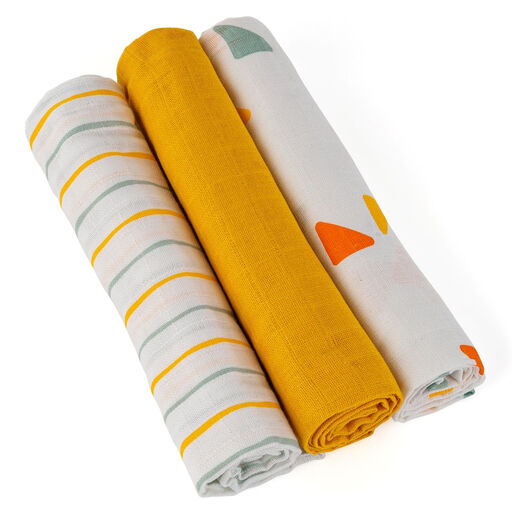
Why this product suits this profile: This 3-pack of 70 × 70 cm cloths is a good choice for families looking for a manageable set of essentials to use at home and when out and about.
The clearly stated size and pack quantity make it easier to plan, so you don’t end up buying a large blanket for small everyday jobs.
Made from 100% cotton according to the product description, machine-washable at 40 °C and suitable as a cloth for dribbles and spills, a changing cloth or a comforter.
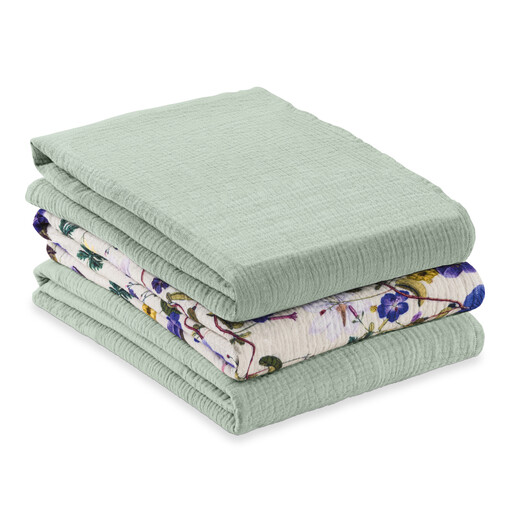
Why this product suits this profile: The larger size and double-layer cotton muslin weave will appeal to buyers looking for a cloth that can handle several larger tasks.
Details about the material, 80 × 80 cm size and washability give you a clearer basis for choosing than vague claims such as “universal”.
100% cotton, double-layer fabric, suitable from birth according to the product information and washable at up to 60 °C.
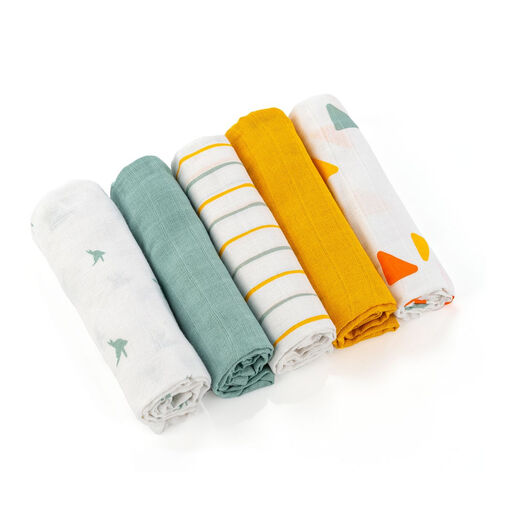
Why this product suits this profile: If you need several cloths every day for feeding, changing, washing and outings, this pack gives you five in the same size.
Having several cloths means you won’t need to keep switching a single one between different tasks.
Five 70 × 70 cm cloths, made from 100% cotton according to the description, machine-washable at 40 °C and designed for a range of everyday uses.
We’ve put together a complete, regularly updated list of products that meet these strict selection criteria and fully comply with the safety regulations in force in the EU.
It depends on how you use them and how often you do the washing. A 3-pack of muslin cloths may be enough for the occasional spill and for outings. If you use them every day for feeding, changing and washing, five or more will be more practical, so you always have a clean one to hand.
Larger cloths, such as 80 × 80 cm, are often chosen for swaddling. Whether a cloth is suitable depends on the instructions and how freely your baby can move. It mustn’t cover your baby’s face or be too tight, and it shouldn’t be left unattended in the sleeping area.
There’s no set lifespan that applies to every cloth. It depends on the washing temperature, drying method, frequency of use and quality of the material. Replace a cloth if its seams come undone, holes appear, threads become loose or the fabric gets noticeably thinner.