
Lieferung heute & morgen

Qualitätsgarantie

Willkommens-Angebote freischalten: KOSTENLOSE Lieferung | Bis zu 80 % RABATT | Kostenlose 30-Tage-JoyPlus-Testphase
App herunterladen
There is a wide range of baby nappies and nappy pants to choose from. Alongside traditional tab-fastened nappies, there are pants, multipacks, night-time nappies and products for older children. Marketing terms such as “12-hour protection”, “kind to skin” or “360° fit” sound convincing, but they only make sense when considered alongside weight, body shape and the intended use.
Nappy sizes are primarily based on body weight, not exact age. Depending on their development, a nine-month-old child may need a different size from another child of the same age. That is why the weight guidance on the packaging should always be the first point of comparison.
With nappies in sizes 1 to 8, the ranges may vary from one brand to another. For example, a BC Babycare Royal nappy in size 2 is available for 4–8 kg, while Pampers Baby-Dry Pants in size 4 are intended for 9–15 kg. If the nappy is too loose, gaps around the legs are more likely to appear. If it is too small, it can cause pressure marks and leaks.
A bulk pack of nappies can reduce the price per nappy, but it also ties up money and storage space. Babies can sometimes change size and fit within just a few weeks. It is therefore worth doing a simple calculation before buying:
When changing products, a pack of 36 or 40 is often more practical than stocking up on more than 100 nappies.
The search term leak-proof nappies is widely used, but no product can fully accommodate every movement, sleeping position or individual body shape. Specific construction features are more relevant:
With pants, there is also the fact that they are pulled up around the hips. For newborns or frequent changes while lying down, tab-fastened nappies may be easier to use. For mobile babies and toddlers, however, nappy pants offer the convenience of changing like underwear.
Highly absorbent nappies need an adequately sized absorbent core. Product details often list materials such as superabsorbent or SAP (Superabsorbent Polymer). This refers to the component that absorbs and locks away liquid, but on its own it does not indicate whether the product is suitable for every child.
During the day, freedom of movement, a comfortable fit and easy changing are usually more important than very high absorbency. With nappies for day and night, you should also check whether the manufacturer explicitly states a longer wearing time. A soiled nappy should be changed immediately, regardless of advertising claims.
Nappies are often made from non-woven fabric, elasticated threads, a breathable outer layer and SAP. Some products also contain a lotion or feature a pH-related surface description. This is product information, but it is not a blanket guarantee of individual skin tolerance.
According to the manufacturer, the Pampers Pants listed contain no intentionally added EU fragrance allergens as defined by the stated EU Cosmetics Regulation and have been dermatologically tested, according to the manufacturer. A skin reaction is nevertheless possible. If redness, itching or irritation occurs, stop using the product and seek medical advice if necessary.
A good fit is shown by a comfortable feel without digging in. The leg cuffs should lie flat against the skin. With tab-fastened nappies, refastenable closures make it easier to adjust the fit. Pants are pulled up and opened at the side seams. For children who wriggle a lot during changing, this system can be more practical in everyday use.
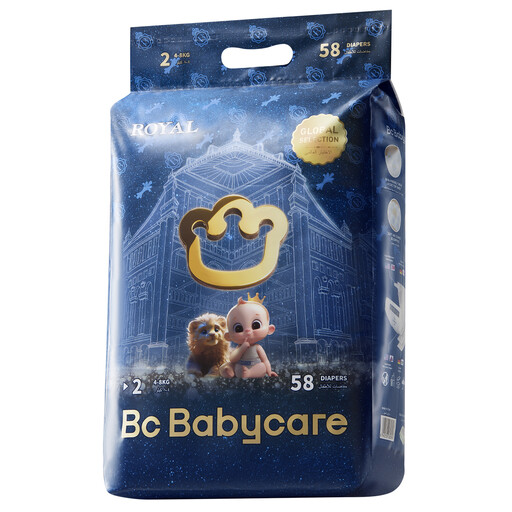
Why this product suits this profile: Size 2 is specified for 4–8 kg and comes in a manageable pack, making it suitable for parents who want to try a new brand first.
The clearly stated weight range makes choosing easier. The pack size reduces the risk of an expensive mistake when the fit is still unfamiliar.
According to the product details: SAP absorbent core, 360-degree leak protection and wetness indicator.
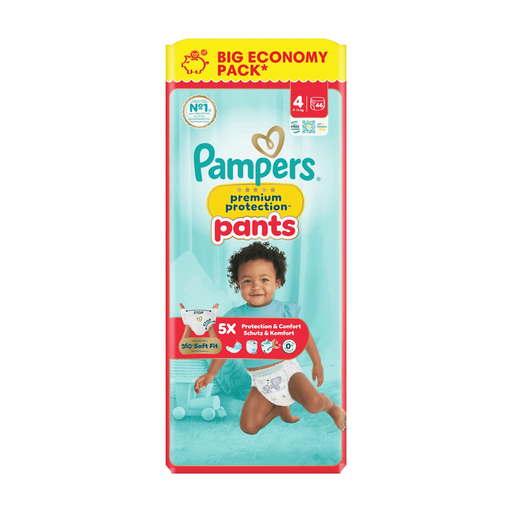
Why this product suits this profile: These pants are designed for 9–15 kg and combine an elasticated waistband with the typical pull-up changing method.
The details specify concrete construction features such as leg cuffs, a back pocket and a 360-degree waistband, rather than making general claims about protection.
According to the manufacturer: 0% intentionally added EU fragrance allergens and OEKO-TEX STANDARD 100.
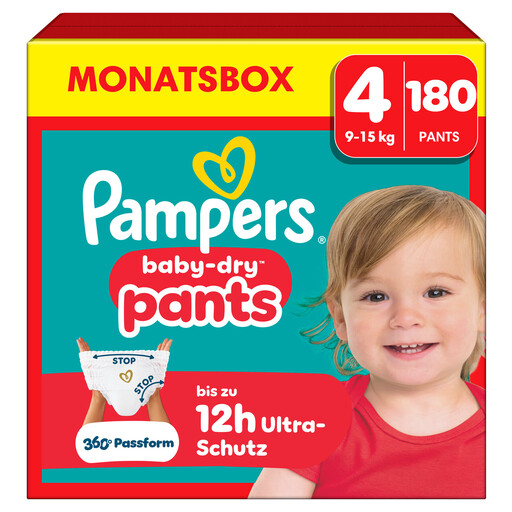
Why this product suits this profile: This bulk pack is designed for 9–15 kg and may appeal to families who need several pants every day.
The fit should be checked against the child’s weight before buying in bulk. Anti-leak cuffs and a flexible waist help address common gaps when children are highly active.
According to the manufacturer: Stop-&-Protect system, superabsorbent core and up to 12 hours of stated protection.
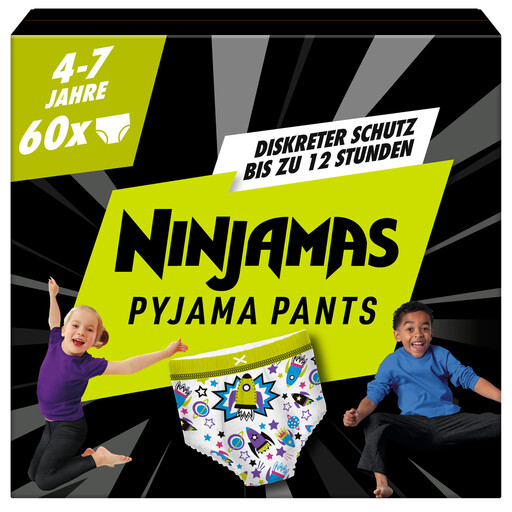
Why this product suits this profile: These pyjama pants are intended for children aged around 4–7 years and weighing 17–30 kg, and are specifically designed for night-time use and bedwetting.
The clearly stated purpose helps prevent normal baby nappies being chosen for older children and longer overnight periods.
According to the manufacturer: 360-degree FormFit waistband, quieter material and absorbency specified for night-time use.
We have put together a complete, regularly updated list of products that fully meet these strict selection criteria and the safety regulations applicable in the EU.
It depends on the brand and cut. Products such as Pampers Baby-Dry Pants and Pampers Premium Protection Pants are listed in the available offers for 9–15 kg. The leg opening, waist measurement and freedom of movement are also important. If leaks continue despite correct use, moving up to the next size may be sensible.
Wearing time depends on how full the nappy is, whether it is soiled and the condition of the child’s skin. A protection time stated by the manufacturer, such as up to 12 hours, is not an instruction to leave a soiled nappy on for that long. During the day, check regularly and change when needed. At night, nappies for day and night or pyjama pants designed for this purpose may be suitable options.
For older children weighing at least 17 kg, specially designed products such as Ninjamas Pyjama Pants may be suitable. They are worn like underwear and are intended for night-time use. If bedwetting continues or is accompanied by other symptoms, discuss the cause with a medical professional.