
Lieferung heute & morgen

Qualitätsgarantie

Willkommens-Angebote freischalten: KOSTENLOSE Lieferung | Bis zu 80 % RABATT | Kostenlose 30-Tage-JoyPlus-Testphase
App herunterladen
The range of baby pacifiers is vast, and as a parent, you want to make a choice that supports your child's well-being and healthy development. However, the market is filled with marketing promises that can make the decision difficult. Instead of relying on exaggerated claims, it's better to focus on the key product features that truly matter. This guide will help you avoid common purchasing pitfalls and make an informed decision.
Many well-intentioned purchases prove to be impractical or unsuitable in daily life. Pay attention to these three points to avoid a poor investment:
To make the right choice, you should focus on objective criteria that directly impact function, safety, and comfort.
An orthodontic pacifier is designed to minimise pressure on the jaw and teeth. Look for the following features:
For the material, the silicone pacifier has become the standard. Silicone is taste-neutral, particularly temperature-resistant, and hygienic, as its smooth surface makes it difficult for germs to adhere. All models presented here meet this standard.
The pacifier's size must match your child's age and jaw size. Manufacturers provide clear age recommendations that serve as a reliable guide:
The shield should have sufficiently large ventilation holes to allow air circulation and prevent saliva build-up. This is crucial for preventing skin redness and irritation.
A trustworthy pacifier must comply with the European safety standard EN 1400. This standard ensures the pacifier is tear-resistant, contains no swallowable small parts, and that the ventilation holes in the shield are large enough to ensure breathing is possible in an emergency.
Accessories like a reusable travel and steriliser case are not a luxury, but an essential feature for hygiene and convenience in daily life.
Here are some recommendations tailored to the different requirements of parents and children.
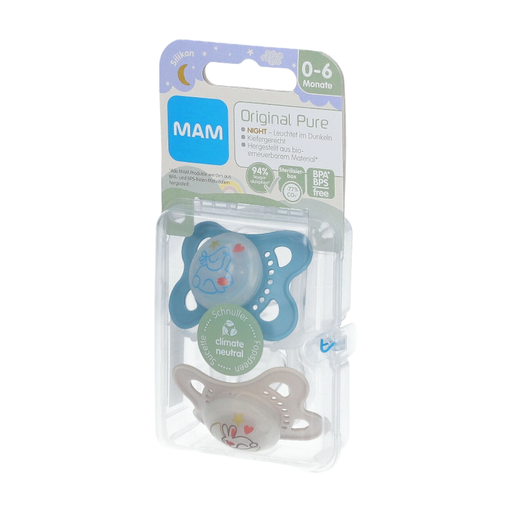
Why it's a great fit: Ideal for nighttime, as the button glows in the dark, making it easy to find. According to the manufacturer, the soft SkinSoft silicone is instinctively accepted by 94% of babies, simplifying the familiarisation process.
Solves the hygiene problem with its included steriliser and travel case, which allows for quick, energy-saving sterilisation in the microwave.
The glow-in-the-dark effect reduces nighttime searching. Its orthodontic, symmetrical shape always sits perfectly in the mouth.
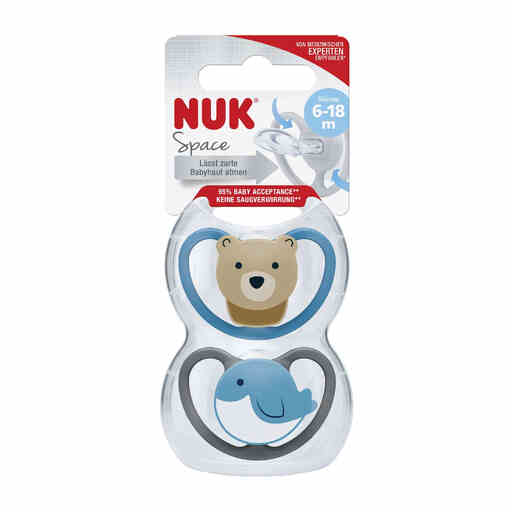
Why it's a great fit: Specially designed for sensitive baby skin. The design features extra-large openings for maximum air circulation, allowing the skin to breathe—a feature confirmed by 98% of mothers, according to the manufacturer.
Goes beyond the "BPA-free" standard by specifically addressing the problem of skin irritation with a thoughtful shield design.
The extra-large openings in the shield minimise skin contact and prevent redness. The original NUK pacifier shape is orthodontic.
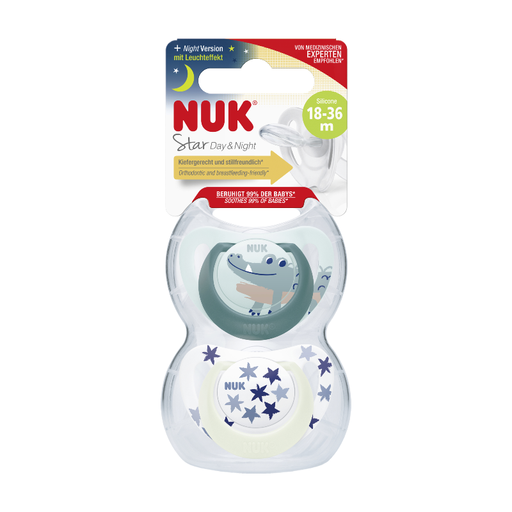
Why it's a great fit: Size 3 is specifically designed for the larger jaw of toddlers. The durable silicone can withstand the first little teeth, while the orthodontic shape continues to support healthy development.
Debunks the "one-size-fits-all" myth by offering a specific, age-appropriate solution for the final pacifier stage before weaning begins.
Age-appropriate size for toddlers from 18 months. The glow-in-the-dark effect of the night pacifier remains practical even at this age.
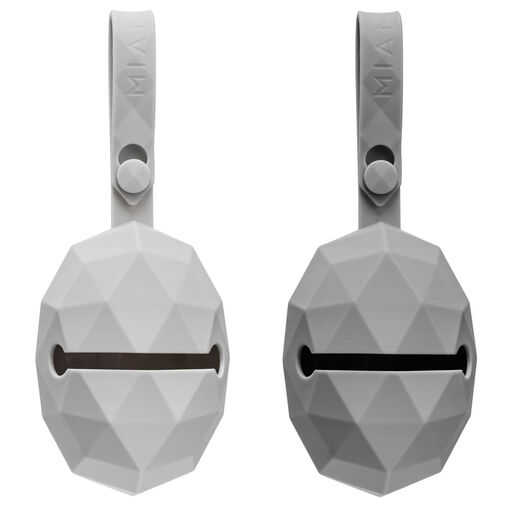
Why this accessory fits: A simple and effective solution for the hygienic storage of up to three pacifiers. It's ideal for on the go, as it can be easily attached to a stroller or diaper bag with its silicone strap.
Solves the pitfall of underestimated hygiene needs. Instead of carrying the pacifier loosely in a bag, the case provides a clean and protected space.
Hygienic storage, easy attachment, and dishwasher-safe cleaning. Made from food-grade silicone.
We have compiled a complete, up-to-date list of products that fully meet these strict selection criteria and European safety regulations.
For hygiene and safety reasons, it is recommended to replace a silicone pacifier every one to two months. Check the pacifier before each use by pulling firmly on the teat. Discard it at the first signs of cracks, damage, or if it becomes sticky.
No pacifier can guarantee perfect tooth alignment. However, an orthodontic pacifier is designed to significantly reduce pressure on the teeth and jaw compared to round or non-orthodontic teats. The flat neck and teat adapted to the oral cavity support healthier development and minimise the risk of dental misalignment that can arise from intense sucking.
Before first use, the pacifier should be sterilised in boiling water for five minutes. For daily cleaning, washing with warm water and mild soap is sufficient. Many models from NUK and MAM come with a pacifier case that allows for quick and easy sterilisation in the microwave. Follow the manufacturer's instructions for this. Cleaning in a dishwasher is often not recommended, as harsh detergents can damage the material.