
Lieferung heute & morgen

Qualitätsgarantie

Willkommens-Angebote freischalten: KOSTENLOSE Lieferung | Bis zu 80 % RABATT | Kostenlose 30-Tage-JoyPlus-Testphase
App herunterladen
The sheer variety of pacifiers can be overwhelming for expectant and new parents. From different shapes and materials to special features, the market offers countless options. However, not every pacifier is suitable for every baby. The wrong choice can not only cause discomfort for your child but may also negatively affect jaw development. This guide will help you understand the most important criteria and avoid common purchasing pitfalls.
Before we dive into the details, it's important to be aware of the most common misconceptions that often lead to unsuitable purchases.
To make an informed decision, you should evaluate three key aspects. These parameters determine the safety, comfort, and developmental benefits of a pacifier.
The teat of a pacifier is usually made of silicone or latex. Both materials have specific properties:
Regardless of the material, compliance with the EN 1400 safety standard is a must. This standard regulates requirements for materials, construction, and labelling to minimise risks such as swallowing or choking. Also, ensure the pacifier is explicitly declared as BPA/BPS-free.
The shape of the teat is a crucial factor for the healthy development of the jaw and teeth.
The size must correspond to the child's age. Manufacturers provide clear age recommendations, such as Pacifier 0-6 months, 6-18 months, or 18-36 months. A pacifier that is too small can be taken fully into the mouth, while one that is too large will interfere with jaw development.
The pacifier shield should be shaped to rest comfortably against the face without leaving marks. Large ventilation holes are essential to allow air to circulate and keep the skin under the shield dry. Practical accessories like a pacifier clip prevent the pacifier from falling on the floor, and a pacifier case ensures hygienic storage on the go.
Based on the criteria above, we have compiled a selection of products for different needs and preferences.
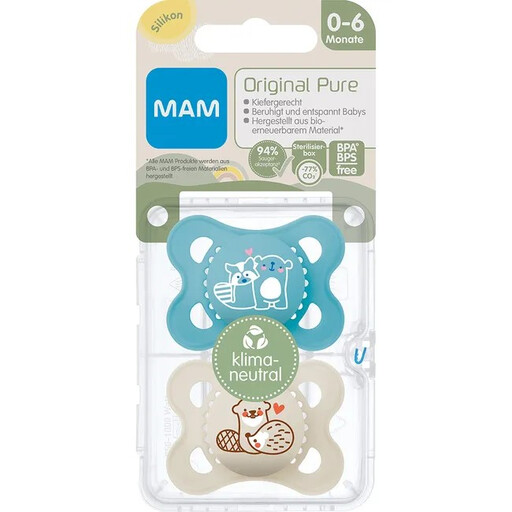
Why this model is a great fit: This MAM pacifier is the brand's first climate-neutral option. The shield and button are made from bio-renewable material, making it an excellent choice for parents who value sustainability and a low carbon footprint.
It meets all safety requirements (BPA/BPS-free, EN 1400) and goes a step further with its sustainable materials, thus avoiding the pitfall of being purely function-oriented without any environmental consideration.
Climate-neutral product made from sustainable materials. According to the manufacturer, the SkinSoft silicone is instinctively accepted by 94% of babies.
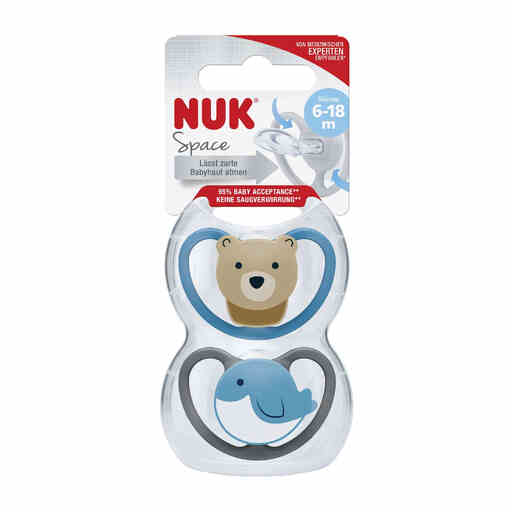
Why this model is a great fit: The NUK pacifier was specially designed to give sensitive baby skin room to breathe. Its design with extra-large openings ensures maximum air circulation and minimises skin contact.
It directly addresses the pitfall of skin irritation with a functional design tailored to the needs of sensitive skin, rather than just offering a standard shape.
The design with extra-large openings lets the skin breathe. According to an independent market research study in Germany (2018), 98% of mothers confirm this effect.
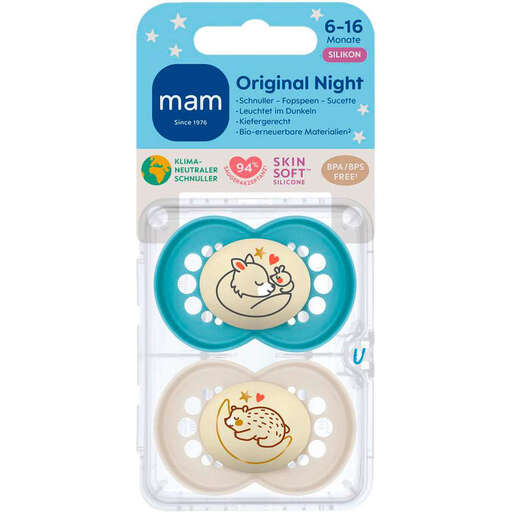
Why this model is a great fit: This glow-in-the-dark pacifier solves an everyday problem: searching for the pacifier in the dark. The button glows, allowing parents and babies to find it easily, which reduces nighttime disruptions.
It offers real added value for daily life beyond the basic function. The included sterilising case also simplifies hygiene, saving time and energy.
Glows in the dark for easy retrieval. The travel case also doubles as a microwave steriliser.
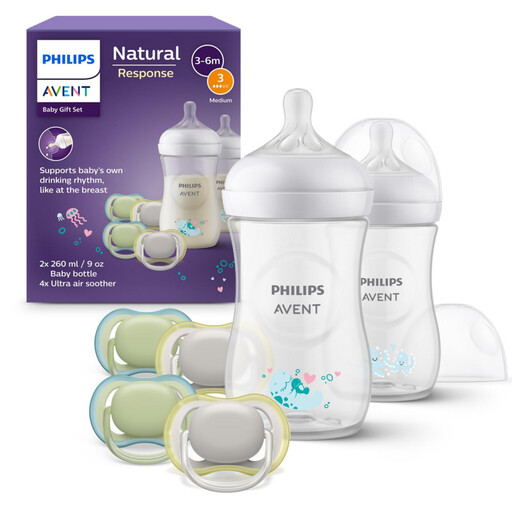
Why this model is a great fit: This baby gift set is a thoughtful solution for a baby's first essentials or as a gift. It includes coordinated bottles and pacifiers designed to ease the transition between breastfeeding and bottle-feeding.
It prevents the purchase of mismatched products. The set offers a coordinated solution for feeding and soothing that is tailored to the needs of newborns.
Comprehensive set with two Natural Response bottles and four ultra air pacifiers. The teat only releases milk when the baby actively drinks.
We have compiled a complete, up-to-date list of products that fully meet these strict selection criteria and rigorous safety regulations.
For safety and hygiene reasons, it is recommended to replace a pacifier every one to two months. Before each use, inspect the soother for any tears, holes, or other signs of wear. Pull the teat in all directions. Dispose of the pacifier immediately at the first sign of damage.
Before first use, the pacifier should be sterilised in boiling water for five minutes. For daily cleaning, you can wash it with warm water and mild soap, then rinse thoroughly. Many modern pacifiers come in a pacifier case that allows for quick and easy sterilisation in the microwave. Follow the manufacturer's instructions for this.
An orthodontic pacifier has an asymmetrical, flat teat. This shape is modelled on the mother's nipple during breastfeeding. It is designed to minimise pressure on the jaw and teeth and allow the tongue enough space for its natural movement to support healthy development.