
Lieferung heute & morgen

Qualitätsgarantie

Willkommens-Angebote freischalten: KOSTENLOSE Lieferung | Bis zu 80 % RABATT | Kostenlose 30-Tage-JoyPlus-Testphase
App herunterladen
When life gets hectic, ready-made pasta dishes for babies and toddlers are a convenient solution. But the market is vast, and marketing claims can be overwhelming. As a Joybuy Product Recommendation Officer, I'm here to help you separate fact from advertising and make an informed decision. In this guide, I'll show you which pitfalls to watch out for and what criteria truly matter.
Many parents invest in products that don't live up to their promises. Pay attention to these three points to avoid disappointment:
To find the right product, focus on these objective features. They will help you quickly assess the quality of an organic ready meal for babies.
A good ingredient list is short and easy to understand. The main components, such as vegetables, pasta, and meat or fish, should be listed first. Pay attention to the following:
The nutritional table provides crucial information. For baby food from 8 months and younger, the salt content should be as low as possible. A value below 0.1 g of salt per 100 g is a good benchmark for the first few months. Also, check the "of which sugars" value to identify hidden sugars. In contrast, high-quality fats, like those found in rapeseed oil, are beneficial as they provide alpha-linolenic acid (an omega-3 fatty acid), which is important for the development of brain and nerve cells.
The food's texture is crucial for oral motor development.
Here are some product recommendations tailored to different developmental stages and needs.
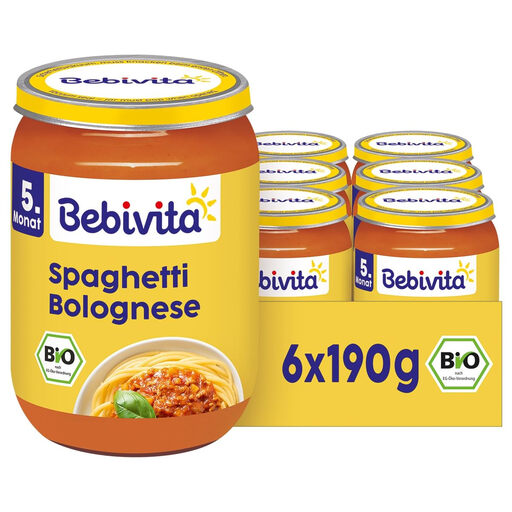
Why it's a great fit: Ideal for parents who are just starting to introduce solids. The very fine purée and mild flavour make the transition from milk to solid food easier.
It sidesteps the salt trap with an extremely low salt content of 0.03 g per 100 g. The finely puréed texture is perfectly matched to the age recommendation, preventing any swallowing issues.
No added salt and strictly controlled organic quality provide a safe foundation for your baby's first meals.
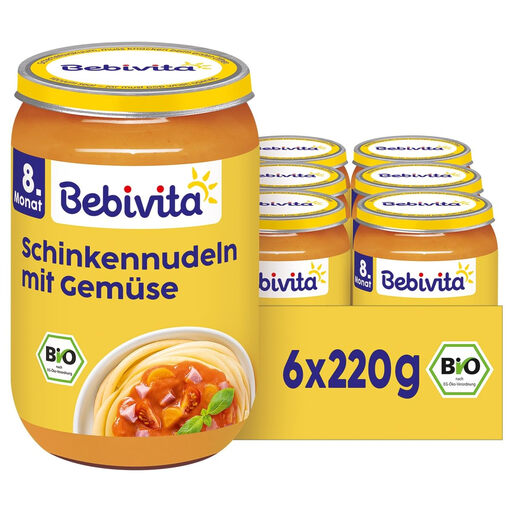
Why it's a great fit: For babies who are ready for the next step. The finely-chunked texture stimulates the chewing muscles without overwhelming the child.
It solves the texture pitfall by offering a perfect transition from purée to more solid food. The salt content remains low and appropriately adapted for this age.
The texture is specifically designed to encourage chewing. The product is a complete meal, formulated with vegetables and meat.
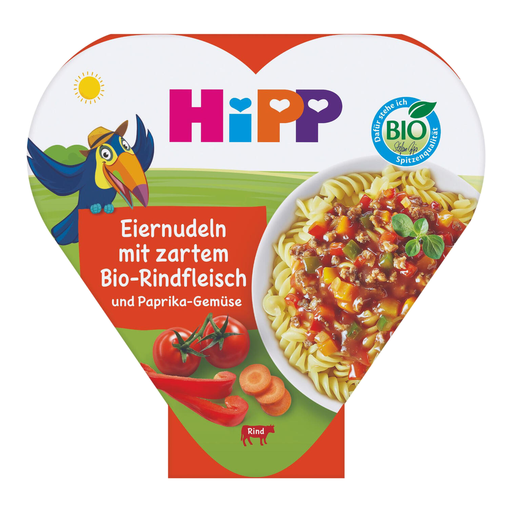
Why it's a great fit: For toddlers who want to eat independently. The heart-shaped bowl is sturdy, and the larger pieces are suited to the abilities and nutritional needs of children from one year onwards.
The texture and portion size are precisely tailored to toddlers, avoiding the pitfall of inappropriate age recommendations. The HiPP organic quality ensures compliance with strict ecological standards.
The practical, microwave-safe bowl promotes the child's independence. It is a complete meal with clearly defined ingredients.
We have compiled a comprehensive, up-to-date list of products that meet these strict selection criteria.
Finely puréed baby food with pasta can generally be introduced from the 5th or 6th month as part of starting solids. It's important to begin with a smooth consistency. Chunkier meals are suitable from the 8th month onwards to help train chewing. Always observe your child's individual abilities.
Choosing organic is a personal decision. However, products with the EU organic logo guarantee that no chemical-synthetic pesticides or genetic engineering were used in growing the ingredients. Many parents prefer this to keep their child's exposure to unwanted substances as low as possible.
Take the desired amount out of the jar and heat it either in a water bath or in the microwave. Never heat the entire jar if you don't plan to use it all. Stir the meal well after heating to distribute the warmth evenly, and carefully test the temperature on your wrist before feeding your baby.