
Lieferung heute & morgen

Qualitätsgarantie

Willkommens-Angebote freischalten: KOSTENLOSE Lieferung | Bis zu 80 % RABATT | Kostenlose 30-Tage-JoyPlus-Testphase
App herunterladen
A baby playpen can create a defined play and relaxation area for everyday life. To ensure it remains a worthwhile purchase over time, parents should look beyond colour, design and a low price. The key factors are suitable dimensions, a sturdy construction and use that matches the child’s stage of development.
A baby playpen should fit not only in the nursery but also into your daily routine. Before buying, check the available floor space, door widths and the distance from heaters, windows, cables and furniture. A model measuring 75 × 100 cm requires significantly less room than a hexagonal playpen with a diameter of around 121 cm.
A playpen with castors is easier to move around. However, the castors must lock reliably when the playpen is stationary. If there are no brakes, or they are not engaged, the playpen may move when the child uses it for support. You should also check its stability and all screw connections whenever you change its location.
A height-adjustable playpen makes it easier to lift your baby in and out during the early stages. Once your child starts pulling themselves up or becomes more mobile, the base must be lowered. Height adjustment does not replace regular checks and must not be used beyond the load limit specified by the manufacturer.
Look for specific information about the product standard. Many playpens refer to EN 12227 or DIN EN 12227. This standard covers requirements for playpens intended for domestic use. However, simply stating the standard does not replace correct assembly and regular checks.
Important points to check include:
With a wooden playpen, the surface should be smooth and free from splinters. A fabric insert can provide additional comfort, but it must be checked regularly for tears, loose fastenings and dirt.
A square model measuring 100 × 100 cm provides an easy-to-plan footprint. Rectangular versions such as 75 × 100 cm may be better suited to smaller rooms. A hexagonal playpen uses space differently and can offer more room to move in the centre thanks to its shape, but it generally requires a larger clear area.
If you regularly move the playpen between the living room and bedroom, you may wish to consider castors or a folding playpen. Check the following:
The stated age range is only a guide. Your child’s weight and motor skills are also important. Some of the models listed in the product data are designed for children up to around 24 months, or up to 15 kg or approximately 16.6 kg. As soon as your child tries to climb over the sides, the playpen should no longer be used as a safe area.
A playpen is not a substitute for adult supervision. It should stand on the floor and must not be placed on raised surfaces. Additional mattresses, cushions or loose blankets can increase the risk of entrapment and should not be added without the manufacturer’s express approval.

Why this product suits this profile: This model offers a 75 × 100 cm play area, two base heights and a folding design for households with limited storage space.
The folded dimensions of approximately 70 × 10 × 5 cm make storage easier when the playpen is not intended to remain assembled every day.
Folding, fitted with castors and specified for a maximum load of 15 kg.

Why this product suits this profile: Three height settings, a padded insert and four locking castors combine practical features for everyday use.
According to the product details, the removable insert is machine-washable at 40 °C, helping you keep cleaning manageable and predictable.
Wooden frame, 75 × 100 cm footprint and developed in accordance with EN 12227, according to the manufacturer.
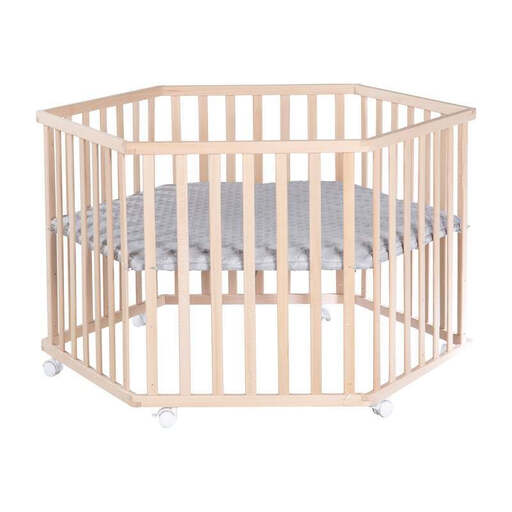
Why this product suits this profile: The hexagonal shape, with a diameter of around 121 cm, is suitable for families able to allow for more room to move.
The three base positions allow the playpen to be adjusted to your child’s stage of development; the six castors should be locked when stationary.
Solid beechwood, washable insert and specified use from birth to around 24 months or until the load limit is reached.
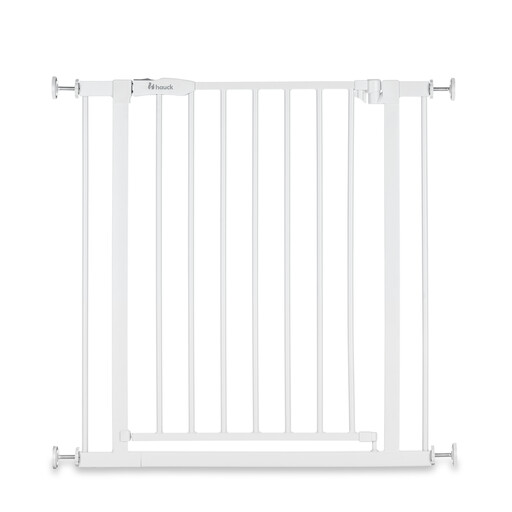
Why this product suits this profile: It is designed for households that also need to restrict access to stairs or certain rooms in addition to using a baby playpen.
The intended opening width is 75–80 cm, so you can check before installation whether it fits your doorway or staircase.
One-handed operation, pressure-fit installation and extension up to 122 cm, according to the product details.
We have put together a complete, regularly updated list of products that fully meet these strict selection criteria and the safety regulations applicable in the EU.
A baby safety gate for doors and stairs serves a different purpose from a playpen. When installing one near stairs, you should take particular care to check the installation position, opening direction and fixing method. A pressure-fit gate may be suitable for certain openings, but it is not automatically intended for every position on a staircase.
A bed rail for babies is also not a substitute for a playpen. According to the product description, the roba bed rail is designed for children from around 18 months, mattresses up to a maximum height of 18 cm and attachment to a slatted bed base. Before buying, make sure the bed construction and mattress height are compatible.
This depends on the individual model and your child’s development. According to some manufacturers, certain products are suitable from birth. The base height must be adjusted to match your child’s mobility. Once your child starts pulling themselves up, the base should be moved to the lower position.
Many models are designed for use up to around 24 months or up to a specific weight limit. The first limit reached is always the decisive one. If your child can climb over the sides, use must stop regardless of their age.
In addition to the purchase price, you may incur costs for replacement parts, an additional insert or cleaning. Washable fabric inserts are practical, but should be cared for according to the washing instructions. Regularly checking castors, screws and locking mechanisms is worthwhile, so that wear can be identified at an early stage.