
Lieferung heute & morgen

Qualitätsgarantie

Willkommens-Angebote freischalten: KOSTENLOSE Lieferung | Bis zu 80 % RABATT | Kostenlose 30-Tage-JoyPlus-Testphase
App herunterladen
Preparing for a newborn's arrival involves many decisions, especially when it comes to creating a safe and functional sleep environment. Choosing the right newborn sleep essentials depends on objective criteria like material quality, safety standards, and everyday practicality. This article analyses the essential components for a baby's sleep area and presents a selection of products chosen for their technical specifications and versatility.
Creating a safe sleep space is of paramount importance. Certain technical features and standards serve as a guide for expectant parents.
For cots, bedside sleepers, and cradles, the European standard EN 1130:2019 is a key indicator. It sets requirements for stability, materials, and construction to minimise risks such as entrapment or strangulation. Products that comply with this standard have undergone a defined testing process. Look for a sturdy construction, slat spacing that prevents the baby's head from slipping through, and a secure attachment mechanism, especially for bedside sleepers.
The materials used come into direct contact with the child. Therefore, fabrics tested for harmful substances and food-safe finishes on wooden elements are preferable.
A baby's and family's needs change quickly. Multifunctional products offer long-term value.
The following products have been selected based on their technical features, multifunctionality, and adherence to relevant safety standards.
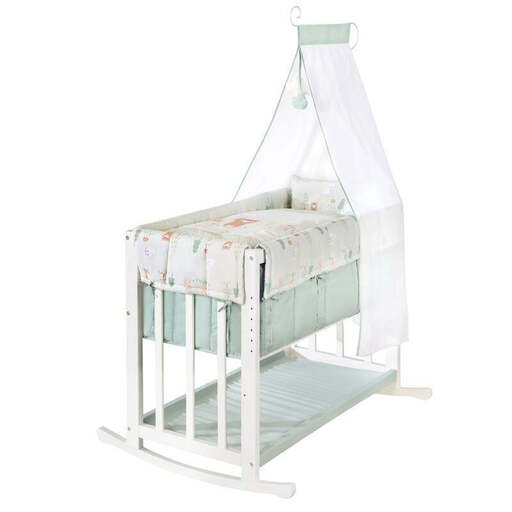
Why We Recommend This Product: This model combines four key functions in one product: cradle, bedside sleeper, cot, and bench. According to the manufacturer, the construction is developed in line with the current safety standard EN 1130:2019. The all-in-one bassinet set already includes all necessary textiles, which simplifies the initial purchase.
Pros:
Who It's For: Parents looking for a flexible and durable all-in-one solution for the first few years who value a complete, coordinated set.

Why We Recommend This Product: This baby lounger stands out for its portability and versatile applications. It functions as a changing mat, a travel companion, and a soft lounging surface on the floor. The quilted microfibre material is easy to care for, and the filling of the lying surface is removable via a zip for washing.
Pros:
Who It's For: Families who are often on the go or need a flexible, mobile lounging surface for the baby for supervised use in different areas of the home.

Why We Recommend This Product: A white noise machine for babies can help create a soothing and consistent soundscape that masks disruptive ambient noises. With 20 different sound options, this model offers a wide selection. Additional features like the adjustable night light, timer, and child lock increase its practical value.
Pros:
Who It's For: Parents looking for an auditory sleep aid for their child that provides a familiar sound environment both at home and on the go.
A well-thought-out new baby checklist helps you keep track of the essentials for the sleep environment:
Choosing nursery essentials is also a matter of personal taste. Every family has individual requirements for design and colour schemes. For a wider selection of models, for example in the green bed category, you can find more options here that cater to different aesthetic preferences.
1. What are the basic newborn essentials for the sleep area? The basic equipment includes a safe baby cot (e.g., a bedside sleeper or a slatted cot), a suitable firm mattress, two to three waterproof mattress protectors, two to three fitted sheets, and two to three baby sleeping bags in the correct size. Additional items like a white noise machine can be optional.
2. How long can a bedside sleeper be used? The period of use for a bedside sleeper depends on the specific model and the child's development. As a rule, they can be used until the child starts to pull themselves up, sit up, or kneel independently. This is usually around 6 to 9 months of age. Always observe the manufacturer's weight and size specifications.
3. Are baby loungers suitable for unsupervised overnight sleep? Baby loungers are primarily designed for supervised use during the day, for example, as a lounging surface on the floor or sofa. For unsupervised night-time sleep in their own bed, many institutions recommend a clear sleeping surface without extra padding to ensure optimal air circulation. The respective manufacturer's safety instructions are decisive here.