
Lieferung heute & morgen

Qualitätsgarantie

Willkommens-Angebote freischalten: KOSTENLOSE Lieferung | Bis zu 80 % RABATT | Kostenlose 30-Tage-JoyPlus-Testphase
App herunterladen
A baby sleeping bag with feet, 2.5 TOG is designed to keep your little one warm in a cool bedroom while allowing them to move freely. But when choosing one for a baby or toddler aged around 6 to 24 months, colour and size aren’t the only things to consider. Fit, warmth rating, material and a child-safe design are all important.
When buying a warm winter sleeping bag for your baby, it’s easy to be swayed by marketing claims and end up making the wrong choice. The points below will help you compare products objectively.
A 2.5 TOG sleeping bag is often marketed for bedrooms at around 16 to 20 °C. However, the TOG rating describes the sleeping bag’s thermal insulation; it doesn’t replace checking the actual sleep environment. Room temperature, what your child is wearing, their build and their activity levels all affect how warm they need to be.
A sleeping bag that’s too warm can be uncomfortable. Check your child’s neck or chest regularly, and also follow the instructions for the specific product. Hands and feet may feel cooler without necessarily meaning that your child is too cold.
You shouldn’t simply buy a baby sleeping bag “to grow into”. If your child’s head or neck could slip through the opening, this poses a safety risk. Check the stated height and weight ranges, as well as the neck and arm openings.
For example, a 12–18 month baby sleeping bag may be suitable for a child who is 76 to 89 cm tall and weighs 10.0 to 12.7 kg. The size guide for a 18–24 month baby sleeping bag may give a height range of 89 to 101.5 cm and a weight range of 11.8 to 15.5 kg. The fit on your child is what matters, not just the age guidance.
A cotton baby sleeping bag can feel comfortable, but you should also check whether the outer and inner materials are specified, what the filling is made from and how the sleeping bag should be cared for.
For example, a lined model may have 100% cotton on the outside and inside, with a polyester filling. This is not the same as an unlined cotton sleeping bag. The zip cover, seams and cuffs also affect how practical it is for everyday use.
A sleeping bag for 16–20 °C should suit both the room temperature and the clothing worn underneath. According to the product information, the Vowia sleeping bag is rated at 2.5 TOG for this temperature range. It has a polyester filling, with a cotton outer fabric and lining.
Don’t use a sleeping bag with a loose blanket or another thick sleeping bag. Also follow the manufacturer’s guidance, and always place babies on their backs to sleep.
A traditional sleeping bag with a roomy pear shape gives little ones space to kick their legs. For children who are crawling, standing or already walking, a sleeping bag with legs may be more practical. Separate leg sections make it easier to move around outside the bed.
Look for a deep enough crotch, elasticated cuffs and a length that won’t restrict your child’s legs or leave too much loose fabric. For a model with feet, the cuffs should sit comfortably around the ankles without digging in.
For products with the relevant certification or labelling, check for the following:
The term OEKO-TEX baby sleeping bag refers to a certification or material testing; it is not a general quality rating. Similarly, the label EN 16781 baby sleeping bag doesn’t mean that every size will automatically suit every child. Always check the specific product page and the label on the item.
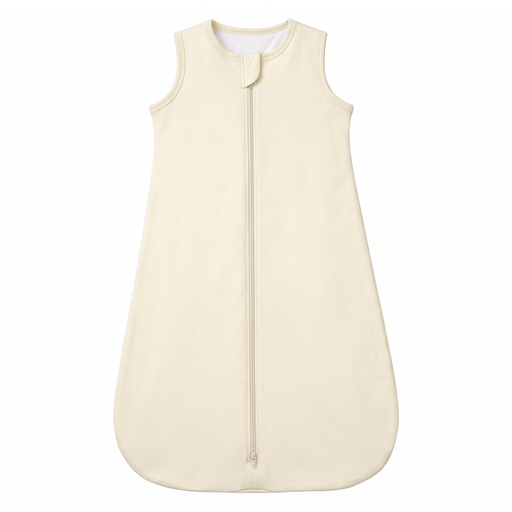
Why this product suits these needs: The classic pear shape gives little ones room to move and is suitable for children who are 76 to 89 cm tall, as long as the neck and arm openings fit properly.
The product information gives size ranges, a 2.5 TOG filling and guidance on the neck and arm openings, rather than relying on a general age recommendation.
100% cotton outer fabric and lining, a two-way zip, and OEKO-TEX Standard 100 and EN 16781, according to the product information.
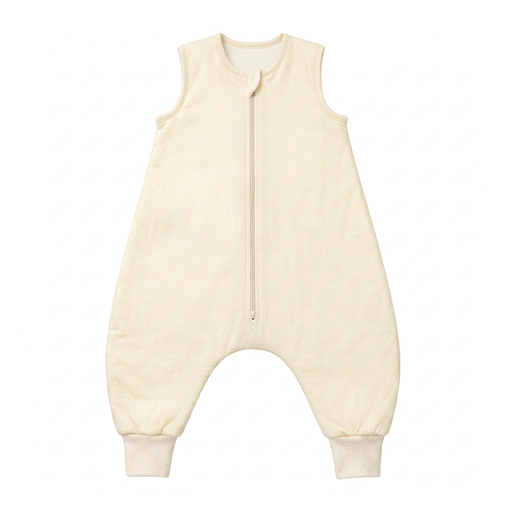
Why this product suits these needs: This legged design is aimed at mobile toddlers who want to crawl, stand or take a few steps while wearing their sleeping bag.
Separate legs and ribbed ankle cuffs reduce loose fabric that could get in the way when your child stands up or crawls.
Rated at 2.5 TOG for 16–20 °C according to the product information, with a chin guard, two-way zip and a deep crotch to accommodate a bulkier nappy.
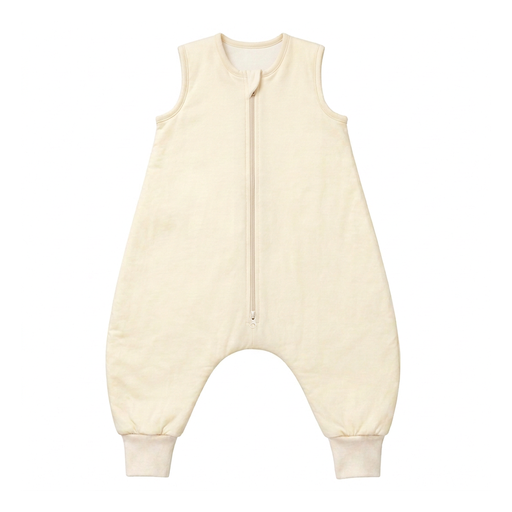
Why this product suits these needs: According to the size guide, the larger version is designed for children who are 89 to 101.5 cm tall and weigh 11.8 to 15.5 kg.
The size chart helps you avoid choosing a sleeping bag that’s too short or too loose. The zip opens from the bottom to make night-time changes easier.
Legged design, cotton lining, chin guard and materials tested for harmful substances to OEKO-TEX Standard 100, according to the product description.
Wash the sleeping bag before using it for the first time. The Vowia models mentioned should be washed on a gentle cycle at up to 30 °C. Reshape the product and hang it out to dry. According to the care instructions, it should not be tumble-dried, bleached or dry-cleaned.
Check the zip, seams and cuffs before each use. Don’t continue using a damaged sleeping bag. Once your child can climb out of bed, check the safety instructions for the specific model again.
We’ve put together a complete, regularly updated list of products that meet these strict selection criteria and fully comply with the safety regulations in force in the EU.
According to the product information, the models described here are designed for around 16 to 20 °C. What your child should wear underneath depends on the room temperature and how warm or cool they feel. Check their neck regularly and avoid adding loose blankets.
That depends on the size, your child’s height and the fit. The 12–18 month and 18–24 month size ranges are just a guide. Change to another model as soon as the neck or arm openings no longer fit securely, the leg sections restrict movement or the sleeping bag is damaged.
A sleeping bag with legs can be practical for mobile children, making it easier for them to crawl, stand and take their first steps. For younger babies who mostly move around in bed, a pear-shaped design without separate legs may be enough. What matters is your child’s stage of development, the fit and the safety instructions for the specific product.