
Lieferung heute & morgen

Qualitätsgarantie

Willkommens-Angebote freischalten: KOSTENLOSE Lieferung | Bis zu 80 % RABATT | Kostenlose 30-Tage-JoyPlus-Testphase
App herunterladen
A baby sleeping bag with legs, 2.5 TOG should combine warmth, freedom of movement and a good fit. Active children between 18 and 24 months in particular may want to roll over, crawl or get up in bed. A traditional sleeping bag without legs can restrict their movement, while a loose blanket can slip out of place.
However, there are often misunderstandings when choosing one. The TOG rating alone doesn’t tell you whether a style is suitable for every bedroom. Nor does a broad age range remove the need to check the size carefully. That’s why our selection takes room temperature, your child’s height, material, fastenings and the manufacturer’s guidance into account.
According to the product information available, a 2.5 TOG sleeping bag is intended for rooms at around 16 to 20 °C. This is a guide, not a guarantee of the right temperature for every child. Sleepwear, humidity, physical activity and the actual room temperature can all affect how warm your child feels.
A warm winter sleeping bag for your baby shouldn’t be used with an additional blanket. Regularly check that their neck feels comfortably warm but not sweaty. Hands and feet may feel cooler, but that doesn’t automatically mean another layer is needed.
A sleeping bag that’s too large may not fit snugly enough around the neck or armholes. Your child’s height is therefore more important than their age alone. For example, the Vowia model in size XL is listed for children measuring 89 to 101.5 cm and weighing 11.8 to 15.5 kg.
When the sleeping bag is fastened, your child’s head must not be able to pass through the neck opening. If your child falls between two sizes, don’t automatically choose the larger one. The fit should allow enough freedom of movement without sitting loosely around the upper body.
A zip that only opens fully from the top can make night-time nappy changes more awkward. A sleeping bag with a 2-way zip, on the other hand, lets you open the lower section while keeping the upper body covered. A zip guard helps prevent the zip from coming into direct contact with the skin.
For a cotton sleeping bag with feet, the foot openings should also be flexible, and the legs shouldn’t keep riding up while your child is crawling or sleeping.
The TOG rating describes the thermal resistance of a textile. As a general rule, a higher rating means better heat insulation. For the range discussed here:
A baby sleeping bag for 16–20 °C should only be used if the temperature in the sleeping area regularly falls within this range.
Many parents look for a high cotton content for sensitive baby skin. According to the product description, the Vowia models are made with 100% cotton for the outer fabric and lining. The padding is made from 100% polyester.
The supplier states that the textiles have been tested for harmful substances in accordance with OEKO-TEX Standard 100. This refers to testing for harmful substances in textiles; it shouldn’t be taken as a claim of medical effectiveness. You should also check the care instructions when choosing a product. For the Vowia models, these specify a maximum wash temperature of 30 °C on a delicate cycle, air drying, and no bleach or tumble drying.
Legs or feet can be practical for mobile toddlers, allowing them to roll, crawl and take their first steps. At the same time, the leg openings should fit securely without digging in. A deep crotch gives more room for a larger night-time nappy.
For every style, check that it has:
Information about EN 16781 should be easy to find in the product description. The supplier states that the Vowia models have a design in accordance with this European safety standard for baby sleeping bags. The relevant instructions for use should still be followed.
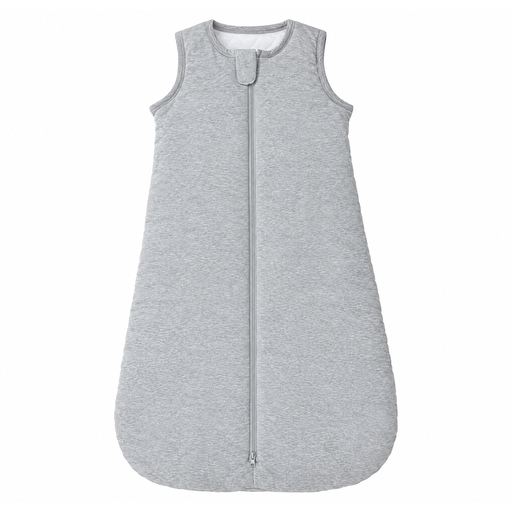
Why this product suits this profile: This style is designed for children measuring 76 to 89 cm. Its 2.5 TOG rating and practical features make it a good choice for cooler bedrooms.
The specific size recommendation helps you avoid choosing based on the age range alone. The 2-way zip also makes nappy changes easier.
According to the supplier, the outer fabric and lining are 100% cotton, with OEKO-TEX Standard 100 certification and ribbed cuffs at the legs.
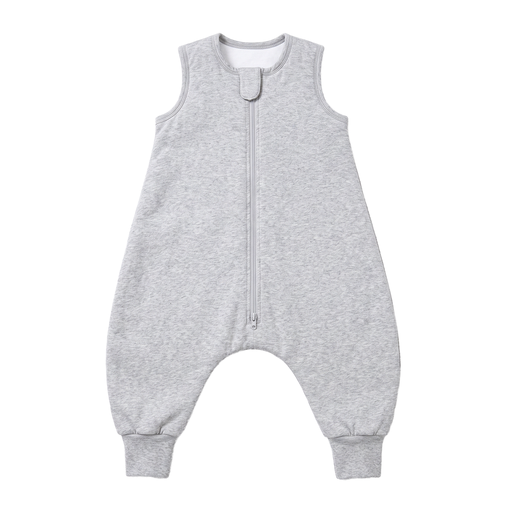
Why this product suits this profile: The XL style is designed for children measuring 89 to 101.5 cm, making it suitable for many children aged 18 to 24 months.
The size guidance includes both height and weight. The neck and arm openings, along with the zip guard, are also described as safety features.
According to the supplier, it has OEKO-TEX Standard 100 certification, a 2.5 TOG rating for 16–20 °C, a deep crotch and a 2-way zip.
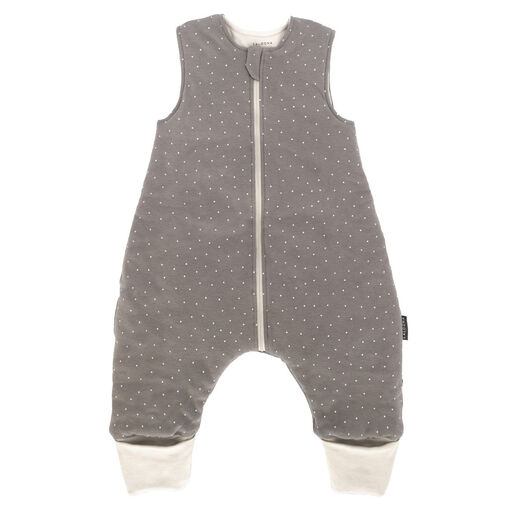
Why this product suits this profile: This style is suitable for smaller children and families looking for a sleeping bag with legs and adjustable foot cuffs.
The stated height of 70 cm helps you avoid choosing based on age alone. The foot cuffs can be folded back as needed.
According to the product description, it has a 2.5 TOG rating, 100% cotton outer fabric, OEKO-TEX Standard 100 certification and is machine washable at 30 °C.
We’ve put together a complete, regularly updated list of products that meet these strict selection criteria and the safety regulations in force in the EU.
According to the product descriptions, the styles mentioned are intended for temperatures of around 16 to 20 °C. The sleepwear worn underneath will depend on your child and the actual room temperature. An additional blanket should not be used.
How long it can be used depends on your child’s height, weight, fit and development of their movement. The Vowia style for 18–24 months is listed for children measuring 89 to 101.5 cm. Stop using the sleeping bag, or reassess its suitability, if your child’s head could fit through the closed neck opening, the sleeping bag is damaged or your child can climb out of bed.
Legs can allow more freedom of movement when rolling, crawling and getting up. Even so, make sure the cuffs fit well, the neck and arm openings are secure, and you follow the instructions for use. A suitable fit that isn’t too large remains essential for overnight sleep.