
Lieferung heute & morgen

Qualitätsgarantie

Willkommens-Angebote freischalten: KOSTENLOSE Lieferung | Bis zu 80 % RABATT | Kostenlose 30-Tage-JoyPlus-Testphase
App herunterladen
A baby soother needs to meet several everyday requirements: it should be suitable for your baby’s age, easy to clean hygienically and comfortable for them to use. At the same time, similar product names, eye-catching designs and broad marketing claims can make it harder to compare options.
Three common buying mistakes are particularly easy to make:
Start by checking the manufacturer’s age guidance. Common ranges include:
The age guidance is not an individual medical recommendation. It’s intended as a guide to the soother’s dimensions and design. If your child has teeth, check the teat particularly carefully before every use for cracks, bite marks and sticky patches.
A silicone soother is odourless and tasteless, and is generally easy to clean. Only use a product designed specifically for your baby’s mouth. Bottle teats are not a suitable substitute.
Many models are sold as BPA-free soothers. The products mentioned here also refer to BPS-free materials or include relevant manufacturer information. Even so, always check the packaging and the latest product description.
The EN 1400 standard applies to soothers for babies and toddlers. It covers requirements including design, safety and labelling. The standard does not replace daily visual checks. Dispose of the soother at the first sign of wear.
It’s also worth checking the materials used for each part. The teat may be made of silicone, while the shield and button are plastic. Sustainability claims should therefore be considered carefully: is only one part made from renewable materials, or is the whole product? When it comes to brand claims, always refer to the manufacturer’s wording.
A 2-pack of soothers is handy for everyday changes at home and when you’re out and about. A 4-pack of soothers can be useful if you regularly need a clean spare or keep soothers in several different places.
A soother with a sterilising box offers extra storage options. It’s important to follow the instructions for each product: water levels, microwave power and cooling times can vary. Keep the box out of children’s reach while it’s hot or contains hot water.
Depending on the product, manufacturers recommend replacing soothers after around four weeks or after one to two months. Always follow the guidance for the specific product. Replace the soother immediately if it is damaged.
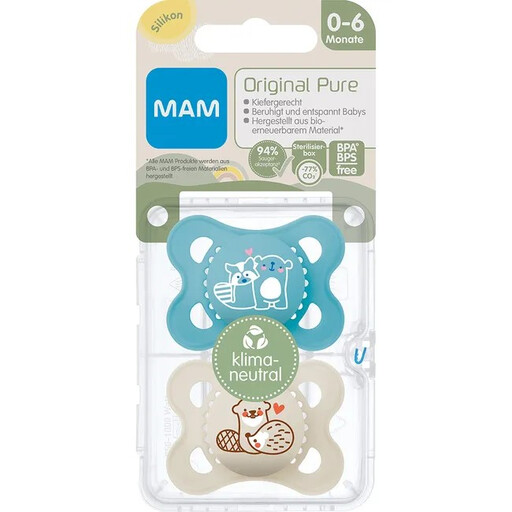
Why it suits this profile: This 2-pack is ideal for parents who want a second soother ready for use at home and when they’re out and about. The model is designed for babies aged 0 to 6 months.
The age range is clearly stated. The sterilising and carry case supplied helps reduce the risk of keeping a spare soother loose in your bag.
Silicone teat, symmetrical shape, BPA-/BPS-free claim and a 2-pack. According to the manufacturer, the model complies with EN 1400.
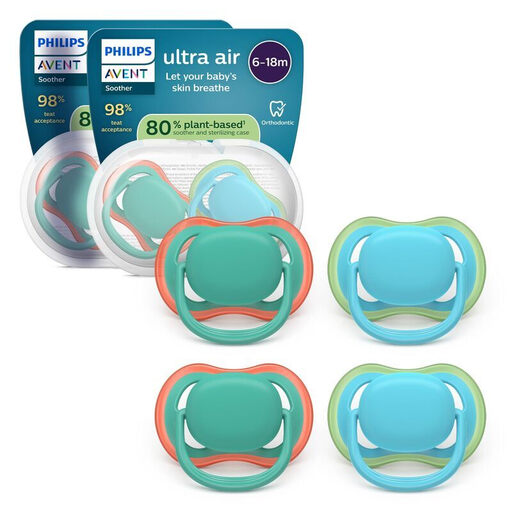
Why it suits this profile: This set combines four soothers with two carry and sterilising cases. It’s a good fit for families who want several soothers for the changing bag, pushchair and home.
The cases provide dedicated storage and are also designed for the sterilising method described by the manufacturer. The 6–18-month age range is clearly stated.
Symmetrical orthodontic silicone teat, large ventilation holes, BPA-free claim and a 4-pack with two cases.
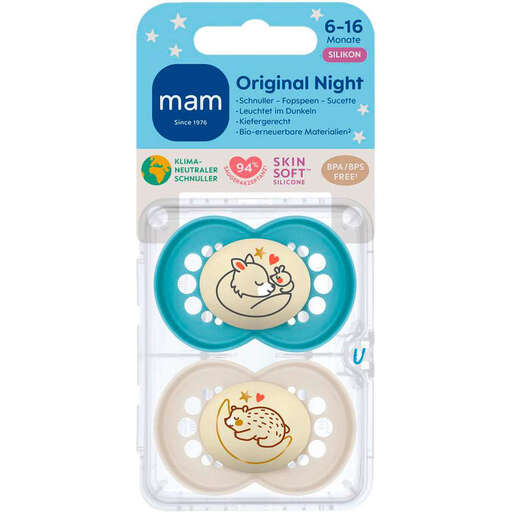
Why it suits this profile: This night-time soother is designed for parents who prefer a model that’s easy to find in the dark. It’s intended for babies aged 6 to 16 months.
The glow-in-the-dark feature adds convenience, but does not replace checks for wear. The 2-pack lets you rotate soothers, while the sterilising case helps with storage.
Symmetrical, flat teat made from SkinSoft silicone, according to the manufacturer, large air holes and a glow-in-the-dark button. The product information refers to EN 1400.
We’ve put together a complete, regularly updated list of products that meet these strict selection criteria and fully comply with the safety regulations in force in the EU.
It depends on the manufacturer’s guidance and the condition of the product. Depending on the model, replacement is recommended after around four weeks or after one to two months. Replace the soother immediately if it has cracks, is misshapen, has a sticky surface or shows bite marks.
A symmetrical, flat teat shape is often described as orthodontic or jaw-friendly. Its design may allow the soother to sit correctly in the mouth whichever way round it is. This does not guarantee any particular development of the teeth or jaw. For questions about oral health, seek advice from your child’s doctor or dentist.
Only use the case supplied with the product and follow the manufacturer’s instructions. Pay attention to the specified amount of water, microwave power and cooling time. Check the temperature before giving the soother to your child. Do not open or remove the case until it has cooled sufficiently.