
Lieferung heute & morgen

Qualitätsgarantie

Willkommens-Angebote freischalten: KOSTENLOSE Lieferung | Bis zu 80 % RABATT | Kostenlose 30-Tage-JoyPlus-Testphase
App herunterladen
Introducing solid foods is an important milestone for both parents and children. When little hands start reaching for the spoon, the self-feeding phase begins. This stage often involves knocked-over bowls and food scattered on the floor. A baby bowl with a suction cup can be a practical tool here, helping to make mealtimes more relaxed and cleaner for everyone involved.
This article serves as a guide. It highlights the essential features of a non-slip baby bowl and presents a selection of products focused on functionality and material properties. The goal is to provide you with an objective basis for your purchasing decision.
The selection of weaning tableware is vast. To find a suitable weaning bowl, several objective criteria should be considered.
The material is a crucial factor, as it comes into direct contact with your child's food. Many products in this segment, especially the silicone bowl for babies, are made from food-grade silicone. This material is flexible, shatterproof, and typically heat-resistant.
Look for the BPA-free label. BPA (Bisphenol A) is a chemical compound found in some plastics, and its use in baby products is strictly regulated in the EU. Products declared as BPA-free, PVC-free, and phthalate-free meet common safety standards for baby items.
The main purpose of a baby bowl with a suction cup is its ability to adhere to a surface. The effectiveness of the suction cup largely depends on two factors: the quality of the suction cup itself and the surface on which it is placed. A strong suction cup works best on smooth, clean, and non-porous surfaces. These include most plastic high chair trays, glass tops, or smooth stone countertops. Adhesion may be limited on textured wood surfaces or uneven tiles.
Some models offer more than just a bowl. A baby feeding set, for example, might include a matching lid, spoon, and fork. A baby bowl with a lid is particularly practical for hygienically storing leftovers in the refrigerator or taking a meal on the go. Also, check the care instructions. Most silicone bowls are dishwasher-safe, which significantly simplifies daily cleaning.
Based on the criteria mentioned, we have compiled a few products that meet different needs.
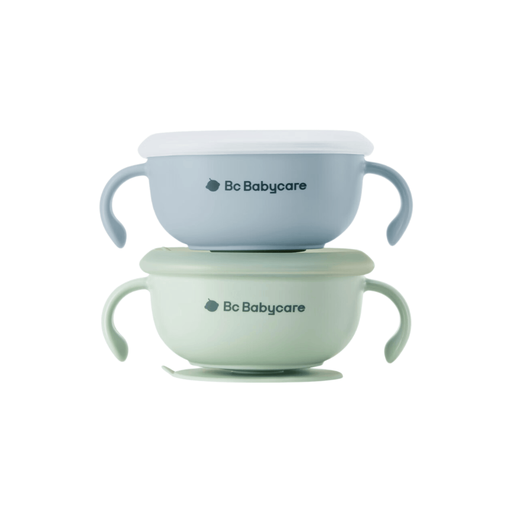
Why it stands out This set is designed as a multifunctional 3-in-1 system. It can be used as a snack bowl, a classic meal bowl, and, with the straw attachment, as a training cup. This versatility makes it a companion through various developmental stages.
Advantages
Who is it suitable for? This set is aimed at parents looking for a comprehensive and flexible solution for the weaning period. It is suitable for children from 6 months onwards who are beginning to eat and drink independently.
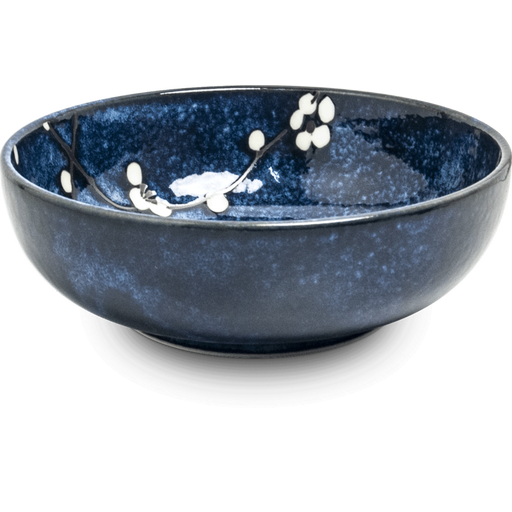
Why it's worth considering This product is a classic porcelain bowl without a suction feature. It presents an alternative for the family table or for older children who no longer need non-slip support. The design with blue floral patterns gives it an appealing aesthetic.
Advantages
Who is it suitable for? This bowl is intended for households looking for a durable and aesthetically pleasing piece of dinnerware. It is not designed as a weaning bowl for infants but as a complement to general tableware.
A baby plate with a suction cup or a special silicone bowl is often the first step. Over time, needs change. If you are looking for more bowls for everyday use, you will find a wide selection in our category.
Discover our selection of blue bowls and dishes for various household applications.
1. From what age is a baby bowl with a suction cup useful? A suction bowl is typically a helpful tool from the start of weaning, around the 6-month mark. It supports the child during the phase when they are developing the motor skills for independent eating and their coordination is not yet fully refined.
2. What is the best way to clean a silicone baby bowl? Most silicone bowls are suitable for cleaning in the top rack of the dishwasher. Alternatively, they can be hand-washed with warm water and mild dish soap. It is advisable to follow the manufacturer's specific care instructions and to avoid using abrasive sponges to prevent damaging the material's surface.
3. Does the suction cup stick to any surface? No, the adhesion depends on the nature of the surface. A suction cup works optimally on completely smooth, clean, and dry surfaces such as plastic, glass, polished stone, or metal. On porous, textured, or slightly curved surfaces, like untreated wood or some tile tables, the suction power may be greatly reduced or fail completely.