
Lieferung heute & morgen

Qualitätsgarantie

Willkommens-Angebote freischalten: KOSTENLOSE Lieferung | Bis zu 80 % RABATT | Kostenlose 30-Tage-JoyPlus-Testphase
App herunterladen
A baby's and toddler's skin is especially delicate and requires reliable protection from UV radiation. The market offers a wide variety of products, but not all of them live up to their claims. As your Joybuy Product Recommendation Officer, I'm here to help you identify the essential features and sidestep common purchasing traps, so you can make an informed decision to protect your child.
Many products advertise compelling features, but their weaknesses often become apparent in practice. Pay close attention to these three points to avoid buyer's remorse:
stroller sun shade marketed as a "universal fit" often proves to be inadequate. Elastic bands quickly wear out, or simple clamps fail to provide a secure hold in windy conditions or on uneven terrain. The result is a constantly slipping cover that requires more adjustment than it provides protection.UV protection for your baby can be insufficient. Don't rely on colour; trust verifiable protection ratings.protect the baby from the sun, some parents are tempted to completely cover the stroller with blankets or thick fabrics. This can lead to a dangerous build-up of heat as it cuts off air circulation. Good sun protection must always ensure adequate ventilation.To find the right protection, you should focus on objective parameters. The following three criteria are crucial for safety and functionality.
The most important rating for textile sun protection is the Ultraviolet Protection Factor (UPF). A product labelled UPF 50+ is certified to block more than 98% of harmful UVA and UVB rays. This standard is essential for products like sun shades, clothing, or the canopies of strollers and car seats.
This rating should not be confused with the Sun Protection Factor (SPF), which applies to sunscreen for children. While SPF indicates the factor by which the skin's natural protection time is extended, UPF describes the percentage of UV radiation blocked by a fabric. Comprehensive protection often requires a combination of both.
Effective sun protection must be breathable. Look for materials that allow for air circulation to prevent heat build-up. Products like a car seat with a sun canopy or a baby pool with a canopy should have integrated ventilation panels or side mesh inserts.
The fastening system is just as critical. Sturdy tie-down cords, robust screw clamps, or firmly integrated frames are preferable to flexible elastic bands. A good system ensures the protection stays in place, even with movement and in a light breeze.
For certain products, legal standards are a clear indicator of quality. For example, a car seat with a sun canopy should comply with the current ECE R129 (i-Size) safety standard. This standard sets higher requirements for side-impact protection and overall safety than older regulations. For inflatable water products, clear manufacturer safety warnings regarding supervision and use in shallow water are essential.
Based on these objective criteria, we have identified products that are particularly well-suited for the specific day-to-day situations parents face.
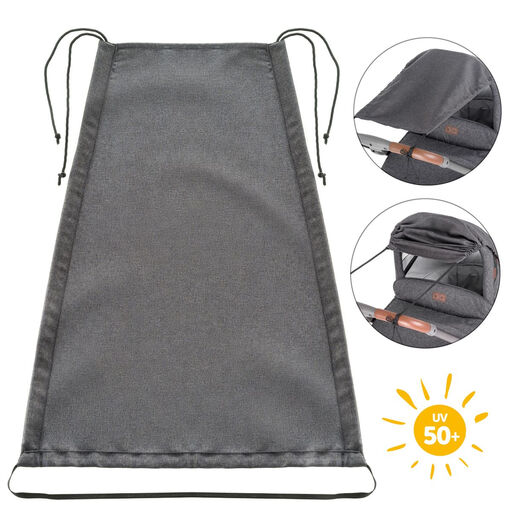
Why it's a great fit: Ideal for parents who need an adaptable solution for various strollers and buggies. The roll-up function allows for quick visual contact and adjustment to the sun's position.
The fastening system, with its elastic cord and two ties, is more stable than simple elastic bands and can be securely fixed to a wide variety of frames, avoiding the "universal fit" trap.
Offers certified UPF 50+ protection and a practical roll-up function that provides more flexibility than a rigid parasol.
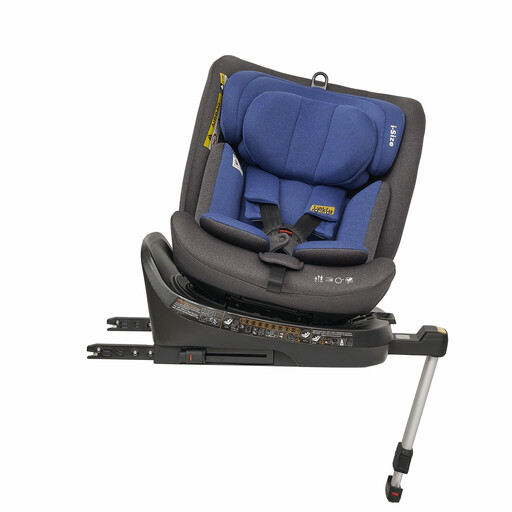
Why it's a great fit: A long-term solution for safety-conscious parents. The seat grows with the child (40-150 cm) and combines the highest safety standards with integrated sun protection.
The detachable sun canopy is custom-designed for the seat, eliminating compatibility issues. The focus is on certified overall safety, not just an add-on feature.
Certified to the latest i-Size standard (ECE R129). The 360° rotation function makes getting your child in and out of the car significantly easier.
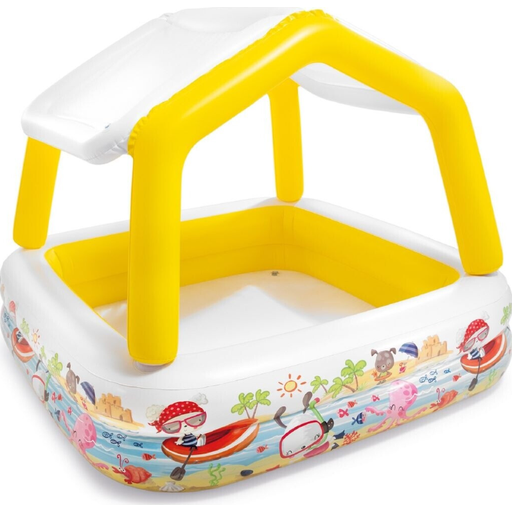
Why it's a great fit: Creates a protected and cool play area for hot days in the garden or on the patio. The large canopy provides reliable shade during water play.
The integrated canopy provides stable, wide-area shade that, unlike an external parasol, doesn't need constant readjustment and won't tip over in a light breeze.
Generous dimensions (157x157 cm) and a water capacity of 295 litres offer plenty of space. Includes a drain plug for easy emptying.
We have compiled a complete, up-to-date list of products that fully meet these strict selection criteria and safety regulations.
1. What is the difference between UPF and SPF?UPF (Ultraviolet Protection Factor) is used for textiles and indicates what percentage of UV radiation is blocked by the fabric. UPF 50+ means that less than 2% of radiation can penetrate. SPF (Sun Protection Factor) is used for sunscreens and indicates the factor by which the skin's own protection time is extended before a sunburn occurs.
2. How do I properly attach a sun shade to a stroller so it holds up in the wind? Use models with sturdy fastening cords instead of simple elastic bands. Wrap the cords around fixed parts of the stroller frame (not the movable parts of the canopy) and pull them tight. On some models, the straps secure to the bottom of the frame or the seat base, which provides extra stability.
3. Is a sun shade enough, or does my baby also need sunscreen? A sun shade or canopy with UPF 50+ offers excellent protection for the covered area. However, UV rays can reflect off surfaces like water or light-coloured sand and reach the child even in the shade. Furthermore, body parts like hands and feet are often not completely covered. It is therefore recommended to also apply a baby-safe sunscreen with SPF 50+ to all exposed skin.