
Lieferung heute & morgen

Qualitätsgarantie

Willkommens-Angebote freischalten: KOSTENLOSE Lieferung | Bis zu 80 % RABATT | Kostenlose 30-Tage-JoyPlus-Testphase
App herunterladen
A baby thermometer is an essential item for many families. When buying one, however, it’s not just the stated measurement time that counts. What really matters is whether the measurement method suits your child’s age, whether the device is easy to clean in daily use, and whether warning signals are clearly displayed. A digital thermometer can be useful at home, on the go, or when caring for elderly relatives – provided you understand its features correctly.
Claims like “measurement in one second” primarily describe speed. With an infrared thermometer, distance, angle, room temperature and positioning can all affect the result. A contactless thermometer should therefore offer a clear distance indicator or an easy-to-follow guide. With an ear thermometer, it’s also important that the probe is correctly aligned.
A 3-in-1 thermometer or 6-in-1 thermometer sounds versatile. But the combination of forehead, ear, object, liquid and room temperature measurement is only practical if switching between modes works clearly. Unclear symbols, complicated menus or hard-to-read displays can become a disadvantage, especially at night or with a restless child.
A fever alarm, a coloured display or a beep are the device’s orientation aids. They do not replace a medical assessment. The threshold values vary depending on the model. Buyers should therefore check at what temperature the alarm is triggered, whether the sound can be turned off, and whether Celsius and Fahrenheit are selectable.
A forehead thermometer usually measures contactlessly and is suitable for quick checks without disturbing a sleeping child. An ear thermometer works close to the ear canal and must be positioned very carefully. A wearable baby temperature monitor, on the other hand, is attached under the armpit and transmits readings continuously to a separate display. This solution is interesting for rest periods, but requires the sensor to be correctly attached.
A clearly readable display is more important than a long list of features. Practical features include:
A memory function with, for example, 20, 32 or 35 storage slots can help track changes over several readings. However, it should not be mistaken for a medical record.
The measuring probe should be cleanable according to the instruction manual. For contactless models, wiping the housing and sensor with a suitable, dry cloth is often sufficient. Disposable probe covers can add extra effort and ongoing costs with ear thermometers.
Also check whether AAA batteries, a storage case, a quick-start guide or a charging cable are included. With a baby temperature monitor, you should also consider the battery life of the sensor and display, as well as the wireless range.
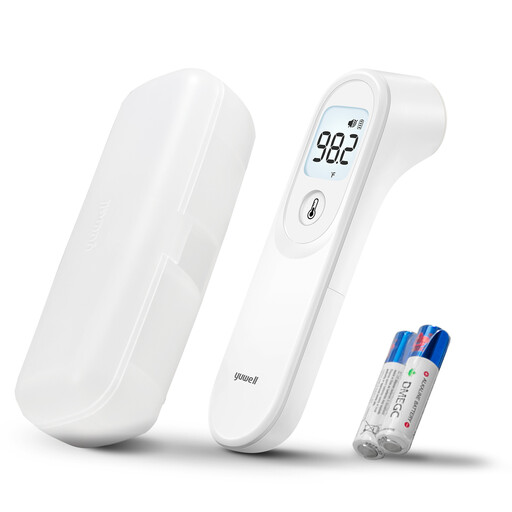
Why this product suits the profile: This contactless forehead thermometer is designed for simple use and, according to the product information, is suitable for babies, children and adults. Measurement takes place from around 5 cm away.
A distance sensor helps with positioning. Silent mode reduces disruptive beeps during measurements when the child is resting.
Contactless forehead measurement, measurement time around 1 second according to the product information, high temperature alarm and two AAA batteries included.

Why this product suits the profile: This model combines contactless and contact-based forehead measurement with an age-related display. It is aimed at families who prefer guided operation and clearly visible indicators.
PositionCheck with target light, distance sensor and display prompts address the common error of incorrect measurement positioning.
3-in-1 measurement for body, liquids and food, colour-coded display, silent mode and two AAA batteries.
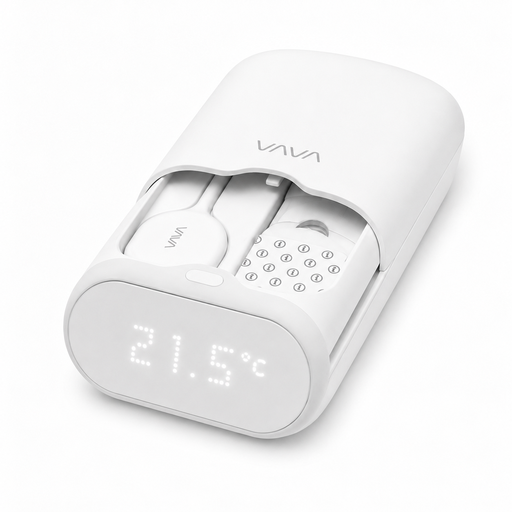
Why this product suits the profile: The wearable armpit sensor transmits readings to a separate LED display. This allows you to monitor temperature during rest periods without having to stand right next to your baby for every check.
The concept is not limited to individual quick measurements. Connection status, loose sensor and low battery are all shown on the display.
Sensor battery life up to 24 hours according to the product description, display range up to 15 metres indoors, USB-C charging and both audible and visual warnings.
We have put together a complete, regularly updated list of products that fully meet these strict selection criteria and the safety regulations in force in the EU.
Read the instructions before first use and allow the device to adjust to room temperature if the manufacturer recommends this. For contactless forehead measurement, make sure sweat, hats or hair are not covering the measurement site. Keep to the specified distance and, if necessary, take several readings under comparable conditions.
An ear thermometer should only be used carefully and in accordance with the age recommendation. Object or room temperature modes are intended for milk, bath water or the environment, and should not be confused with body temperature measurement. If readings are unusual or you have health concerns, consult a medical professional.
The lifespan depends on batteries, cleaning, storage and mechanical stress. Infrared devices should be kept dry, protected from direct sunlight and cleaned according to the instructions. For rechargeable baby temperature monitors, you should also consider the charging cycles of the sensor and display.
A contactless thermometer can measure temperature without touching the skin. What matters is the age recommendation, the correct distance and positioning. The manufacturer’s information should be checked before purchase and before use.
With battery-operated models, the main costs are for replacement batteries. Devices with silent mode, automatic shut-off and included batteries can be more practical in daily use. A rechargeable model reduces the need for disposable batteries, but requires regular charging.