
Lieferung heute & morgen

Qualitätsgarantie

Willkommens-Angebote freischalten: KOSTENLOSE Lieferung | Bis zu 80 % RABATT | Kostenlose 30-Tage-JoyPlus-Testphase
App herunterladen
When choosing baby milk and toddler milk, the brand name alone does not determine which option is right. Your child’s age, feeding stage, ingredient list and preparation requirements all need to fit into your family’s everyday routine. Three common misconceptions are particularly likely to result in the wrong purchase: follow-on formula is not suitable for every age, prominent added ingredients are not automatically proof of quality, and a larger pack is not always more economical.
1. Age stages are confused
Follow-On Milk from 6 Months, Follow-On Milk 2 and Follow-On Milk 3 are not interchangeable. Depending on the manufacturer, Stage 2 may be suitable from the sixth or seventh month, while Follow-On Milk 3 is often intended from the tenth month onwards. Toddler Milk from 1 Year or Toddler Milk from 2 Years belongs to a different age group.
2. Individual ingredients are given too much importance
DHA, omega-3 fatty acids, HMO, GOS/FOS and vitamins can all be interesting product features. However, they do not replace checking the complete nutritional information. Terms such as “organic” or “palm-oil-free” alone do not indicate whether the product is suitable for your child’s age and current diet.
3. Preparation and consumption are underestimated
Milk powder must be measured precisely according to the instructions on the packaging and prepared fresh. Incorrectly measured infant formula can alter the nutrient concentration. Opened packs also have a limited shelf life, which is usually three to four weeks depending on the product.
First, check the age stage on the packaging:
Introducing complementary foods and switching to a different milk formula should be based on your child’s individual development. If you are unsure, a paediatrician, midwife or another qualified infant and toddler nutrition professional can offer advice. Breast milk is considered suitable nutrition during the first six months of life; follow-on formula is not intended for babies under six months.
When choosing milk powder for babies, it is worth checking the full ingredient list rather than focusing on individual marketing claims. Pay particular attention to:
For organic follow-on formula, the organic certification mark or control-body information on the packaging is also relevant. “Organic” and “palm-oil-free” are different properties and should be assessed separately.
An 800-g tin can be practical if the product is used regularly, while a 500-g or 600-g pack leaves less unused product when cautiously switching formulas. The following points are important:
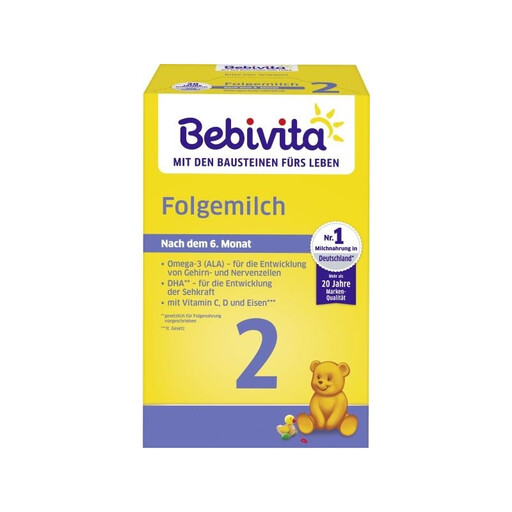
Why this product suits this profile: The 500-g pack is suitable for families who would like to try Follow-On Milk 2 in a manageable quantity to begin with. It is intended for babies from six months as part of a mixed diet.
The clearly stated Stage 2 reduces the risk of accidentally buying toddler milk for a younger age group. The packaging also highlights fresh preparation and the limited shelf life after opening.
Contains ALA, iron and vitamin C according to the product details. The recipe is gluten-free and supplied as powder in a 500-g format.
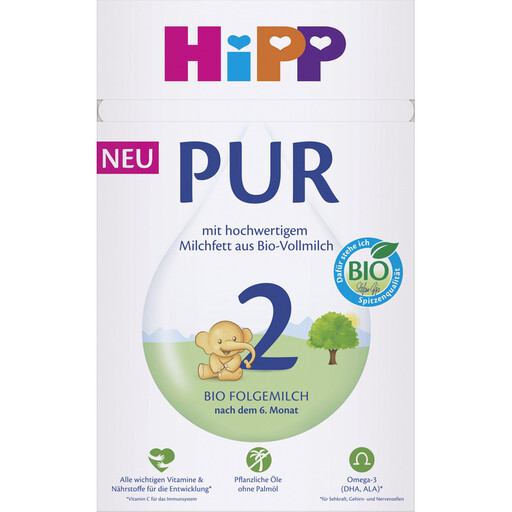
Why this product suits this profile: This organic follow-on formula may appeal to parents who prioritise certified organic production, a recipe without added starch and DHA.
The product details state the age stage from six months and name the organic control body. This makes it possible to assess the organic credentials and age recommendation separately.
Organically produced, with DHA and ALA and lactose as the only carbohydrate source according to the product description. The recipe is stated to be palm-oil-free.
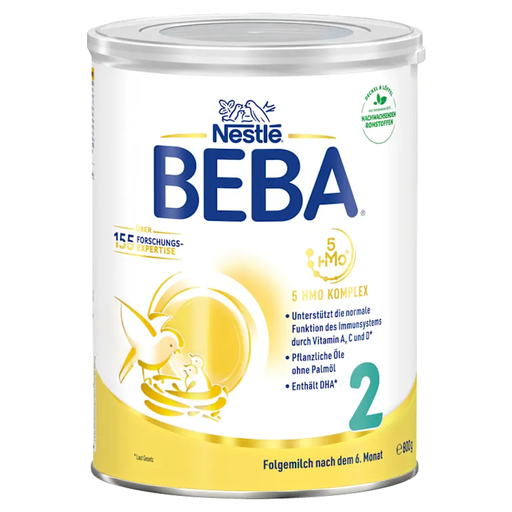
Why this product suits this profile: The 800-g tin is aimed at families with regular consumption. According to the product details, the recipe contains 2'-FL HMO, DHA from algal oil, and a blend of sunflower and rapeseed oils.
The recommendation from seven months prevents it from being treated as interchangeable with every follow-on formula from six months. Ingredients such as HMO and DHA are clearly named and can be checked against the label.
Palm-oil-free recipe according to the product description, with 2'-FL HMO, DHA and vitamins A, C and D. The tin contains 800 g.
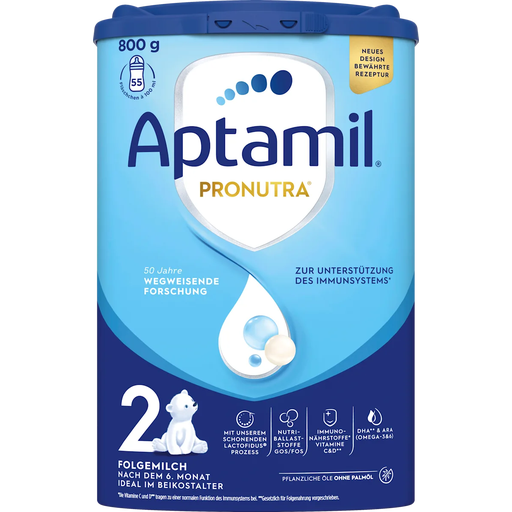
Why this product suits this profile: Suitable for parents who want to pay particular attention to declared GOS/FOS ingredients as well as DHA and ARA when choosing follow-on formula from 6 months.
The nutritional information lists the named ingredients individually. This allows parents to compare the recipe based on the actual declaration rather than general terms.
Contains GOS, FOS, DHA, ARA and HMO according to the product details. The pack size is 800 g; milk, fish and soya are listed as allergens.
We have put together a complete, regularly updated list of products that fully meet these strict selection criteria and the safety regulations applicable in the EU.
This depends on the specific recipe. Many products are intended from six months, while some are only suitable from seven months. The age recommendation on the packaging and the guidance on feeding alongside complementary foods are decisive.
The recommendations vary. The products mentioned here often state three or four weeks. Once opened, the powder should be stored dry, tightly sealed and at room temperature. The specific manufacturer’s instructions take priority.
Toddler milk is a milk drink for a specific age group and is not an essential part of every toddler’s diet. Whether it fits into your child’s individual meal plan depends on their overall diet and milk consumption. If you have questions about nutritional intake or intolerances, it is advisable to seek advice from a healthcare professional.