
Lieferung heute & morgen

Qualitätsgarantie

Willkommens-Angebote freischalten: KOSTENLOSE Lieferung | Bis zu 80 % RABATT | Kostenlose 30-Tage-JoyPlus-Testphase
App herunterladen
With baby and toddler products, it’s not just about an attractive design. What really matters are the age recommendation, materials, care requirements, space needed and clear safety information. Especially with baby toys, feeding sets, cradles or pram travel systems, vague product details can lead to costly mistakes later on.
A toy labelled for 6 to 36 months isn’t automatically suitable for every child throughout that entire period. A baby needs different stimuli and dimensions than a three-year-old toddler. So check whether the operation, size of the parts and play position match your child’s developmental stage. With toys for 6 to 36 months, it should also be clear whether they are designed for tummy time, sitting or standing play.
Labels like “child-friendly”, “safe” or “educational” mean very little without technical specifics. Instead, look for information on materials, age, warnings and relevant standards. For toys, EN 71-1, EN 71-2 and EN 71-3 are key parts of the European toy safety standard. A CE mark is important, but should be considered alongside the rest of the product information.
Batteries, replacement teats, extra play balls, hard-to-clean fabrics or components that aren’t dishwasher-safe can all add to the cost of using a product. Before you buy, check what’s included in the package and which parts will need regular replacement or washing.
With learning toys for babies, sensory toys and Montessori toys, the function should fit the everyday situation. A moving toy can make tummy time more interesting, while an activity table is better suited to children who can already reach and grab with purpose or stand. Motor skills toys should be neither too complex nor fitted with small parts that could easily come loose.
For sleep and mobility products, different limits apply. A baby cradle with a sleeping area of 90 × 40 cm, for example, isn’t designed for unlimited use. It may need to be stopped being used as soon as your child can sit up or pull themselves up independently.
With baby bottles and dummies, material details such as BPA-free polypropylene and instructions on cleaning and sterilisation are important. Also check whether bottles, teats and dummies should be inspected for cracks or wear before each use.
For foam play blocks, practical criteria include a stable base, concealed zips, washable covers and a full list of what’s included. If a set arrives vacuum-packed, you should allow for the expansion time stated by the supplier. With sets that include a ball pit, it’s especially important to check whether the balls are actually included.
Measure the intended area before you buy. This applies to the footprint of a baby cradle just as much as the width of a pram in your hallway or lift. With a pram travel system, you should also compare the folded size, total weight, maximum load, parking brakes and the respective use of the carrycot and seat unit.
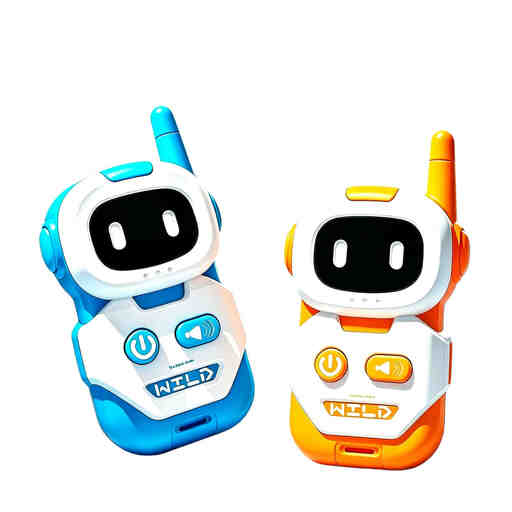
Why this product fits the profile: This compact 4-in-1 toy combines drum surfaces, lights, animal sounds and shape and colour sorting. According to the product details, it is intended for 6 to 36 months; batteries are not included.
The product description states the material, age range, rounded edges and EN71 and CE compliance. Nevertheless, adult supervision is still required.
Five geometric buttons, two drum surfaces and multiple play modes; the volume and battery availability should be checked before purchase.
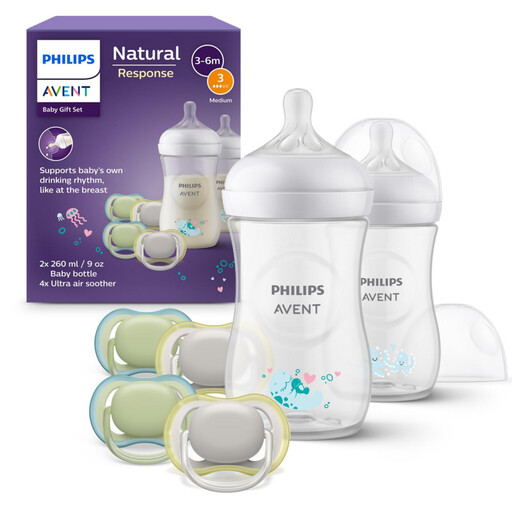
Why this product fits the profile: The set contains two 260 ml bottles and four Ultra-Air dummies for 0 to 6 months. According to the product details, the components are dishwasher-safe and must be sterilised before first use.
The age range, quantity, capacity, material and care instructions are all clearly stated. Teats and dummies must be checked regularly for damage.
Six pieces in one set, BPA-free polypropylene and dishwasher-safe components.

Why this product fits the profile: For families who want to climb, crawl and build indoors, this set combines soft foam elements with a ball pit. According to the product details, the play balls are not included.
The missing balls are explicitly mentioned. The description also highlights washable covers, non-slip bases and concealed zips.
EN71-1, EN71-2 and EN71-3 according to product details; removable, machine-washable covers and flexible building options.
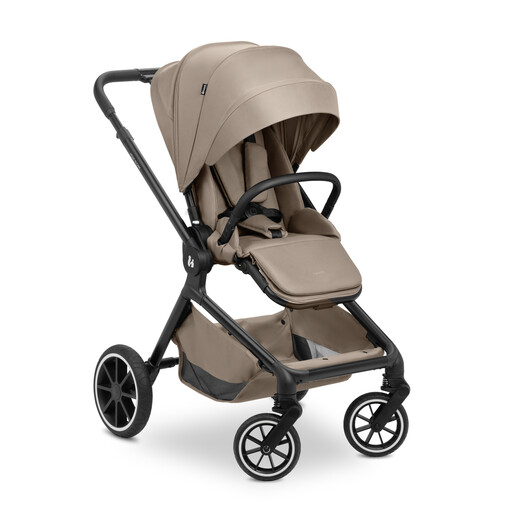
Why this product fits the profile: This set is designed for use from birth through to the toddler stage and includes a carrycot, seat unit, car seat adapters and a car seat. The stated maximum load is 22 kg.
The folded size, total weight, load limit, parking brake and safety harness are all listed in the product details. Car and door dimensions should be checked before purchase.
Carrycot and reversible seat unit; height-adjustable handle, XL basket and puncture-proof tyres according to the product description.
We’ve put together a full, regularly updated list of products that fully meet these strict selection criteria and the safety regulations in force in the EU.
That depends on the product category. Toys are usually classified by an age range, while cradles and dummies have specific usage limits. With a cradle, you should stop using it as soon as your child can sit up, pull themselves up or reaches the limit stated by the manufacturer. Bottle teats and dummies should be replaced immediately if you notice any visible damage.
For starting weaning, a plate, a bowl, a drinking cup and a suitable spoon are useful. Non-slip bases and easy-to-clean materials make daily use much easier. With bottle sets, you should compare the number of bottles, capacity, teat size and age range against your individual needs before buying.
No. The educational label alone says nothing about the material, workmanship or compliance with standards. Always check the age recommendation, small parts, edges, battery compartment and warnings. Even safe baby products must be checked regularly for wear and loose components during use.