
Lieferung heute & morgen

Qualitätsgarantie

Willkommens-Angebote freischalten: KOSTENLOSE Lieferung | Bis zu 80 % RABATT | Kostenlose 30-Tage-JoyPlus-Testphase
App herunterladen
Baby and toddler toys should provide engaging activities, support development and be safe to use in everyday family life. However, the choice is vast: from motor skills toys and Montessori toys to musical toys, products vary considerably in terms of recommended age, materials, noise levels and care requirements.
Illuminated buttons, melodies and numerous play modes may seem versatile at first glance. For babies and toddlers, however, the key question is whether the features match their current abilities. A child who cannot yet grasp objects securely is likely to benefit more from different surfaces or easy-to-reach elements than from complex tasks.
“From 1 year” and “for 1- to 3-year-olds” are not interchangeable recommendations. Small parts, marbles or detachable accessories may be unsuitable for younger children. Movement toys such as a bouncing toy also require sufficient height, balance and a suitable environment.
Electronic baby activity toys require batteries and the battery compartment should be checked regularly to ensure it closes securely. With larger products such as an activity table or bouncing toy, available floor space and cleaning requirements are important. Wooden toys can often be cared for with a damp cloth, but should not be stored in damp conditions for long periods.
The manufacturer’s age recommendation is the first filter. For newborns and babies up to around 12 months, suitable options include play gyms, grasping toys and sensory toys with easily accessible surfaces in different textures. For baby toys from 1 year, consider stacking and inserting games, simple building blocks for toddlers and vehicles with easy-to-use features.
When choosing, it helps to ask: which activity should be the main focus?
For plastic products, information such as BPA-free, rounded edges and a child-safe battery compartment are relevant product details. For wooden toys, certifications such as FSC can provide more information about the origin of the wood. A CE marking indicates that the product meets the relevant EU requirements; however, it does not replace checking for damage or loose parts during everyday use.
The European EN 71 series of standards covers toy safety requirements. Buyers should also pay attention to warnings, manufacturer information and the recommended age group. Claims such as “non-toxic” should always be considered in conjunction with the specific material and safety information provided for the product in question.
A toy should not only be interesting, but also practical to store. A compact activity cube is more suitable for small flats or travelling than a large play station. With electronic products, volume control is useful, particularly in blocks of flats or during quieter times of day.
Before buying, you should also check the battery type, what is included and the dimensions. The VTech Tut Tut Baby Flitzer Fire Truck, for example, includes two AAA batteries. According to the product details, it measures approximately 5.77 × 8.97 × 8.09 cm and is recommended for children from 1 year.
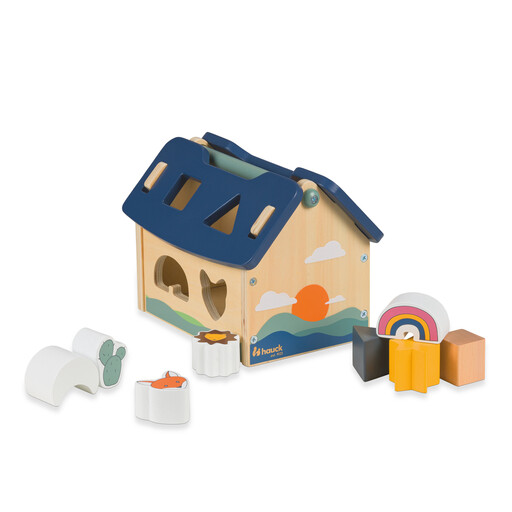
Why this product suits this profile: The shape-sorting house focuses on one clearly defined activity and does not require batteries. It is suitable for children from 12 months and can be stored neatly thanks to the storage space inside the house.
The eight shape blocks and removable roof keep the contents manageable. The warning about small parts and the minimum age of 12 months are clearly stated.
FSC-certified wood according to the product description, eight building blocks and integrated storage space.
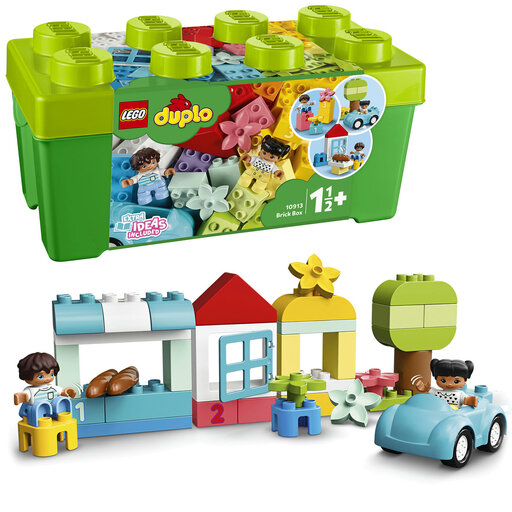
Why this product suits this profile: The box contains 65 pieces, including large building blocks, figures, a vehicle and number blocks. According to the product details, it is intended for children from 18 months.
The set focuses on large, easy-to-grasp building blocks and a storage box. This makes the play materials easy to keep track of after playtime.
65 pieces, two figures, number blocks and a box with lid according to the product description.
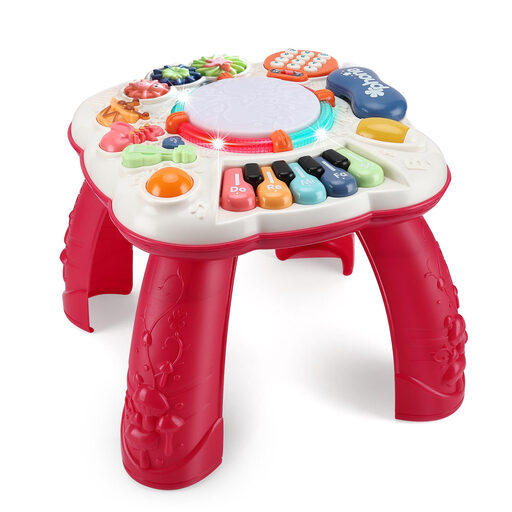
Why this product suits this profile: The table combines six play areas, including piano keys, a drum, gears and a telephone. Removable legs allow it to be used as a floor play board or standing table.
According to the product details, the volume can be adjusted. Buyers should nevertheless check the noise level in everyday use and plan for the batteries separately.
Six play zones, ABS plastic, rounded edges and suitability from 6 to 36 months according to the listing.
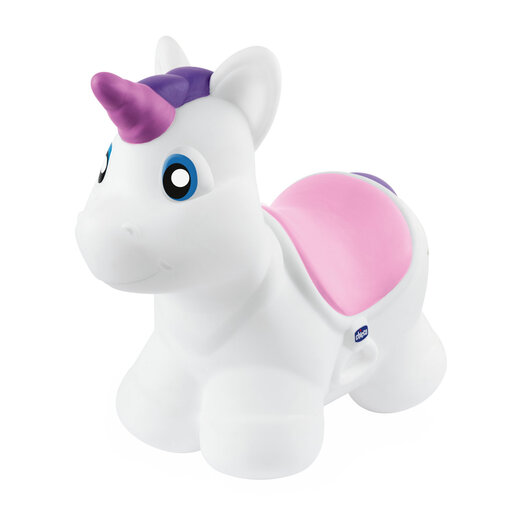
Why this product suits this profile: According to the listing, the inflatable bouncing toy is designed for children aged 2 to 5 years and weighing up to 25 kg. It is suitable for families looking to encourage active play indoors or outdoors.
The product information states the maximum load, age range and specific warnings. Before each use, check the air pressure, surface and valve.
Ergonomic seat, integrated handles, pump included and PVC material according to the product description.
For vehicles with light and sound functions, consider the Vtech Tut Tut Baby Flitzer Fire Truck or the VTech Tut Tut Baby Racer. According to the product details, both models are suitable from 1 year and compatible with other Tut Tut Baby Flitzer playsets. For creative building from around 18 months, LEGO DUPLO Classic 10413 or LEGO DUPLO My First 10474 Creative Vehicles are good options. For babies from 3 months, the roba Montessori Baby Play Arch, measuring 52 cm in height, is one possible choice, provided it is used on a flat surface and under supervision.
We have put together a complete, regularly updated list of products that fully meet these strict selection criteria and the safety regulations applicable in the EU.
From 1 year, large, easy-to-grasp parts, simple sorting games, vehicles and first building blocks for toddlers are common choices. The key factors are the specific age recommendation, the warning about small parts and whether the toy can be used under supervision.
Lifespan depends on the materials, workmanship and how the toy is used. Plastic parts should be checked for cracks and sharp edges, while wooden toys should be inspected for splinters or loose components. For battery-operated toys, the battery compartment and contacts should be checked regularly.
Ongoing costs mainly come from batteries. Before buying, check the battery type and what is included. An automatic switch-off function and volume control can make everyday use more convenient.