
Lieferung heute & morgen

Qualitätsgarantie

Willkommens-Angebote freischalten: KOSTENLOSE Lieferung | Bis zu 80 % RABATT | Kostenlose 30-Tage-JoyPlus-Testphase
App herunterladen
Baby and toddler toys should keep children occupied, encourage their first skills and remain practical for everyday family life. However, product descriptions often make broad promises such as “multifunctional”, “supports development” or “for several age groups”. What really matters are specific details such as the recommended age, materials, volume control, stability and cleaning requirements.
A toy with lots of buttons, melodies and activities may seem versatile at first glance. For a baby, however, it can be overwhelming, while an older toddler may quickly lose interest in certain functions. So check whether the ways of playing suit the child’s stage of development and interests.
An activity cube for babies or a baby activity table can combine several activities. The important question is whether each element can also be used easily and purposefully.
“For babies and toddlers” is not enough information. A toy with small shapes or detachable parts may be unsuitable for children under three. Check the specific age recommendation, warnings and information about small parts that could be swallowed.
For baby toys from 6 months, large, easy-to-grip elements are usually suitable. Learning toys for toddlers from one year old may include more challenging sorting, turning or inserting activities, provided this is covered by the age recommendation.
Musical toys for children can quickly become persistently loud in the home. A volume control or quiet mode is therefore important in everyday use, particularly in flats or during shared playtime. You should also check the battery compartment, battery type and switch-off function. For battery-powered products, regular checks for damage are advisable.
The recommended age is an important guide, but it does not replace the parents’ own judgement. A baby who is learning to crawl needs different stimuli from a three-year-old engaged in role play. When choosing motor skills toys for babies, easily accessible buttons, sufficiently large parts and a stable construction are particularly important.
For products involving more movement, such as a bouncing toy, you should also consider the child’s weight, seat height and surroundings. Stairs, thresholds and smooth floors can increase the risk of accidents.
Look for information about the main material and smooth finishing. Product details may mention ABS plastic, BPA-free materials or wood from FSC-certified forests, for example. Such information should appear directly in the product description or safety information.
The CE mark indicates that the supplier has declared compliance with the relevant EU requirements. EN 71 refers to European toy safety standards. Neither is a substitute for your own checks: before every use, check whether any parts are loose, broken or sharp-edged.
A compact toy is easier to fit in your luggage, while a baby activity table offers more space for play but requires a permanent place in your home. For electronic products, check whether batteries are included, how many are needed and whether the device can be cleaned with a damp cloth.
The following points are also useful for everyday use:

Why this product suits this profile: According to the product information, this compact motor skills cube combines several play options in a 23 × 23 × 24 cm space and is suitable for children aged 1 to 3.
The age recommendation is clearly stated. The product description also specifies rounded edges and no loose parts. Nevertheless, the actual condition should be checked before use.
Several modes, including piano, gears, telephone and music, in one portable cube; ABS and BPA-free materials stated by the supplier.
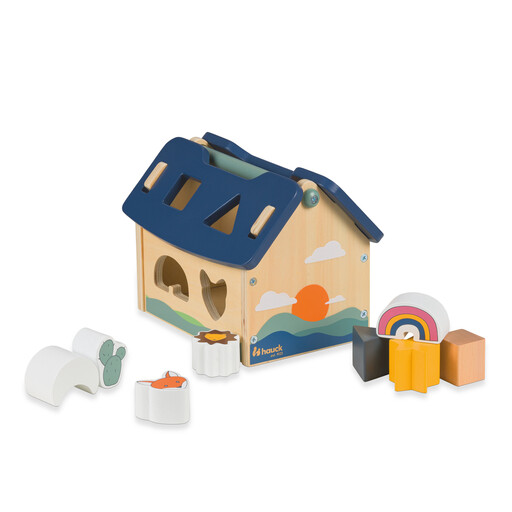
Why this product suits this profile: According to the supplier, this shape-sorting house is intended for children from 12 months and uses FSC-certified wood, with eight shapes to match.
The warning about small parts is stated explicitly. According to the product information, the toy is not intended for children under 12 months; damaged or loose parts must be removed.
Wooden construction with a carry handle and storage space inside the playhouse; matching shapes and colours is a clearly described play activity.
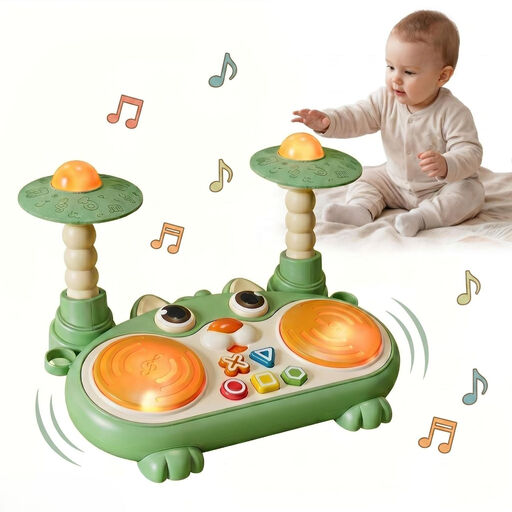
Why this product suits this profile: The combination of drum surfaces, lights, animal sounds and shape sorting is designed for short, repeatable play sessions from 6 months.
The product description states that it has a stable, non-slip base and rounded edges. As batteries are not included, check the correct batteries and the compartment before first use.
Several sensory play stimuli in one device; shape and colour buttons complement the musical functions.
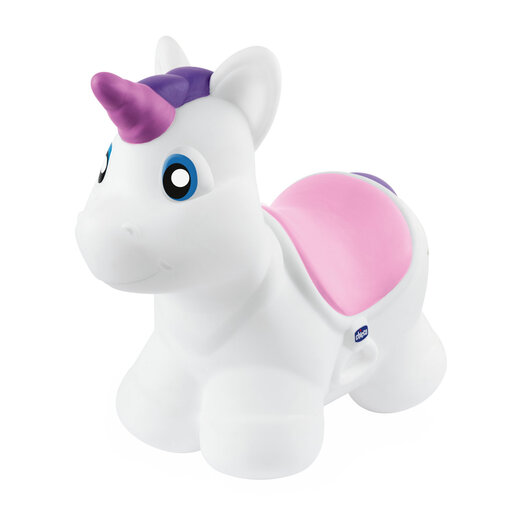
Why this product suits this profile: According to the product information, this inflatable bouncing toy is suitable for children aged 2 to 5 and weighing up to 25 kg, and can be used indoors and outdoors.
The age and weight limits, along with warnings about stairs, roads and water, are specified. Before every use, check the air pressure, surface, valve and any possible damage.
Ergonomic seat with integrated handles; hand pump included and PVC material stated in the product information.
We have put together a complete, regularly updated list of products that fully meet these strict selection criteria and the safety regulations applicable in the EU.
Terms such as Montessori toys or early development toys do not automatically describe a proven educational method. What matters is the activities actually offered: gripping, pressing, sorting, moving, listening and shared role play.
Products with large, easily accessible elements may be suitable, such as simple gripping and tactile toys, a sensory play cube or a baby musical drum with a clear age recommendation. Small detachable parts should be avoided. Always use the product in accordance with the manufacturer’s instructions.
Their lifespan depends on the material, build quality, intensity of use and storage. Electronic products require new batteries regularly; with wooden toys, check the screws, edges and joints. Damaged parts should no longer be used.
Battery-powered musical toys involve recurring battery costs. An automatic switch-off function, volume control and an energy-saving play mode can reduce consumption in everyday use. Before buying, it is worth checking the battery type, what is included and how accessible the battery compartment is.