
Lieferung heute & morgen

Qualitätsgarantie

Willkommens-Angebote freischalten: KOSTENLOSE Lieferung | Bis zu 80 % RABATT | Kostenlose 30-Tage-JoyPlus-Testphase
App herunterladen
The range of baby and toddler toys stretches from simple grasping rings to electronic soft toys, bath toys and creative DIY sets. It's precisely this huge variety that makes buying so tricky. A product might look appealing, but due to an unclear age recommendation, hard-to-clean parts or unsuitable small components, it can prove impractical in everyday use.
As Joybuy's Product Recommendation Officer, I've filtered the most important buying criteria and matched them to real-life situations. This makes it easier to judge whether a toy is suitable for a baby from 1 month, a child from 12 months, or an older child from 4 years.
Lights, music and lots of colours look convincing in product images. What really matters, however, is whether the operation and components match the child's developmental stage. A toy with small detachable parts isn't suitable for younger babies, even if it's marketed as "educationally valuable".
Always check the manufacturer's specific age recommendation. "Toy from 1 month", "toy from 3 months" and "toy from 12 months" are not interchangeable labels. With bath toys, you also need to remember that water always requires constant supervision.
Bath toys for babies regularly come into contact with water, soap and possible residue. Toys with hollow cavities can be difficult to dry. With soft toys that have lights and music, it's also important to know whether the electronic module can be removed before washing.
A good practical criterion, therefore, isn't just the material, but also the cleaning method. Washable fabric covers, smooth surfaces and dry storage all make hygienic care much easier.
Labels like "sensory", "magical" or "development-boosting" don't automatically describe a specific play value. What's more meaningful are clear, understandable features: different fabric textures, rattle or crinkle elements, grasping opportunities, stackable cups or a controlled water flow.
With sensory baby toys, parents should therefore check which stimuli are actually offered and whether the volume, size and material composition are suitable for the child.
The minimum age should match the manufacturer's recommendation. Also check:
For babies from 1 month, soft, easy-to-grasp elements with different surfaces can be suitable. From 3 months, many children become increasingly interested in moving objects, sounds and rolling items. Motor skills toys for children from 12 months can already encourage more complex actions like pouring, stacking or sorting.
With plastic toys, information about the material, care instructions and intended use is helpful. The European standard series EN 71 covers various safety aspects of toys. However, it's no substitute for reading the specific product labelling and warning notices.
Look out for:
According to product information, the Chicco Baby Bear Pink is BPA-free and tested for chemical migration in line with EN 71-3. Such claims should always be understood as the respective manufacturer's statement and cross-checked against the information on the packaging and product page.
Electronic toys often need batteries. Check whether these are included, how the battery compartment is secured, and whether the batteries should be removed during long periods of non-use. With a soft toy that has lights and music, the electronic unit should be completely removed before cleaning.
Bath toys and sand and water toys should be rinsed after use, dried thoroughly and stored in a dry place. For products with gels, powders or multiple shapes, sealable storage is also important.
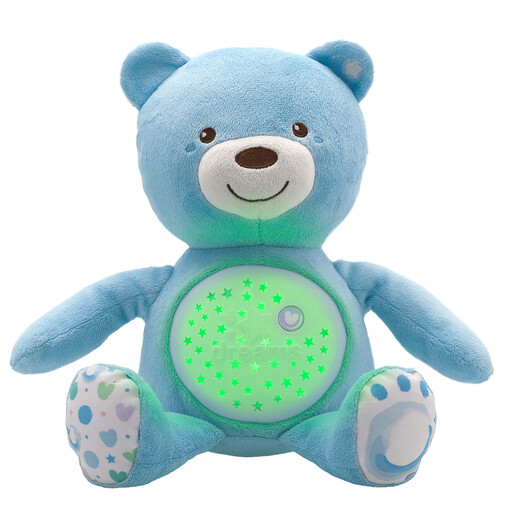
Why this product fits the profile: According to product information, this soft bear is designed for children from 1 month to 3 years and combines three light effects with 30 minutes of melodies and nature sounds.
The electronic module can be removed before washing. The age recommendation and warning about small parts should still be observed.
Three light modes, removable electronic compartment and machine-washable plush cover; requires 3 AAA batteries, which are not included.
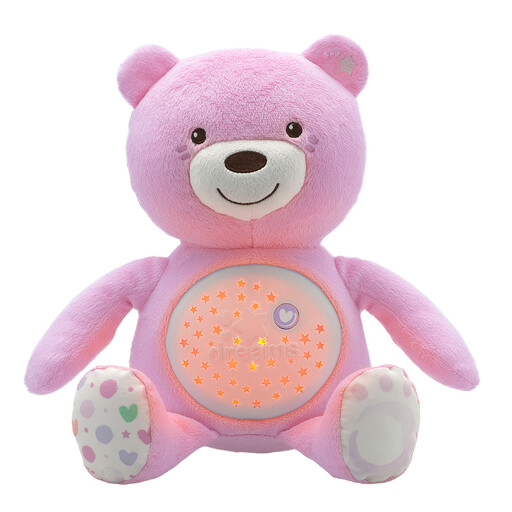
Why this product fits the profile: For families who value documented material and care information, this model offers details on BPA-free material, EN 71-3 and three light functions.
The cover is washable at 30 °C on a gentle cycle, provided the electronic module is removed first. This reduces everyday care effort.
Material and care information provided, 30 minutes of music and 3 x AAA battery operation; rated for 1 month to 3 years.

Why this product fits the profile: This model is designed for the sandpit, garden, bath and indoor areas, and according to product information is suitable for 12 months to 6 years.
The intended use is clearly described: water or fine sand flows through the funnel, turtle wheel, seesaw and sun wheels. Thorough cleaning is required after use.
Wide base feet, 100% plastic according to product information and versatile use with water or fine sand.
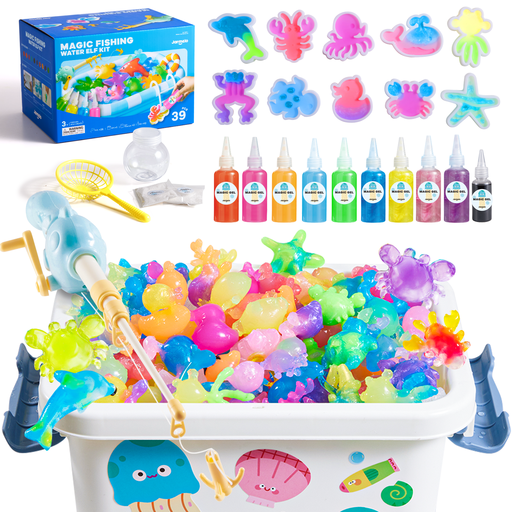
Why this product fits the profile: According to the manufacturer, this set is aimed at children aged 4 to 8 and combines shapes, colours, water figures and a fishing game.
The age limit and the necessary instructions reduce misuse. Gels and powders must be stored sealed, dry and out of reach of younger children.
More than 30 components, ten shapes, several types of gel and various play options for shared creative play.
We've put together a complete, regularly updated list of products that fully meet these strict selection criteria and the safety regulations in force in the EU.
Products that are easy to grasp and don't contain any loose, accessible small parts are suitable. One example is the Fisher-Price WaterMates Duck Ball, which according to product information is designed for 3 months to 3 years. When using it in water, remember: only use in shallow water and under constant supervision. The Chicco Musical Ball can also support sensory exploration through different fabrics, sounds and a grasping opportunity; the specific warning labelling should be checked before purchase.
That depends on the age recommendation, material and condition. The Bluey Family Pourers Bath Toy is designed for children from 18 months according to product information. The four stackable figures can be used in the bath, garden, paddling pool or at the beach. Bath toys should be regularly checked for cracks, wear and areas that are difficult to dry. After bath time, all parts must be removed before the water drains away.
Ongoing costs are usually limited to batteries and possibly replacement parts. The Chicco Baby Bear requires 3 AAA batteries; according to product information, these are not included with purchase. Remove batteries during long periods of non-use and only replace them according to the manufacturer's instructions. With battery-operated learning toys for toddlers, it's also worth checking the volume control and automatic shut-off function.