
Lieferung heute & morgen

Qualitätsgarantie

Willkommens-Angebote freischalten: KOSTENLOSE Lieferung | Bis zu 80 % RABATT | Kostenlose 30-Tage-JoyPlus-Testphase
App herunterladen
Baby and toddler toys should bring joy, be safe, and suit the child’s developmental stage. At the same time, the choice is vast: motor skills toys for babies, sensory toys, musical toys and Montessori toys all differ significantly in terms of age recommendation, material, care and supervision.
If you decide based only on bright colours or as many features as possible, you risk overlooking important details. Three typical buying pitfalls are particularly relevant:
The manufacturer’s age recommendation is a key starting point, but it does not replace supervision. For babies from the first month of life, soft hanging toys, grasping toys and simple materials with different textures are suitable, for example. From around six months, toys that encourage grasping, pressing, rolling or crawling become interesting.
Toys from 6 months should be easy to grip and must not contain any freely accessible small parts. For toys from 1 year, shape sorters, simple vehicles and interactive buttons can be added. For children aged two to five, movement-oriented products such as an inflatable bouncing toy are possible, provided the size, weight limit and environment are appropriate.
Look out for:
The CE marking is a legally required conformity marking for certain product groups. It is not a general quality judgement. Therefore, parents should also check the specific age recommendation, warnings and workmanship.
For baby musical toys, volume control and automatic shut-off are practical. Battery-operated products should have a child-safe battery compartment. A moving interactive baby toy needs enough clear floor space without stairs, cables or fragile objects.
Care also matters: wooden toys can often be cleaned with a damp cloth, whereas fabric hanging toys may only be wiped down superficially. Inflatable products must be checked regularly for air pressure, tears and porous areas.
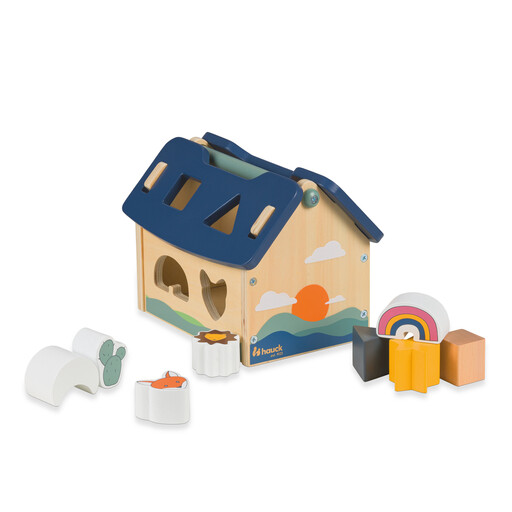
Why this product suits the profile: The shape sorter is designed for children from 12 months and combines sorting, stacking and storage in one product.
The clearly stated age limit and the eight shape elements make selection easier. Small parts still require supervision and are not suitable for children under 12 months.
FSC-certified wood according to the product description, removable roof and carrying handle.
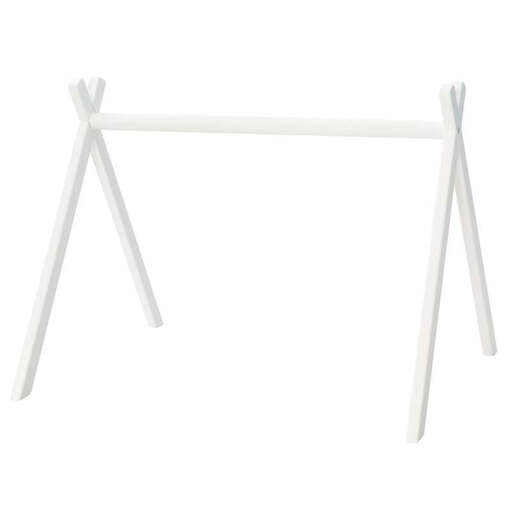
Why this product suits the profile: The sturdy play arch is designed for babies from three months and offers opportunities for grasping, touching and observing.
The construction is designed for a level, stable surface. Fastenings and parts must be checked for damage before each use.
Varnished wood, wipe-clean surfaces and dimensions of approximately 52 × 70 × 50.5 cm.
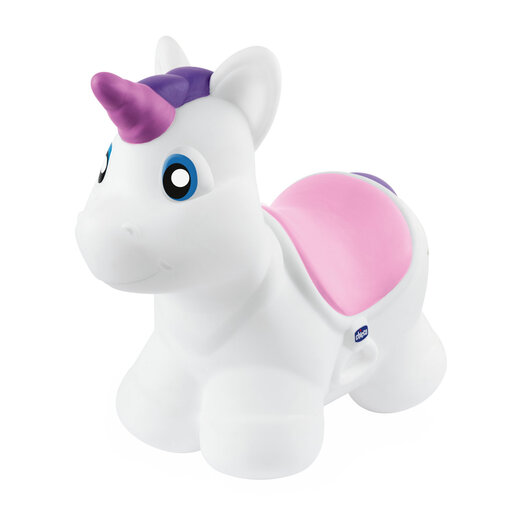
Why this product suits the profile: The inflatable ride-on is aimed at children aged two to five and is suitable for active play times indoors or outdoors.
The pump and weight limit of up to 25 kg are specified. The valve must be completely closed; stairs, roads and swimming pools are excluded as play environments.
Ergonomic seat, integrated grab handles and compact dimensions of approximately 50 × 45 × 25 cm.
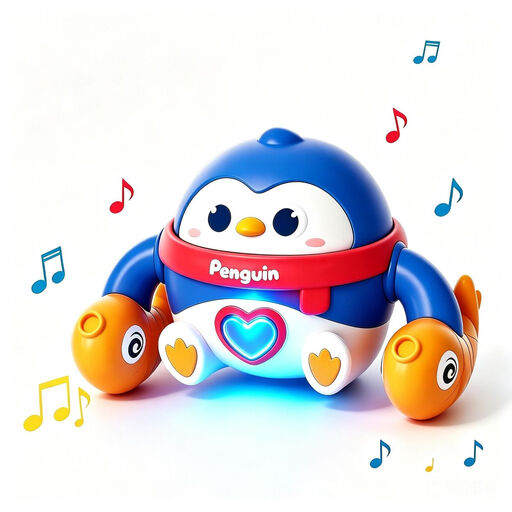
Why this product suits the profile: The rolling toy combines movement, light and music and is intended for 6 to 36 months according to the product information.
The manufacturer states rounded edges and ABS plastic. Batteries are not included; the housing, sensor and battery compartment should be checked before use.
360-degree rolling motion, glowing heart and motion sensor for interactive play.
We have put together a complete, regularly updated list of products that fully meet these strict selection criteria and the safety regulations in force in the EU.
From six months, grasping toys, simple shape and button functions, rolling balls and sensory products with different textures are all suitable. What matters is the right size, rounded edges and continuous adult supervision.
The length of use depends on the material, workmanship, care and the child’s developmental stage. A toy with several ways to play can remain interesting for longer. However, the age limit and the condition of the product are decisive. Damaged parts should be removed or replaced immediately.
Look for volume control, automatic shut-off and a child-safe battery compartment. Musical toys should not be used continuously close to the ear. If there is visible damage to the housing or battery compartment, the toy should no longer be used.