
Lieferung heute & morgen

Qualitätsgarantie

Willkommens-Angebote freischalten: KOSTENLOSE Lieferung | Bis zu 80 % RABATT | Kostenlose 30-Tage-JoyPlus-Testphase
App herunterladen
The range of baby and toddler toys is extensive: baby motor-skills toys, sensory toys, musical toys and educational toys differ not only in design, but also in recommended age, care requirements and safety standards. For parents, grandparents and other family members, it is therefore important to distinguish product claims from the features that genuinely matter.
A broad age recommendation may seem practical. However, it says little about whether a toy can be used meaningfully at every stage of development. For example, a baby activity table with detachable legs can initially be used on the floor and later as a standing table. By contrast, a toy with small moving parts may be unsuitable for younger children, even if it looks like a baby toy in product images.
Important: The age recommendation and safety information on the product page or packaging must always be considered together.
Lights, melodies, sounds and different play modes do not automatically provide educational value. For babies, a straightforward toy with a clear cause-and-effect relationship may be more suitable than a product with numerous buttons and stimuli. With electronic toys, you should also check the volume control, battery compartment and automatic switch-off function.
Children’s bath toys are exposed to water, soap residue and moisture. Models with difficult-to-access cavities may dry only slowly after play. With musical soft toys, electronic vehicles and toys with lights, cleaning, battery replacement and regular checks are also part of using the product.
For children under three, small parts are an important point to check. According to the product information, the Dinosaur Pull-Back Car Toys Set is intended for children aged 2 to 6, but carries the warning “Not suitable for children under 36 months” due to a possible choking hazard. Such information takes priority over a general description of the target age group.
With dinosaur toys, vehicle toys and sorting games, you should also check that wheels, figures, connecting pieces and fastenings are securely attached. Damaged or loose parts should no longer be given to children.
For plastic toys, rounded edges, a smooth surface and a stable base are practical selection criteria. Information such as BPA-free or CE marking can provide useful guidance, but does not replace an individual check before every use. A CE mark is also not an independent quality assessment; it relates to the applicable EU requirements.
With an activity table or drum kit, stability and resistance to tipping are also important. For a bouncing toy such as the Chicco Bouncing Unicorn, the surface, child’s weight, grip position and required supervision are particularly relevant.
Electronic learning toys for toddlers usually require batteries. Before buying, check whether batteries are included, how many are needed and whether the toy can be switched off completely. The product information for the VTech Tut Tut Baby Flitzer Fire Truck states that two AAA batteries are required and included. By contrast, the children’s drum kit with microphone requires batteries which, according to the description, are not included.
A volume control is useful in everyday life at home, during shared playtime or in quiet periods. However, it should not encourage children to play directly next to the speaker for long periods.

Why this product suits this profile: According to the product description, the lightweight ball is suitable for children from 3 months and can be used on play mats, in a playpen or, under certain conditions, in shallow bath water.
It does not rely on electronic functions. The ball and its inner filling must be checked for damage before every use.
Lightweight design, transparent ball with a duck figure and possible use in a range of play environments.
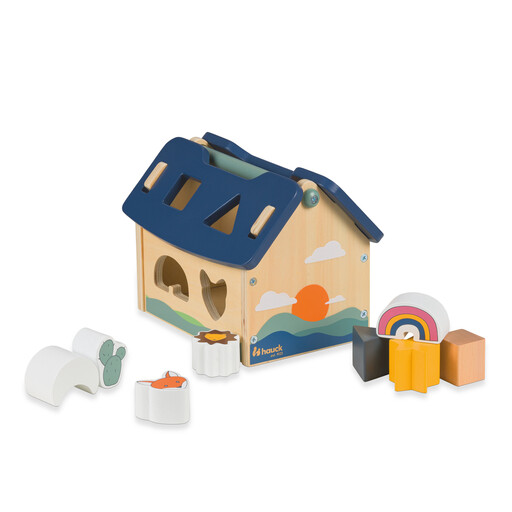
Why this product suits this profile: According to the product information, the FSC-certified wooden sorting house is suitable for children from 12 months and combines storage with shape and colour matching.
The age limit and warning about small parts are clearly stated. Damaged, splintered or loose wooden pieces must be removed immediately.
Eight building blocks, a removable roof and a carry handle; the pieces can be stored inside the house.
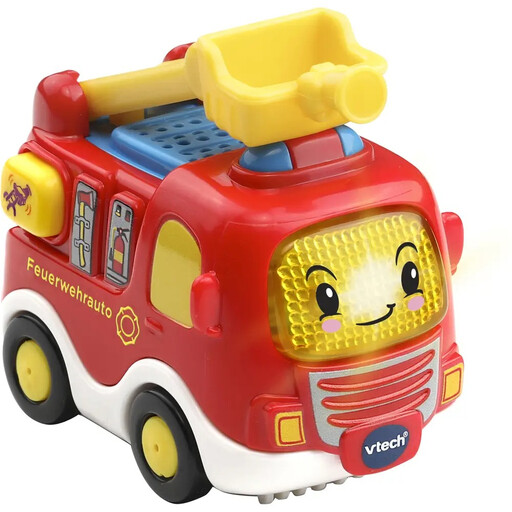
Why this product suits this profile: According to the product description, the vehicle is designed for children from 1 year and is aimed at families who want to combine musical toys with moving play elements.
According to the description, the battery compartment and power supply are clearly specified. The toy should be kept dry and checked regularly for wear.
Moving fire engine ladder, light and sound effects, plus compatibility with other Tut-Tut Baby Flitzer playsets.
A suitable gift for babies and toddlers should therefore be chosen based on more than just colour or design. Developmental stage, available space, volume, cleaning requirements and the ability to supervise the toy safely are all important considerations.
We have put together a complete, regularly updated list of products that fully meet these strict selection criteria and the safety regulations applicable in the EU.
Lightweight, easy-to-grasp and sturdy products without detachable small parts are generally suitable. Before use, check the seams, surfaces, fillings and moving parts. With bath toys, constant supervision in shallow water is also required.
This depends on the child’s developmental stage and the way the toy works. Sorting and construction toys can be used for longer when new tasks increase the level of difficulty. Electronic toys often remain versatile when they offer several modes and adjustable volume. However, this does not guarantee a specific period of use.
Battery-operated toys incur ongoing costs for replacement batteries. Before buying, check the battery type, quantity and whether they are included. An automatic switch-off function or an easily accessible on/off switch can reduce consumption in everyday use. Batteries should be replaced out of children’s reach and stored safely in the closed battery compartment.