
Lieferung heute & morgen

Qualitätsgarantie

Willkommens-Angebote freischalten: KOSTENLOSE Lieferung | Bis zu 80 % RABATT | Kostenlose 30-Tage-JoyPlus-Testphase
App herunterladen
Baby and toddler toys should keep children occupied, encourage them to grasp and explore, and suit their stage of development. At the same time, parents face a huge amount of choice: baby motor skills toys, sensory toys, children’s musical toys and Montessori toys can differ considerably in recommended age, materials, noise level and space requirements.
Three common purchasing misconceptions can lead to unsuitable purchases:
For baby toys for 6 to 12 months, the focus is usually on grasping, touching, pushing, rolling and visually tracking objects. For children aged 1 and over, sorting games, simple insertion elements, activity toys and vehicles are also suitable. From around the age of 2, role-play toys, instruments and movement-focused products can be added.
The label “from 1 year” is a safety and usage recommendation, not a promise of developmental progress. A toy designed to support fine motor skills should be made so that the child can explore its main function independently with a manageable amount of effort.
Look for:
The CE marking is not a quality seal or an independent product test. It indicates that the supplier has taken the applicable EU requirements into account. For products with batteries, parents should also check that the battery compartment is securely covered and that the batteries can be disposed of correctly.
Children’s musical toys can be used at home, in the car or when out and about. A volume control is therefore practical, particularly in flats or during quiet periods. For electronic baby activity toys, you should also check the batteries or rechargeable power supply, automatic shut-off and cleaning options.
The dimensions also matter: a compact product is easier to store and transport. A walker, activity table or bouncy toy, on the other hand, needs plenty of clear floor space and a stable environment.
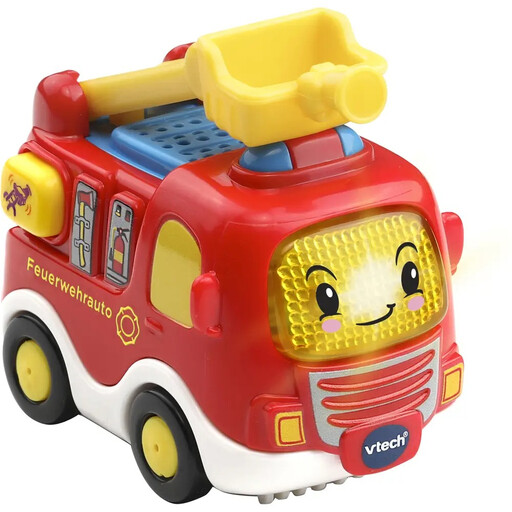
Why this product suits the profile: This compact vehicle is designed for children aged 1 and over and can be operated by pushing and pressing. It is suitable for families looking for a straightforward electronic baby motor skills toy.
The product information specifies the age range, battery type, dimensions and warnings. This makes it easier to assess the size, power supply and suitability before buying.
Three songs, six melodies, a movable ladder and compatibility with Tut-Tut-Baby-Flitzer play worlds, according to the product description.
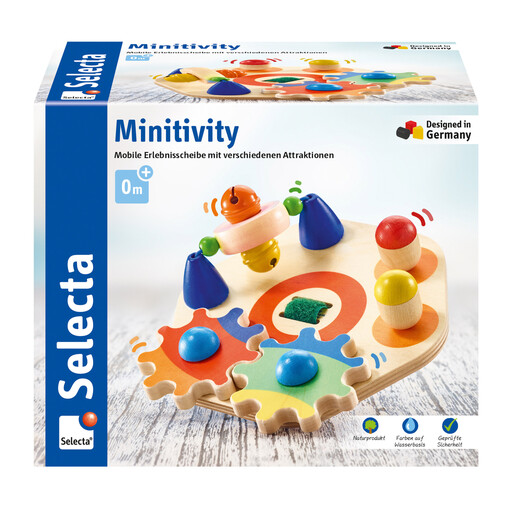
Why this product suits the profile: Made in Germany, this wooden toy focuses on three clearly defined play stations and is ideal for parents who prefer a simpler, mechanical activity toy.
It requires no batteries and makes no electronic sounds. The product description specifies natural wood, a size of 14 cm and hook-and-loop fastenings for a cot, playpen or buggy.
A gear spinner, movable elements and a bell spinner offer a variety of manual activities in a compact format.

Why this product suits the profile: The activity cube combines eight types of play in one format and is suitable for families looking for toddler learning toys with a range of ways to interact.
The age range of 1–3 years, dimensions of 23 × 23 × 24 cm and rounded edges are clearly specified in the product information.
A piano, guitar, telephone, gears and other controls cover grasping, turning, pressing and role play.
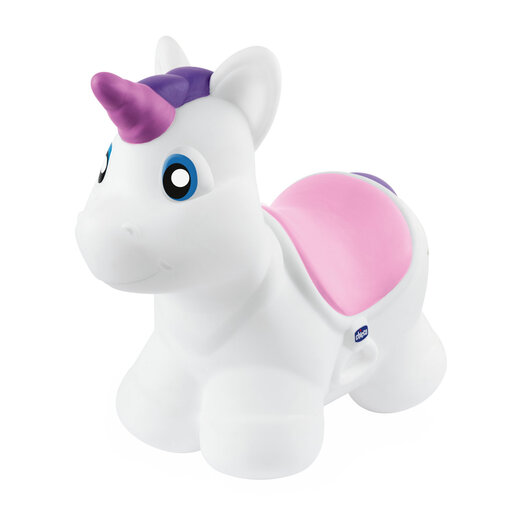
Why this product suits the profile: This inflatable bouncing toy is designed for children aged 2 to 5 and requires a safe, clear play area indoors or outdoors.
The instructions specify the weight limit, supervision requirements, potential fall zones and the need to check regularly for cracks or loss of air.
An ergonomic seat, integrated handles and a supplied hand pump; BPA- and phthalate-free, according to the product information.
We have put together a complete, regularly updated list of products that fully meet these strict selection criteria and the safety regulations applicable in the EU.
Even carefully selected baby and toddler toys require regular checks. Wipe plastic surfaces with a damp cloth as instructed by the manufacturer, and check moving parts, seams, screws and battery compartments for signs of wear. Wooden toys should not be stored in damp conditions for extended periods.
For electronic toys, ongoing costs mainly arise from batteries. Products powered by two AAA batteries are straightforward to use, but should be switched off during longer breaks or have their batteries removed. Rechargeable devices should be charged using the supplied cable and kept away from children while charging.
Suitable options may include simple sorting and insertion games, push-along and pull-along toys, activity cubes and vehicles with large, easy-to-grasp controls. Always check the specific age recommendation and warnings for the product in question.
This depends on the age range and complexity. Products with several play stations can remain interesting for longer when individual functions are introduced in line with the child’s stage of development. Toys should no longer be used if they show visible wear, have loose parts or feature damaged battery compartments.
A volume control, sturdy construction, a secure battery compartment and a clear age recommendation are important. Toddlers should be supervised during use, particularly if the toy contains microphones, cables, batteries or detachable parts.