
Lieferung heute & morgen

Qualitätsgarantie

Willkommens-Angebote freischalten: KOSTENLOSE Lieferung | Bis zu 80 % RABATT | Kostenlose 30-Tage-JoyPlus-Testphase
App herunterladen
Baby and toddler toys should spark curiosity, fit comfortably in little hands and suit the child’s stage of development. At the same time, the choice can be overwhelming: glowing buttons, music, numerous functions and terms such as “Montessori” may sound appealing, but on their own they reveal little about how practical a toy will be in everyday life. As a Joybuy Product Recommendation Officer, I filter the relevant information and show parents, grandparents and family members what to look for when buying.
A toy with a piano, telephone, gears, lights and several melodies may sound versatile. What matters, however, is whether the child can operate the functions independently and whether they are suitable for their age. For very young babies, too many stimuli can quickly become overwhelming. For a child aged 1 and over, an activity cube can be interesting if individual switches, rotating parts and buttons are easy to reach.
“For babies and toddlers” is not enough guidance when choosing a toy. Toys from 6 months must meet different requirements from a shape sorter for children aged 1 and over. Small parts, magnets and marbles should be kept out of reach of children under 3 years old. An age recommendation is therefore not just an educational suggestion, but an important safety and usability parameter.
Rounded edges, a stable construction and an easy-to-clean surface are important for everyday use. Teething toys and grasping toys also involve direct contact with the mouth. Information such as BPA-free ABS or silicone should come from the product description, not just from advertising slogans. Parents should also check that warnings, manufacturer details and responsible contact points for the EU market are provided.
For babies from around 6 months, grasping toys, teething toys, soft balls and simple sensory elements are suitable. One example is a grasping toy with different textures. The child can hold and turn it and, according to the manufacturer’s information, use it while teething. Use should be supervised.
From 1 year onwards, motor-skills toys, simple wooden puzzles and shape sorters become more interesting. Fitting, turning and matching pieces playfully support hand–eye coordination. With Montessori toys, it is important to focus objectively on the specific activity: Does the child sort, insert, grasp, or explore cause and effect? The term alone is not proof of quality.
Check the following before buying:
Magnetic components require particular care. According to the product information, the magnetic construction toy available in the range is suitable only from 3 years and contains strong magnets. It is therefore not a suitable choice for babies and younger toddlers.
Electronic learning toys for babies and musical toys for toddlers should have adjustable volume or an option to switch them off. An activity table also requires sufficient floor space and should stand securely on a suitable surface. Compact cubes, balls or grasping toys may be more practical for smaller homes or travelling.
Also pay attention to the power supply: batteries are not included with several products. With fabric toys, a removable battery unit is useful if the textile element needs to be cleaned.
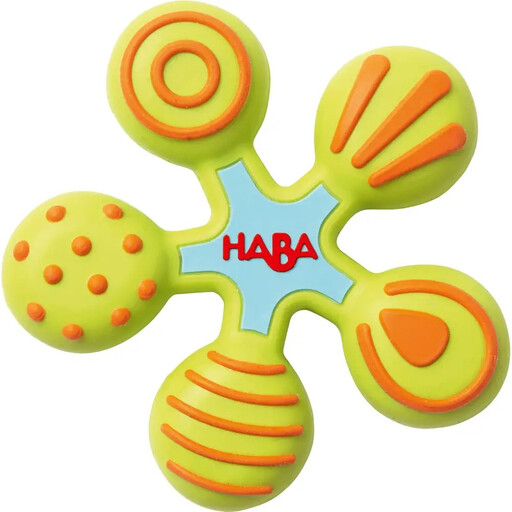
Why this product suits the profile: According to the product information, this compact grasping toy is suitable from 6 months and requires no batteries. Different textures and the stated dishwasher-safe design make everyday use easier.
The age recommendation and specific care instructions are clearly stated. Nevertheless, the recommended supervision should be followed during use.
Silicone material, approximately 8 × 8 cm and dishwasher-safe according to the description.
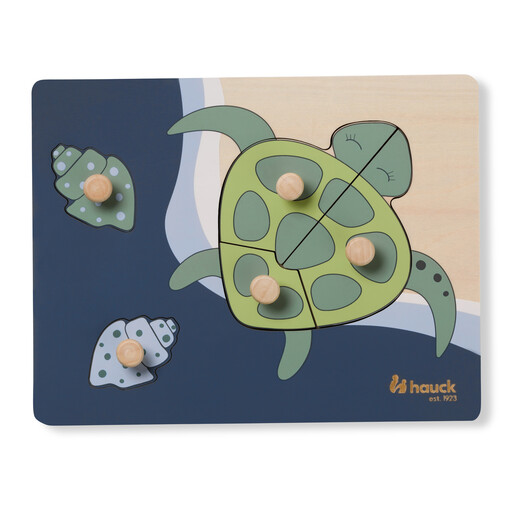
Why this product suits the profile: According to the manufacturer, this wooden puzzle is intended for children from 12 months and is made from FSC-certified wood. The knobs on the pieces make them easier to grasp.
The manageable number of pieces helps reduce sensory overload. The age limit and guidance on direct supervision should be followed.
22 × 17 cm, rounded design and shape puzzle with an animal motif.

Why this product suits the profile: According to the product description, this activity cube combines eight play areas in a compact 23 × 23 × 24 cm design. The piano, guitar, telephone, gears and other controls suit families looking for several activities in one compact product.
The functions are arranged on one sturdy cube rather than being spread across numerous separate parts. According to the information provided, it is intended for ages 1–3 years.
BPA-free ABS according to the product information, rounded edges, carry handle and several manual and electronic activities.
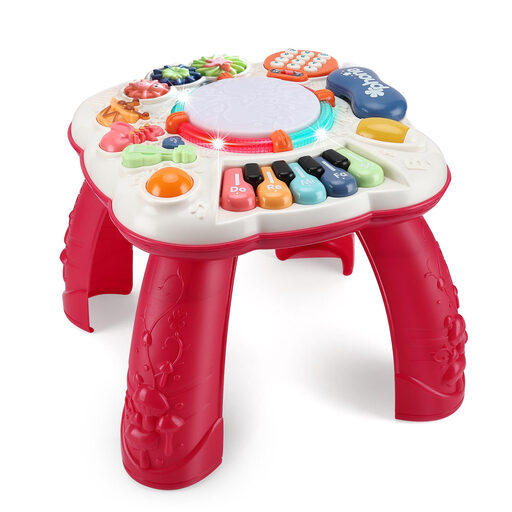
Why this product suits the profile: According to the product description, the removable legs allow it to be used first as a floor play panel and later as a table. This makes the model suitable for families who want to combine different play positions.
The product description lists six play areas, volume control and a quiet mode. Before buying, check the space required, batteries and stability.
Two ways to use it, piano keys, drum, gears and telephone function; batteries not included according to the information provided.
We have put together a complete, regularly updated list of products that fully meet these strict selection criteria and the safety regulations applicable in the EU.
From 6 months, grasping toys, teething toys, soft balls and simple sensory elements are suitable options. The key factors are an appropriate age recommendation, no small parts that could be swallowed and supervised use. Electronic toys should not be operated continuously at high volume.
This depends on the recommended age range and the specific functions. A cube labelled for ages 1–3 years can remain interesting for a longer period if the way it is used develops with the child. An activity table with removable legs can cover different stages of development through floor play and standing play.
Products with a clear age recommendation, easy-to-understand safety information and a manageable range of functions make suitable gifts. For babies, grasping and tactile features are often more appropriate than small components. For children from 1 year, shape sorters, wooden puzzles or a motor-skills toy can be suitable choices. Before giving the gift, check the packaging, warnings and contents.