
Lieferung heute & morgen

Qualitätsgarantie

Willkommens-Angebote freischalten: KOSTENLOSE Lieferung | Bis zu 80 % RABATT | Kostenlose 30-Tage-JoyPlus-Testphase
App herunterladen
Baby toys should spark curiosity, encourage movement, and work reliably in everyday family life. At the same time, parents, grandparents, and gift-givers are faced with plenty of promises: “supports development”, “safe from birth”, or “suitable for multiple age groups”. Without precise product details, these claims aren’t very meaningful.
What really matters are clear, verifiable criteria such as age recommendation, materials, build quality, volume control, cleaning options, and design. This buying guide shows what families in Germany should look for when choosing baby toys for children from 6 months up to three years old.
A toy labelled “6 to 36 months” may cover different developmental stages, but it won’t necessarily suit every stage equally well. A moving crawling toy is quite different from a toddler activity cube with dials and a telephone function when it comes to a baby who isn’t yet standing.
So, check the following:
Lights, music, and numerous buttons may look versatile at first glance. However, if there’s no volume control, a musical baby toy can quickly become annoying in a flat. Hard-to-reach gaps also make cleaning difficult.
For a baby activity table or sensory toy, a stable base, easily accessible controls, and a simple battery compartment are important selection points. “Multifunctional” shouldn’t automatically be taken to mean “practical for everyday use”.
Details like BPA-free ABS or silicone are useful, but they don’t replace checking edges, seams, and removable components. According to product information, several of the toys listed here have rounded edges. Before buying, you should also read the safety instructions, age rating, and care guide.
For baby toys from 6 months, easily reachable surfaces, large gripping areas, and simple cause-and-effect reactions make sense. A toy that triggers lights or sounds when touched can encourage purposeful grasping without requiring complex actions.
From around one year old, Montessori toys, activity cubes, and small musical instruments become suitable. Here, turning, pressing, sorting, and imitation take centre stage. The term “Montessori” isn’t a standard quality mark, so pay attention to the actual play activities described.
Look out for:
CE is a manufacturer’s declaration under relevant EU regulations, not an independent quality mark. With second-hand or damaged products, pay particular attention to cracks, loose parts, and damaged cables.
For musical baby toys, volume controls or a quiet mode are practical features. Batteries are also part of the cost consideration. Check whether batteries are included and how easy they are to replace.
For baby bottles and accessories, different criteria apply: bottles should be thoroughly cleaned after every use. A baby bottle set with dishwasher-safe components can reduce daily effort. With anti-colic baby bottles, parents should assess the functional description neutrally and follow the manufacturer’s usage instructions. You shouldn’t assume they will relieve discomfort.
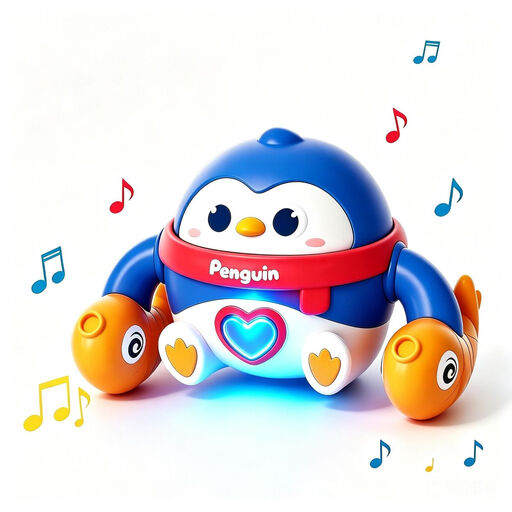
Why this product fits the profile: This moving penguin toy combines rolling, lights, music, and a motion sensor for children from 6 months according to the product information. It’s ideal for families looking for a compact crawling toy for tummy time.
The product description mentions a BPA-free ABS casing, rounded edges, and no loose parts. Batteries are not included and need to be bought separately.
360-degree rolling motion, light function, and clap or touch sensor according to product information; age range 6 to 36 months.
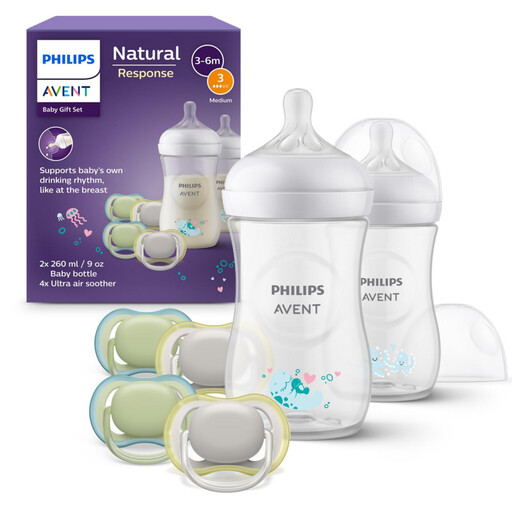
Why this product fits the profile: This set is designed for families looking for baby bottles and dummies in a coordinated package. It includes two 260 ml bottles and four Ultra-Air dummies for 0 to 6 months.
The product information states BPA-free polypropylene, dishwasher-safe components, and an age rating for the teats and dummies.
Natural Response teats with a milk flow adapted to the baby’s drinking rhythm according to the manufacturer, plus an anti-colic valve.

Why this product fits the profile: For families who use bottles frequently and on the go, this set offers multiple cleaning attachments, a soap dispenser function, a foldable drying rack, and a travel case.
The various brushes cover bottles, teats, straws, and pump parts. The product information mentions food-grade silicone and BPA-free plastic.
7-piece concept with a foldable drying rack; silicone parts are suitable for boiling according to the product description.

Why this product fits the profile: This compact toddler activity cube is designed for children aged 1 to 3 years and combines turning, pressing, buttons, music, and role play in a portable format.
The age range is narrower than for many baby products. According to the product information, the casing and controls are made from BPA-free ABS with rounded edges.
Eight described play areas, a carry handle, and a compact size of approximately 23 × 23 × 24 cm.
We’ve put together a full, regularly updated list of products that fully meet these strict selection criteria and the safety regulations in force in the EU.
From 6 months, toys that are graspable, sturdy, and easy to understand are suitable – for example, a sensory toy with light or sound reactions, a simple crawling toy, or a flat activity element. The specific age recommendation of each product remains the most important guide.
That depends on the material, build quality, and age range. A toy labelled 6 to 36 months can be used across several developmental stages if it’s regularly checked for damage and loose parts. It should be replaced when it shows signs of wear.
In addition to the purchase price, batteries can create ongoing costs. Check whether batteries are included, how many are needed, and whether the product has an automatic shut-off or a quiet mode. These details help you assess the real everyday effort.