
Lieferung heute & morgen

Qualitätsgarantie

Willkommens-Angebote freischalten: KOSTENLOSE Lieferung | Bis zu 80 % RABATT | Kostenlose 30-Tage-JoyPlus-Testphase
App herunterladen
Baby toys should keep little ones entertained, stimulate their senses and support their first movements. At the same time, choosing the right toy can be challenging: age recommendations, materials, noise levels and small parts that could be swallowed are not always immediately clear from the product image. Choosing solely based on bright colours or a long list of features can result in buying a toy that quickly becomes impractical in everyday life.
Music, lights, buttons and moving elements may seem appealing at first. For babies, however, what matters is whether they can activate the features themselves. A toy with clear cause-and-effect actions, such as pressing, turning or pulling, may be easier to understand than a product that reacts mostly automatically.
“From 6 months” or “for 6 to 36 months” provides general guidance, but not every feature is suitable for every stage of development. A baby who is just learning to grasp and press needs different features from a two-year-old who is sorting, stacking or beginning to engage in pretend play.
Smooth surfaces, sturdy connections and rounded edges are useful points to check. With toys containing small shapes, battery compartments or detachable parts, parents should also pay attention to the warnings. A CE mark alone is no substitute for checking the specific product and supervising play.
Look at the recommended age group and consider which movements the toy requires. For toys from 6 months, easily accessible pressing, turning, pulling and sliding elements are generally suitable. Motor-skills toys, a simple activity table or a sensory toy should be easy to operate without excessive force.
For children from around one year old, stacking toys, sorting games and an activity cube may be suitable options. If a product contains small parts, the warning “not suitable for children under 36 months” must not be ignored. For wooden toys such as the hauck stacking tower, the product information expressly highlights small parts and the need for supervision.
For plastic baby toys, details such as ABS, BPA-free or rounded edges are relevant product information. Even so, you should check the surface for burrs, cracks and loose parts. With textiles, it is important to know whether electronic modules can be removed before washing.
A baby play mat should be large enough for the intended area, stay securely in place and be easy to clean. EVA foam can provide a soft base; however, the mat does not protect against every fall and is no substitute for a safe environment.
With music toys for babies, volume, ease of use and power supply are important. Check whether batteries are included, how securely the battery compartment is closed and whether sounds or light effects can be switched off. For products with numerous features, you should also consider how easy it is to clean around buttons, gaps and speakers.
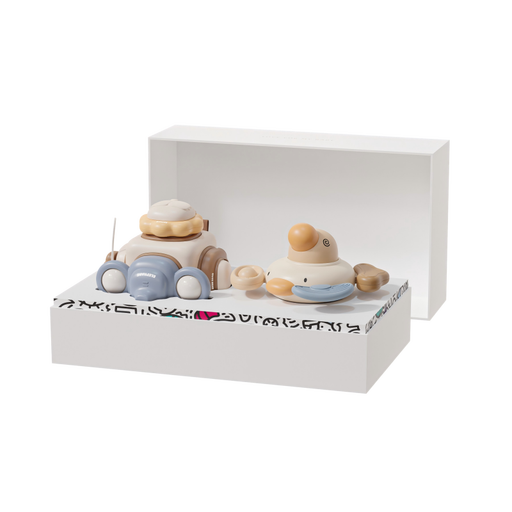
Why this product suits this profile: According to the product information, this plastic toy is suitable for babies from 6 months and combines six interactive animal functions in a compact format.
The actions are clearly identifiable on the animal figures. This means the focus is not just on an automatic effect, but on pressing, turning, pulling and sliding the elements themselves.
Approximately 12.5 × 11.5 cm or 13 × 14.1 cm; gift-box packaging; recommended for indoor use and parent-child interaction.
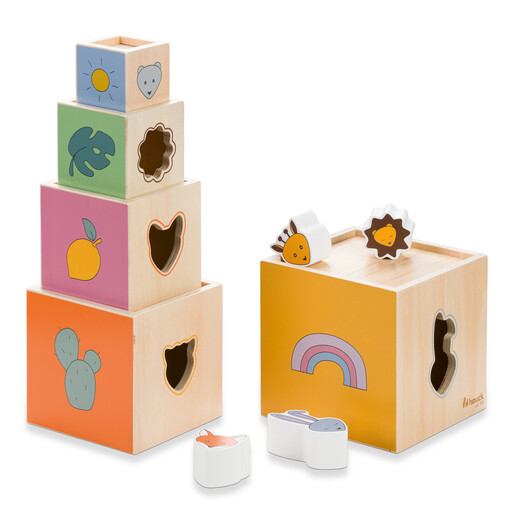
Why this product suits this profile: According to the product information, this wooden toy combines stacking, matching and sorting and is suitable from 12 months.
The functions do not rely on lights or music. Parents can directly check the construction, parts and fit before use.
FSC-certified wood according to the product description; stackable cubes; space-saving storage by nesting them together; observe the warning about small parts.
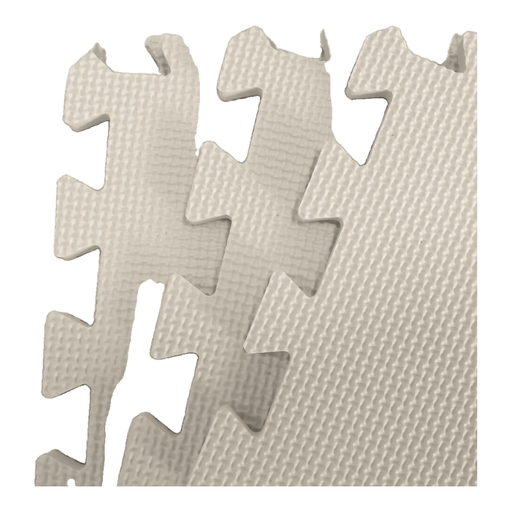
Why this product suits this profile: The six EVA foam tiles provide a defined play surface for tummy time, floor-based activities and everyday indoor play.
The interlocking system can be assembled, extended or taken apart without tools. The smooth surface can be cleaned when it becomes dirty.
Six tiles measuring 12 × 12 inches each, plus ten edge pieces according to the product information; easy interlocking design; neutral colour.

Why this product suits this profile: Designed for toddlers aged 1 to 3, the cube combines features including a piano, guitar, gears, telephone and musical elements.
Several play surfaces combine different activities, reducing the need for multiple individual products. Before buying, you should still check whether the sound features suit your home environment.
Approximate dimensions of 23 × 23 × 24 cm; carry handle; ABS plastic according to the product information; multiple grasping, turning, pressing and dialling actions.
We have put together a complete, regularly updated list of products that fully meet these strict selection criteria and the safety regulations applicable in the EU.
From 6 months, products that are easy to grasp and feature pressing, turning or pulling elements may be a good choice. A sensory toy such as the YEEHOO Royal Spin Play can offer a range of different actions. The specific age recommendation, construction quality and supervision remain essential.
How long a toy remains suitable depends on the child’s age, interests and the toy’s design. A simple grasping and pressing toy may remain relevant for several months. An activity cube with different play surfaces or a play mat may become part of everyday life for longer. Check all parts regularly and stop using any damaged toy.
Battery-powered musical toys incur additional costs when the batteries need replacing. Before buying, check whether batteries are included and whether the toy has an automatic switch-off function. According to the product information, batteries are not included with the baby musical toy described above; this should be taken into account when planning your budget.