
Lieferung heute & morgen

Qualitätsgarantie

Willkommens-Angebote freischalten: KOSTENLOSE Lieferung | Bis zu 80 % RABATT | Kostenlose 30-Tage-JoyPlus-Testphase
App herunterladen
Baby toys should provide engaging activities, stimulate the senses and suit each stage of development. However, not every colourful product leads to meaningful play. Before buying, parents, expectant parents, grandparents and other family members should pay particular attention to the recommended age, build quality, cleaning requirements and intended use.
Lights, music, sensors and numerous buttons look appealing in product photos. For babies, however, an overloaded design can be difficult to take in. A baby grasping toy with a few clear stimuli may be more suitable for everyday use than a complex baby learning toy that only holds their attention briefly.
The key question is therefore: What specific play activity is possible? Grasping, shaking, rolling, pressing, sorting and crawling encourage different types of engagement.
A toy for ages 6 months and over is not automatically suitable for a younger baby. Conversely, a product for ages 1 year and over may still be too demanding or physically active for a child who is only just learning to sit. For motor-skills toys and toddler movement toys in particular, body size, physical development and the manufacturer's instructions all matter.
Parents should also check whether the product contains small parts, battery compartments, cords or detachable elements. The recommended age does not replace supervision.
Baby toys often end up on the floor, go into your baby's mouth or accompany the family when out and about. Not every material is equally easy to clean. Textiles may need to be machine-washed, while wood should generally only be cleaned with a slightly damp cloth. With electronic musical baby toys, you should also check that the battery compartment remains securely closed.
For newborns and younger babies, lightweight products that can be reached while lying down are usually suitable. A baby activity centre or play arch should stand securely on a level surface and must not have any loosely attached parts.
From around six months, many children become more interested in rolling, sounds and cause-and-effect games. A sensory toy with different textures or a moving crawling toy can be a sensible choice at this stage. For this age group, crawling toys for babies aged 1 year and over are available as a further category.
From their first birthday, children can start to enjoy simple sorting, pushing and rolling games. A baby walker is only suitable if the child can already stand securely and the product is used on a clear, level surface.
Look for:
The CE marking is not a quality seal, but a manufacturer's declaration that certain EU requirements have been met. Some products also list standards such as EN 71. This information should be verifiable in the product description and on the packaging.
Material descriptions such as PVC, ABS plastic, wood, silicone or polyester do not, on their own, indicate whether a product is suitable. The decisive factors are the build quality, care instructions and intended purpose. Parents should regularly check teething and grasping toys for cracks, wear and loose parts.
Electronic products may require batteries. Check whether they are included, how many are needed and whether there is an automatic switch-off function. Volume control is practical in the home, particularly in flats with shared living spaces.
For larger products, the actual dimensions matter. A play arch, activity table or climbing triangle requires sufficient space and a stable surface. Movement products must not be used near stairs, doors, water or other obstacles.
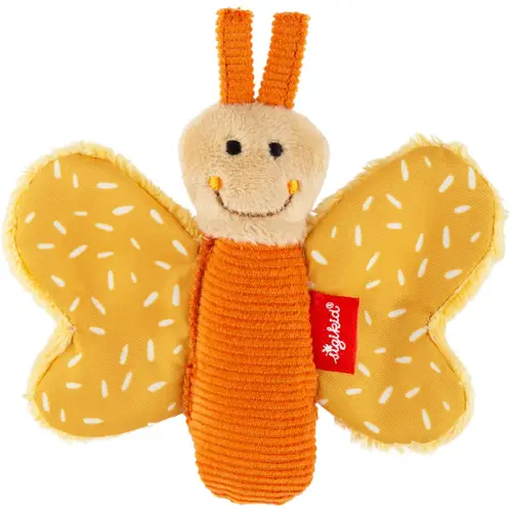
Why this product suits this profile: This lightweight fabric toy is suitable from 0 months and requires no batteries. It is an uncomplicated introduction to the world of grasping toys.
Its straightforward design avoids unnecessary electronics and ongoing battery costs. The crinkle element is securely sewn in.
A mix of fabrics with different textures; according to the product details, machine-washable at 30 °C.
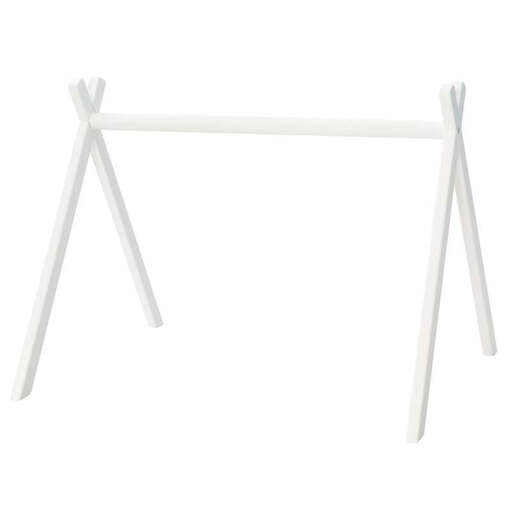
Why this product suits this profile: This painted wooden play arch is described as suitable from three months and provides a stable base for grasping and discovery.
The dimensions of 52 × 70 × 50,5 cm can be checked before buying. The construction requires a level surface, and you should check for loose or damaged parts.
Wipe-clean surface; assembly and use on a flat, stable base.
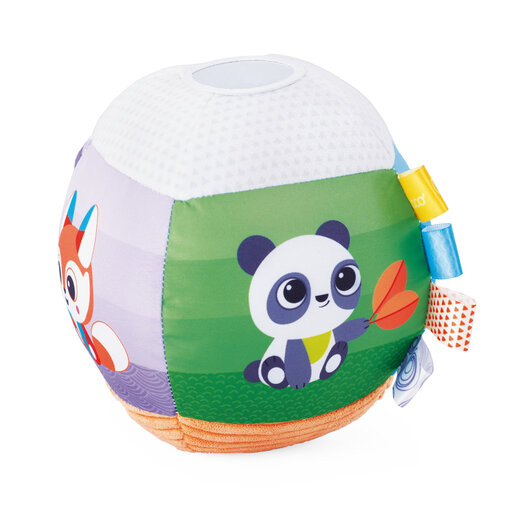
Why this product suits this profile: The combination of fabric sections, hanging elements and activated melodies is ideal for families looking for a versatile toy for floor play and crawling stages.
According to the product description, the removable battery cover makes the fabric ball easier to clean. Before buying, check the conflicting age recommendations and warnings.
Different fabric textures, hanging loops and shake activation; according to the product details, two AAA batteries are included.
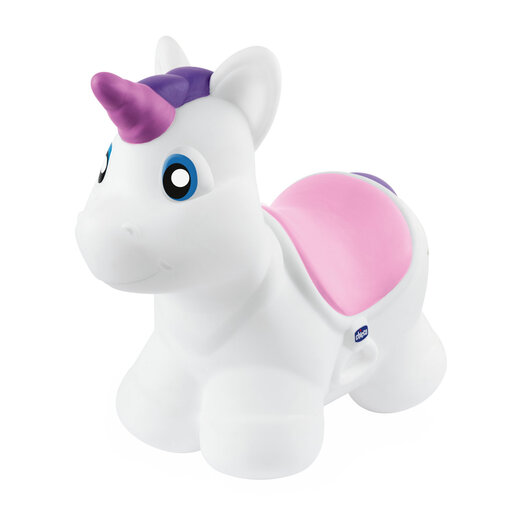
Why this product suits this profile: According to the product details, this inflatable ride-on is designed for children aged 2 to 5 years and weighing up to 25 kg, making it suitable for active toddlers.
The age, weight and space requirements clearly define how it should be used. Before every use, check the air pressure, surface, valve and seams.
Ergonomic seat, integrated handles and included hand pump; use only under constant supervision.
We have put together a complete, regularly updated list of products that fully meet these strict selection criteria and the safety regulations applicable in the EU.
For babies from 0 months, lightweight grasping toys, fabric toys and play arches may be suitable, provided the product details allow for this. Toys for ages 6 months and over may include more challenging grasping, rolling and cause-and-effect elements. Toys for ages 1 year and over can offer sorting functions, push-along elements or early movement games. Your child's individual development and the manufacturer's instructions are the most important factors.
How long a toy remains useful depends on the child's stage of development and how they play with it. A simple grasping toy can be enjoyed for several months, while an electronic product is more likely to remain interesting if it offers a variety of play activities. Products with interchangeable or additional elements can be used for longer, but require regular checks.
As well as the purchase price, batteries can create ongoing costs. Check the number and type of batteries required, as well as whether there is an automatic switch-off function. For frequent use, volume control or a sleep mode can be practical. Mechanical motor-skills toys and fabric rattles, on the other hand, generally do not require batteries.