
Lieferung heute & morgen

Qualitätsgarantie

Willkommens-Angebote freischalten: KOSTENLOSE Lieferung | Bis zu 80 % RABATT | Kostenlose 30-Tage-JoyPlus-Testphase
App herunterladen
Baby toys should spark curiosity, engage the senses and invite little ones to grasp, roll or crawl. Yet parents and relatives are faced with a huge choice: learning toys for babies, sensory toys, musical toys for babies, motor skills toys or a newborn gift all differ significantly in age recommendation, care and usage.
Three typical buying mistakes often lead to the wrong purchases:
The manufacturer’s recommendation is an important starting point, but it doesn’t replace your assessment of the specific situation. For babies under 6 months, lightweight, easy-to-grasp items with different textures are usually best. A play mat, a soft hanging toy or a rattle can encourage looking and grasping.
Toys from 6 months can require more active actions: pressing, shaking, sorting or crawling after. With walkers and push-along toys, your child should already be able to sit securely or move in line with the product instructions. A toy with small parts is only suitable for children under three if the manufacturer expressly states so.
Look out for:
The CE mark is a manufacturer’s declaration of compliance with relevant EU requirements. It is not an independent quality seal and should be considered alongside the other product information. When buying Montessori toys for babies, bear in mind that the term does not automatically indicate a specific material or safety standard. What matters are the product’s specific details.
With interactive baby toys, volume control, automatic shut-off and battery type are practical points to check. Battery-operated products incur ongoing costs and should be designed so that the battery compartment can only be opened with a tool.
For small homes or use on the go, compact dimensions and easy cleaning are key. A crawling toy needs a clear, flat surface. A baby walker should not be used near stairs, thresholds or cables. Bath and activity toys, meanwhile, must be able to dry completely after play.
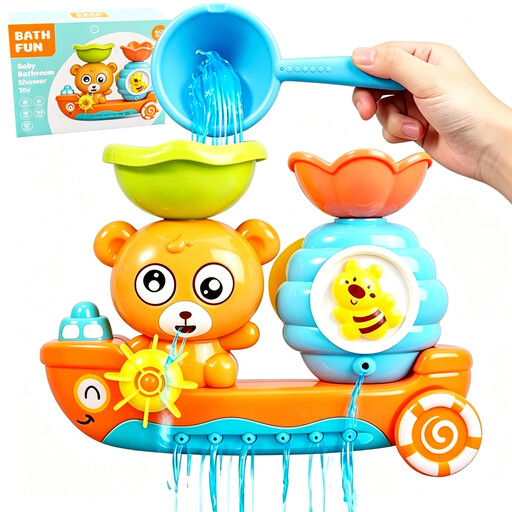
Why this product fits the profile: A bath set is a manageable option for families who want to bring playful stimulation into their daily bath routine.
It focuses on a clear purpose rather than lots of electronic features. Before buying, check the age recommendation, water use and cleaning instructions.
Suitable for the bathtub; easy to classify as bath and activity toy.
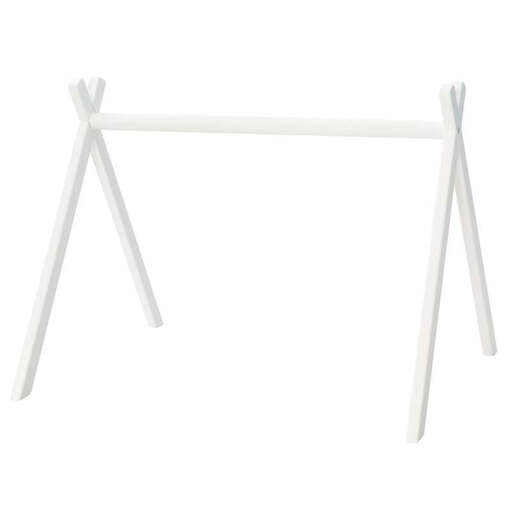
Why this product fits the profile: The lacquered wooden construction, measuring 52 × 70 × 50.5 cm, suits families who prefer a stationary, minimalist learning environment.
Use focuses on grasping and discovering. The structure should be placed on a flat surface; check for loose or damaged parts before each use.
Wipe-clean surfaces; wood material; accessory sets are available separately according to the product description.
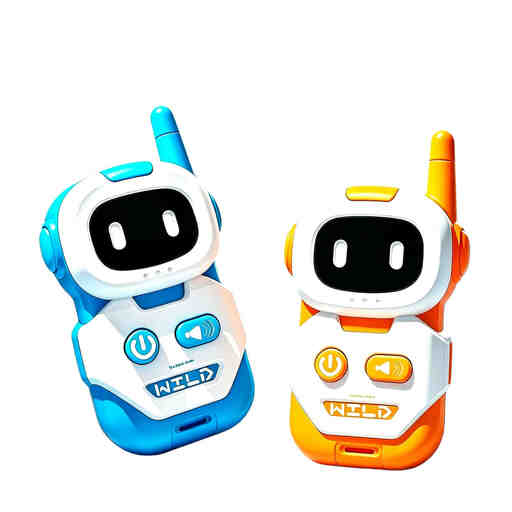
Why this product fits the profile: This multi-function toy combines drum surfaces, lights, animal sounds and shape and colour sorting for active playtimes on the mat.
The age recommendation of 6 to 36 months and the sealed battery compartment should be noted before use. Batteries are not included according to the product information.
ABS plastic according to the product description; several manual and electronic play modes; non-slip base as stated by the supplier.
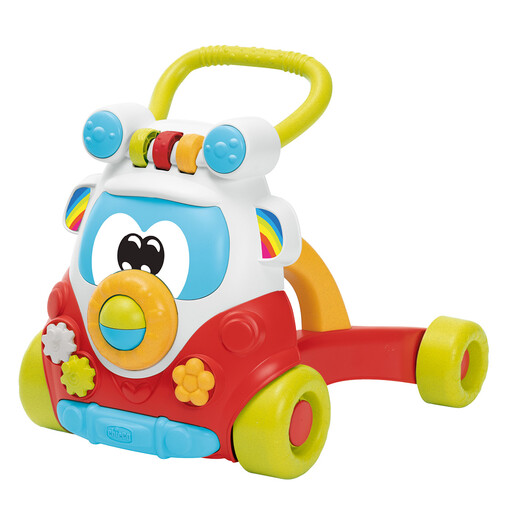
Why this product fits the profile: The 2-in-1 walker is designed for children aged 9 to 24 months and combines push-along support with five manual activities.
The product warnings specify a flat, obstacle-free environment and supervised play. This prevents the walker from being used as an unsupervised walking aid.
Dimensions of 33 × 42.5 × 37 cm; four large wheels; five mechanical activities on the front.
We’ve put together a full, regularly updated list of products that fully meet these strict selection criteria and the safety regulations in force in the EU.
A baby toy gift should not only look appealing but also suit the child’s age. For a newborn, soft or lightweight grasping toys are suitable. From around six months, sorting, sound and crawling toys can become more interesting. For children from 12 months, simple vehicles, learning phones or push-along products are often a good choice.
Before giving a gift, check:
There is no fixed duration. Observe whether your child remains attentive and relaxed. With electronic toys, breaks are a good idea, especially when lights and sounds are combined. Free play with simple objects can be just as varied as a learning toy with multiple functions.
From 6 months, grasping, sorting and sensory toys are suitable, provided your child can sit securely or reach for objects. Moving crawling toys can encourage looking or crawling after them. The manufacturer’s instructions and adult supervision remain key.
Plastic parts are usually cleaned with a soft, damp cloth. Electronic products must not be submerged in water; for textiles, follow the respective care instructions. Bath and activity toys should be emptied, dried and regularly checked for cracks or damage after use.