
Lieferung heute & morgen

Qualitätsgarantie

Willkommens-Angebote freischalten: KOSTENLOSE Lieferung | Bis zu 80 % RABATT | Kostenlose 30-Tage-JoyPlus-Testphase
App herunterladen
Baby toys should be fun, support your child’s development and be practical for everyday life. At the same time, there is a huge range to choose from: rattles, teething rings, baby motor-skills toys, baby musical toys, activity tables and baby educational toys differ considerably in terms of recommended age, materials, care and supervision. The term “educationally valuable” alone says little about whether a toy is genuinely suitable.
As a Joybuy Product Recommendation Officer, I filter the most important information from product descriptions and organise it according to specific usage situations. This makes it easier for parents, expectant parents, grandparents and other relatives to identify which baby toys suit a child’s stage of development and their own everyday routine.
Details such as “for 6 to 36 months” may indicate a versatile design. However, what matters is whether the toy can adapt to different stages of development. A product that interests a crawling baby is not automatically suitable for a toddler who is standing or walking.
It is therefore worth checking:
Lights, music, buttons and moving elements may appear versatile at first glance. For babies, however, an overloaded design can quickly become confusing. When choosing sensory toys, the number of functions is not the only relevant factor. What matters is whether they are easy to reach and produce a clear, understandable response.
A volume control or mute function can be useful in a block of flats, while travelling or during quiet time. Even so, baby musical toys should not be left playing unattended for long periods.
Statements such as “non-toxic”, “shatterproof” or “safe for babies” should be assessed against specific product details. Look out for:
Even an age-appropriate product does not replace supervision. Small parts, batteries, detachable fastenings and damaged surfaces may pose risks.
For babies aged 3 months and over, lightweight products that are easy to grasp are generally suitable. A rattle and teething ring should be designed so that they can be held safely and cleaned according to the manufacturer’s instructions. A product such as the VTech Koala Rattle is stated to be suitable from 3 months.
Baby toys from 6 months can offer more complex grasping, turning or cause-and-effect functions. A rolling toy can encourage eye contact and movement, but should only be used on a suitable, clear surface. From 12 months, simple sorting puzzles, vehicles and role-play toys are often suitable additions.
Wooden toys should have smooth surfaces and neatly finished edges. The hauck Wooden Baby Puzzle is described as featuring FSC-certified wood, wooden handles and rounded edges. These are specific details that are easier to assess than general sustainability claims.
For plastic toys, the material, edges, fastenings and cleaning instructions are important. A teething or grasping toy does not necessarily need to be dishwasher-safe. For example, the Vulli Sophie La Girafe is supplied with instructions to clean it using a damp cloth and, according to the product details, is not suitable for the dishwasher or high-temperature sterilisation.
A baby activity table needs a stable surface and sufficient space. When choosing electronic baby educational toys, parents should also check whether batteries are included, which battery types are required and whether the volume can be adjusted. Battery compartments must remain closed and should be checked regularly for damage.
For children aged 2 and over, a movement-focused toy such as a bouncy toy may be suitable. In this case, the child’s height, weight limit, surface and supervision are particularly important.
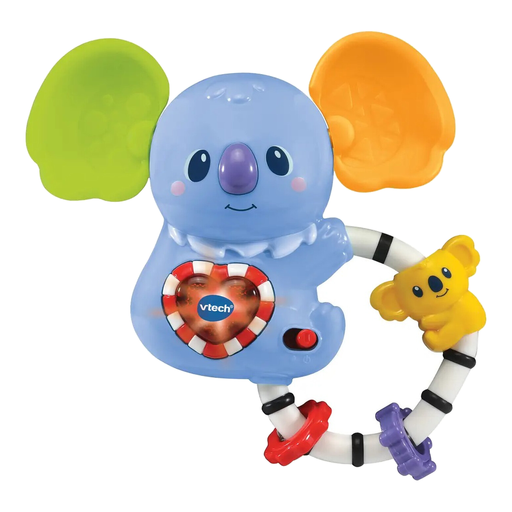
Why this product suits the profile: The rattle is designed for children aged 3 months and over, weighs 200 g according to the product details and requires an included AAA battery. It combines grasping elements with lights, songs and melodies.
The recommended age, product size and battery information are clearly specified. However, you should still check the rattle’s condition and cleaning requirements before buying.
An easy-to-grasp shape, motion sensor, light function and several sound features.
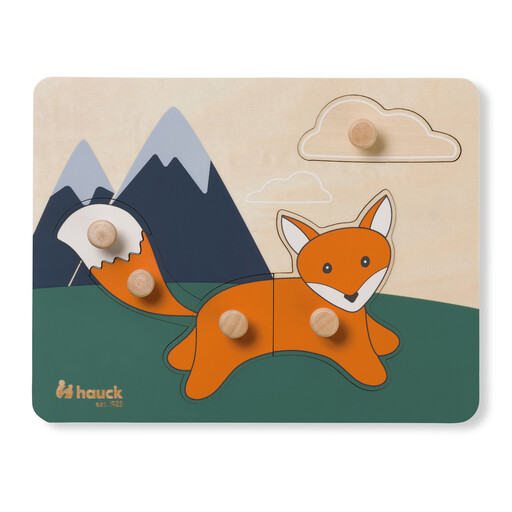
Why this product suits the profile: The wooden puzzle is designed for children aged 12 months and over and, according to the product description, is made from FSC-certified wood. Wooden handles make it easier to remove and insert the animal shapes.
The function is clearly defined and easy to understand. There are no batteries, speakers or difficult-to-assess range of functions.
FSC-certified wood, rounded edges, compact dimensions of 22 × 17 × 2 cm and simple handling.
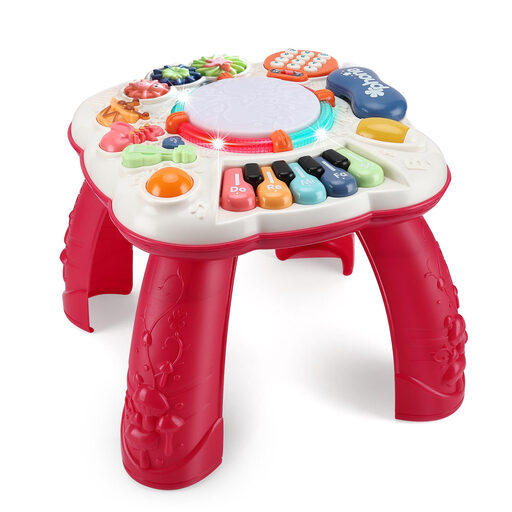
Why this product suits the profile: According to the product details, the table can be used with its legs removed as a floor play panel or with the legs attached as an activity table. Six play areas include piano keys, a drum, a telephone and gears.
The adjustable configuration reduces the risk of the toy becoming unsuitable for the child’s posture after a short time. A volume control and quiet mode are explicitly listed.
Two ways to play, six play zones, rounded edges and a stated BPA-free ABS construction.
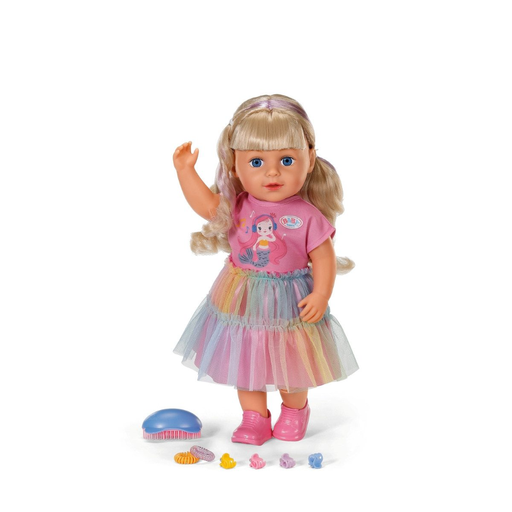
Why this product suits the profile: According to the product details, the doll is intended for children aged 4 and over. Hair accessories, clothing and movable knees provide opportunities for styling and role play.
The clear age limit and warning about swallowable small parts prevent it from being confused with baby toys intended for younger children.
43 cm body height, hairbrush and additional styling accessories; no batteries required.
Check baby toys regularly for cracks, loose parts, frayed fabrics and damaged battery compartments. Clean them only according to the manufacturer’s instructions. Electronic units must be removed before washing where required. Soft toys should not be placed in the cot if they are not expressly suitable for the child’s age or sleeping situation.
A toy stays interesting for longer when it is rotated from time to time. A small number of well-chosen products can make everyday life more manageable than a large collection of toys with similar functions.
We have put together a complete, regularly updated list of products that fully meet these strict selection criteria and the safety regulations applicable in the EU.
Suitable options may include lightweight rattles, grasping toys, teething rings and simple play arches. The specific recommended age, easy-to-grasp shapes, undamaged surfaces and the absence of easily detachable small parts are crucial. Use should always be supervised.
From this age, baby motor-skills toys, rolling figures, simple sorting games and sensory toys can be engaging. Choose functions that encourage your child to grasp, turn, press or observe. An activity table only makes sense once the child can sit or stand securely and the model is designed for this stage.
Running costs depend on the battery type, frequency of use, volume and automatic switch-off function. Before buying, check whether batteries are included, how many are required and whether a quiet mode is available. For regular use, rechargeable batteries can be a practical alternative, provided they are suitable for the device in question.