
Lieferung heute & morgen

Qualitätsgarantie

Willkommens-Angebote freischalten: KOSTENLOSE Lieferung | Bis zu 80 % RABATT | Kostenlose 30-Tage-JoyPlus-Testphase
App herunterladen
Baby toys should keep little ones entertained, encourage them to reach and grasp, and be designed appropriately for their age. At the same time, parents, grandparents and other family members need to consider small parts, materials, volume and whether the toy is genuinely suitable for everyday use. Eye-catching packaging or a long list of functions alone says little about whether a toy is right for the child and their home environment.
Many products promote numerous play modes. For a baby under one year old, however, simple stimuli such as grasping, shaking and exploring different textures may be more beneficial than a complex activity centre with lots of buttons. What matters is whether the child can access the functions independently and safely.
So always check the manufacturer’s age recommendation and whether it matches your child’s motor development. A toy suitable from 6 months is not automatically appropriate for a younger baby.
Terms such as Montessori toy, sensory toy or interactive toy are often descriptive, but they are not protected designations. Check the specific details:
This helps you avoid paying for functions that are rarely used in everyday life.
A rattle, teething ring or grasping toy will often be put into a baby’s mouth. With musical toys for babies, volume and the battery compartment may be more important. For active toddlers, stability, handles and the amount of space needed for movement are key considerations.
Before buying, you should therefore read the safety warnings, cleaning instructions and information about any small parts. A product marketed as a gift for babies must also be suitable for the specific age group.
For plastic toys, information such as BPA-free or phthalate-free is relevant product information where stated by the manufacturer. Rounded edges and a fully enclosed casing can help reduce the risk of injury and swallowing parts. With wooden toys, painted surfaces should be smooth and checked regularly for splinters or flaking.
The CE marking indicates that the manufacturer must declare compliance with the relevant EU requirements. However, it is not an independent quality seal and does not replace checking the age recommendation, safety warnings and construction. If EN 71 is mentioned, this refers to European requirements for toy safety.
A baby toy should be easy to grasp, but not so small that it can fit completely into the mouth. Check moving parts, battery compartments, closure plugs and detachable attachments. For products intended for children under three, information about small parts is particularly important.
Storage matters too: accessories such as shapes, cards or batteries should be kept out of babies’ reach after play if they are not expressly intended for this age group.
Electronic educational toys, musical toys and activity centres often require batteries. Check whether batteries are included, how securely the battery compartment is fastened, and whether the toy has an automatic shut-off or volume control. In homes with several people, adjustable volume may be more practical for everyday use than a large number of melodies.
Cleaning is particularly important for fabric elements, rattles and teething rings. Some products may only be wiped clean with a damp cloth and may not be suitable for dishwashers or hot sterilisation.
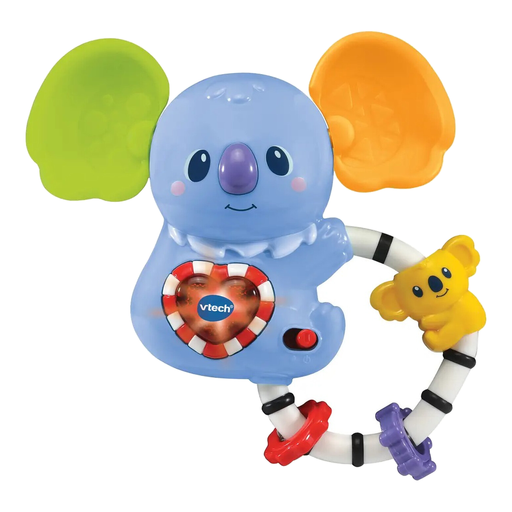
Why this product suits this profile: The koala rattle is designed for babies from 3 months and combines grasping elements with music, speech and a motion sensor. It is therefore a manageable introduction to interactive toys.
The age recommendation, secured battery compartment and automatic shut-off are clearly stated. This makes it possible to check important safety information before buying.
Three sing-along songs, 15 melodies, a light function and a weight of around 200 g.
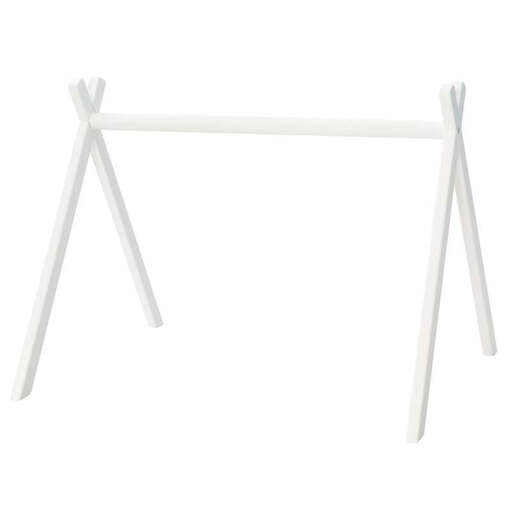
Why this product suits this profile: This painted wooden play arch is designed for use from 3 months and encourages independent grasping, touching and exploring on a flat surface.
Use on a flat surface, checking for loose parts and cleaning with a damp cloth are all expressly specified.
Wipe-clean surfaces, easy assembly and dimensions of 52 × 70 × 50,5 cm.
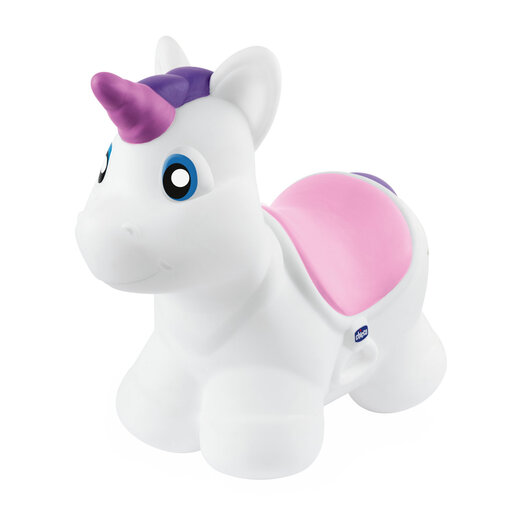
Why this product suits this profile: This inflatable ride-on toy is designed for children aged 2 to 5 years and weighing up to 25 kg, making it suitable for supervised play indoors and outdoors.
The safety information specifies supervision, flat areas, a suitable body size and checking the air pressure. The air plug must be fully inserted.
Ergonomic seat, integrated handles, hand pump included and dimensions of 50 × 45 × 25 cm.
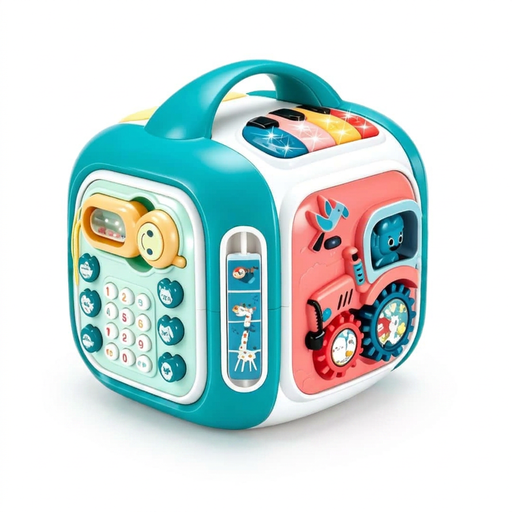
Why this product suits this profile: This cube is aimed at children aged 1 to 3 years and combines a piano, guitar, telephone, gears and music in a compact format.
The age limit, rounded edges and ABS material with a BPA-free design are listed in the product details.
Eight play areas, a carry handle and compact dimensions of 23 × 23 × 24 cm.
We have put together a complete, regularly updated list of products that fully meet these strict selection criteria and the safety regulations applicable in the EU.
From 3 months, easy-to-grasp rattles, soft attachments, grasping toys and simple play arches are typical options. Check that no small parts can come loose and that the product can be cleaned regularly. A teething ring should only be used when the material, age recommendation and care instructions are clearly stated and easy to verify.
The usable life depends on the age recommendation, material and the child’s interest. A play arch is often intended for the early grasping stage, while an activity centre or developmental toy may remain engaging for longer. The maximum age recommendation is not the only consideration; condition matters too. Cracks, loose parts, damaged seams or a battery compartment that no longer closes securely are all reasons to stop using the toy.
Look for volume control, a securely fastened battery cover and, ideally, an automatic shut-off. The toy should not be kept directly next to the child’s ear for long periods. With products featuring several melodies, it is also important to check whether the sounds can be switched off or reduced during everyday use.