
Lieferung heute & morgen

Qualitätsgarantie

Willkommens-Angebote freischalten: KOSTENLOSE Lieferung | Bis zu 80 % RABATT | Kostenlose 30-Tage-JoyPlus-Testphase
App herunterladen
Baby toys should keep children entertained, stimulate them and suit their stage of development. However, choosing the right toy is not just about bright colours or having as many features as possible. Clear age recommendations, durable materials, easy cleaning and a play concept that fits into family life are all essential.
Interactive baby toys with lights, music, buttons and movement may seem versatile at first glance. However, triggering several effects at once can quickly overwhelm a child. It may also be unclear which functions will actually be used regularly. A toy with just a few easily accessible elements can be more practical in everyday life than a model with numerous hard-to-reach details.
“From 6 months” does not automatically mean that every six-month-old baby can play with the product independently. Children develop at different rates. For example, a moving toy may only become suitable once your child can deliberately reach for it or crawl towards it. For products labelled “from 1 year”, the age limit should always be observed.
Removable small parts, hard-to-reach battery compartments or non-washable covers can cause problems later on. Even a toy that appears robust should be checked regularly for cracks, loose parts, sharp edges and signs of wear. Information such as BPA-free, EN 71 or CE marking provides useful guidance, but does not replace checking the specific product information and warnings.
For babies from around 3 months, suitable options include grasping toys, rattles, play gyms and simple sensory toys. From 6 months, activity toys with shapes, colours, sounds or accessible buttons can be added. For toys from 12 months, push-along toys, simple sorting games and age-appropriate motor skills toys are worth considering. From around 18 months, soft climbing elements or vehicles for toddlers can encourage gross motor movement.
The age recommendation should always be considered alongside your child’s current development. Products that encourage crawling, pulling or pushing require plenty of open space and a supervised environment.
Look for rounded edges, firmly secured components and a well-protected battery compartment. For plastic toys, specific material information such as ABS or silicone is more helpful than general terms such as “high quality”. For textiles and foam, the product should specify removable, washable covers and non-slip undersides.
The EN 71 marking refers to European requirements for toy safety. Depending on the product, these include mechanical properties, flammability and certain chemical requirements. CE marking shows that the manufacturer has declared the product to meet the relevant EU requirements. You should also check the warnings, particularly for small parts and moving toys.
For musical toys for babies, the battery type, what is included and volume control are important buying considerations. Not every product is supplied with batteries. An automatic switch-off function or a low volume setting can be practical for use at home.
The care instructions should clearly state whether wiping with a damp cloth is sufficient or whether the covers can be machine-washed. Baby toys are often used on the floor, so it should be possible to keep them hygienically clean without complicated cleaning procedures.
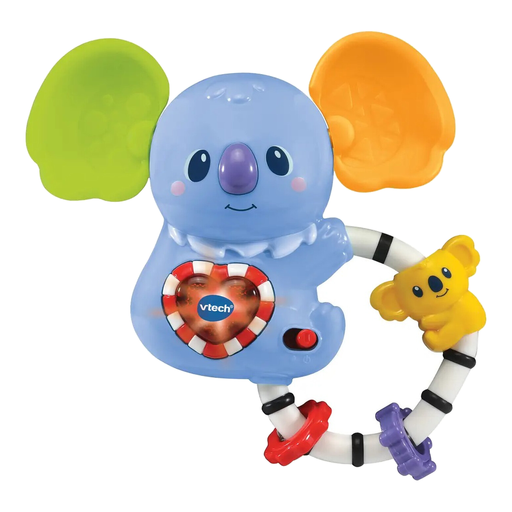
Why this product suits this profile: This compact rattle is designed for children from 3 months and can be held in one hand. It is suitable for short play sessions at home or on the go.
The product information specifies the age group, one AAA battery and an automatic switch-off function. This makes it easier to assess how the toy will be used and the ongoing battery consumption before buying.
According to the product description: three songs, 15 melodies, a motion sensor and an illuminated heart. The toy is intended to be hand-washed.
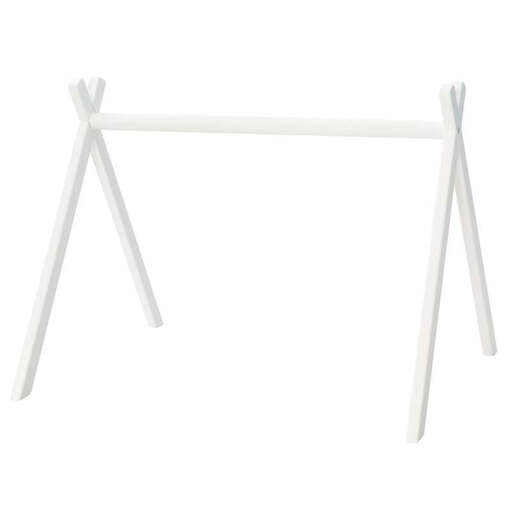
Why this product suits this profile: This wooden play arch is designed for a simple, grasp-focused play environment. It is ideal for families who consciously prefer an uncluttered Montessori toy without built-in electronics.
There are no music, light or battery features that need regular monitoring. The play arch should only be used on a level surface and under supervision.
According to the product information: painted wood, wipe-clean surfaces, dimensions of 52 × 70 × 50,5 cm and compatibility with playsets available separately.
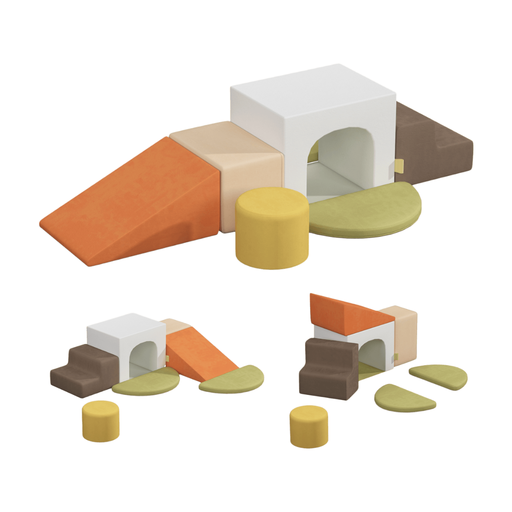
Why this product suits this profile: This 7-piece set is designed for families with enough space for active indoor play. Climbing, crawling and building can be combined in different arrangements.
The vacuum packaging and an expansion time of up to 48 hours are clearly highlighted before purchase. The covers are also removable and machine-washable.
According to the product description: EN 71-1, EN 71-2 and EN 71-3, non-slip underside, hook-and-loop fastenings and washable fabric covers.
We have put together a complete, regularly updated list of products that fully meet these strict selection criteria and the safety regulations applicable in the EU.
A new-baby gift should not be chosen solely for its cute design. For newborns, products with a clear age recommendation, clearly stated materials and few loose elements are generally easier to assess. Electronic toys can be added later, once your child can deliberately grasp and respond.
Suitable options may include grasping and sorting games, simple activity tables, rattles or sensory toys with easily accessible elements. A sturdy construction, rounded edges and the manufacturer’s specific age recommendation are important. Moving products must be used under supervision.
The lifespan depends on the material, how frequently the toy is used and how well it is cared for. Plastic toys can often be wiped clean with a damp cloth, while foam sets with washable covers can be kept hygienically clean. Check seams, wheels, battery compartments, connecting elements and surfaces regularly. Damaged products should no longer be used.
The main ongoing cost is batteries. Check whether batteries are included and how many are required. A volume control and automatic switch-off function can affect how practical the toy is to use. If the toy is used frequently, suitable rechargeable batteries may be an option, provided the manufacturer permits their use.