
Lieferung heute & morgen

Qualitätsgarantie

Willkommens-Angebote freischalten: KOSTENLOSE Lieferung | Bis zu 80 % RABATT | Kostenlose 30-Tage-JoyPlus-Testphase
App herunterladen
Baby toys should provide entertainment while supporting your child’s development. But bright colours, lots of features and terms like “Montessori” or “early learning” don’t tell you much about how useful a toy actually is in daily life. What really matters are verifiable details: age recommendation, materials, build quality, dimensions, cleaning instructions and how the toy is meant to be used.
Interactive baby toys with lights, music and buttons can seem versatile. For a younger baby, however, a few well-placed, easy-to-reach elements can be more beneficial than an overloaded toy. So check whether your child can operate the features independently, and whether you can adjust the volume or switch off individual effects.
A toy labelled “6 to 36 months” isn’t automatically suitable for every stage within that range. A six-month-old baby might use a sensory toy while lying down, whereas a two-year-old can explore more complex stacking, rolling or movement games. The age range is a guide, not a substitute for supervision.
“BPA-free”, “rounded edges” or “CE” are relevant claims, but they should be backed up in the product specification. The CE mark is not an independent quality seal; it indicates that the person responsible declares conformity with relevant EU requirements. Also look out for warning labels, small parts that could be swallowed, battery compartments and specific care instructions.
With toys for 6 to 36 months, your baby’s body position and developmental stage matter:
The manufacturer’s instructions should match how you actually use the toy. A baby walker, for example, is not designed for sloping surfaces, stairs or unsupervised play.
For plastic products, details like ABS, BPA-free, smooth surfaces and rounded edges are helpful. Even so, you should check for cracks, loose parts or damaged battery compartments before every use. For textiles, washability and drying instructions are important, especially for a play mat or play gym.
With a puzzle floor made from EVA foam, the pieces should fit together firmly and you should regularly check for loose edges. The six tiles of the play mats on offer each measure 12 × 12 inches; so plan your space before buying and make sure the mat is placed on a smooth, dry floor.
Musical baby toys usually need batteries, which aren’t always included. Check:
A volume control is very handy in daily use, but it’s not a medical statement about hearing protection. Electronic parts should not be submerged in water. Keep batteries out of children’s reach and remove them from the device if it won’t be used for a while.
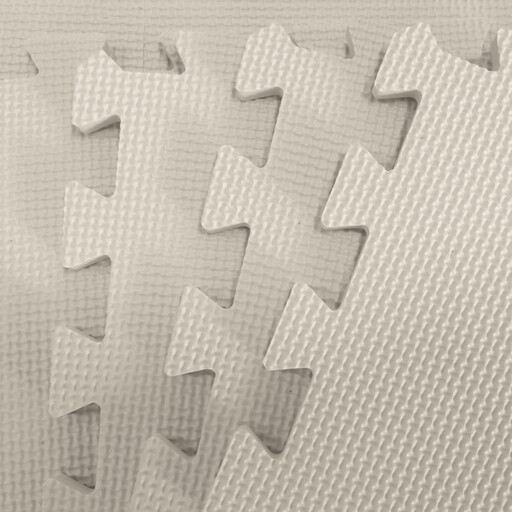
Why this product fits the profile: The six EVA foam tiles can be clicked together without tools, creating a defined play area in your living space.
The dimensions, number of pieces and material are clearly stated. This makes it easy to check whether the area fits the room you have in mind.
EVA foam, interlocking system, six tiles and easy to clean.

Why this product fits the profile: This wooden playpen offers a clearly defined space, three height-adjustable floor positions and four lockable castors.
The specifications of 100 × 100 cm, a maximum weight of 15 kg and EN 12227:2010-12 make it easy to check before buying. Safety warnings should still be followed.
Solid beech wood, washable textile insert and height-adjustable floor.
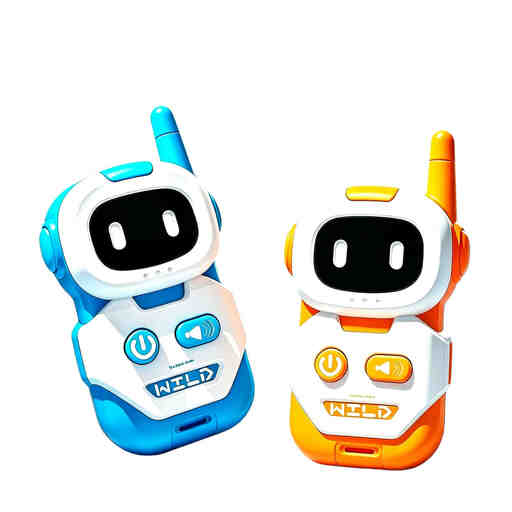
Why this product fits the profile: This 4-in-1 toy combines drum pads, lights, shape and colour sorting, and animal sounds for short, varied play sessions.
The individual play modes and the age range of 6 to 36 months are clearly listed. You’ll need to budget for batteries separately.
ABS plastic according to product details, BPA-free, rounded edges and multiple sensory play stimuli.
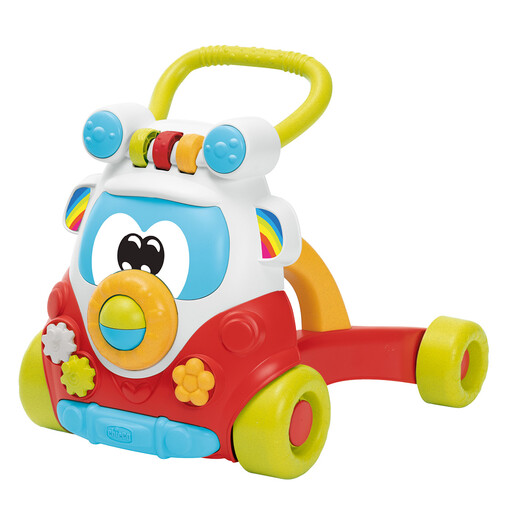
Why this product fits the profile: This 2-in-1 baby walker combines push-along support and manual play elements for children aged 9 to 24 months.
The usage instructions mention level surfaces, clear pathways and supervision, clearly defining how it should be used.
Four large wheels, a wide design and five mechanical activity elements.
We’ve put together a full, regularly updated list of products that fully meet these strict selection criteria and the safety regulations in force in the EU.
Simple grasping, stacking and cause-and-effect toys that can be reached while sitting or lying on their tummy can be suitable. Look for an appropriate age recommendation, large pieces that can’t be swallowed and a stable base. Electronic toys should have a controllable volume.
There’s no fixed lifespan. What matters is the condition, the age recommendation and your child’s interest. Check toys regularly for cracks, loose parts, sharp edges and damaged battery compartments. For a playpen or baby walker, the respective weight and usage limits also apply.
The ongoing cost depends on the battery type, how often the toy is used and for how long. Since batteries aren’t included with several of the products mentioned here, you should factor in the cost of the required batteries when buying. A quiet mode, a timer function or a manual volume control can make daily use more practical.