
Lieferung heute & morgen

Qualitätsgarantie

Willkommens-Angebote freischalten: KOSTENLOSE Lieferung | Bis zu 80 % RABATT | Kostenlose 30-Tage-JoyPlus-Testphase
App herunterladen
The transition from breast or bottle feeding to drinking independently is a major developmental milestone for every child. As a parent, you want to make this process as smooth and mess-free as possible. However, choosing the right training cup can be a challenge given the vast array of models, materials, and features available. A good baby training cup should not only be practical but also safe and tailored to your child's motor skills.
This guide is designed to provide you with clear direction. As a Joybuy Product Recommendation Officer, I have compiled a set of objective criteria to help you make an informed decision. We will explore the most important features, present a selection of proven models, and answer frequently asked questions on the topic.
Before you decide on a model, there are several key criteria to consider. These will help you find a cup that meets both your child's needs and your daily requirements.
Your child's health is the top priority. Therefore, it's essential to ensure the cup is made from materials that are food-grade and free from harmful chemicals. A BPA-free training cup is the standard. Bisphenol A (BPA) is an industrial chemical found in some plastics, and its use in baby bottles has been banned in the EU since 2011. Models made from polypropylene (PP) or silicone are common and safe alternatives.
Designing a leak-proof training cup is one of the biggest challenges for manufacturers—and one of the most important criteria for parents. Integrated valves prevent liquid from escaping when the cup is tipped over or shaken. At the same time, drinking shouldn't be too difficult for the child. Look for a system that is easy to clean to prevent the build-up of germs. Ergonomic handles are also a plus, as they provide a secure grip for little hands and encourage independence.
The right type of spout depends on your child's age and developmental stage.
Based on the criteria mentioned—such as material, functionality, and ease of use—we have curated a selection of models that have proven themselves in practice.
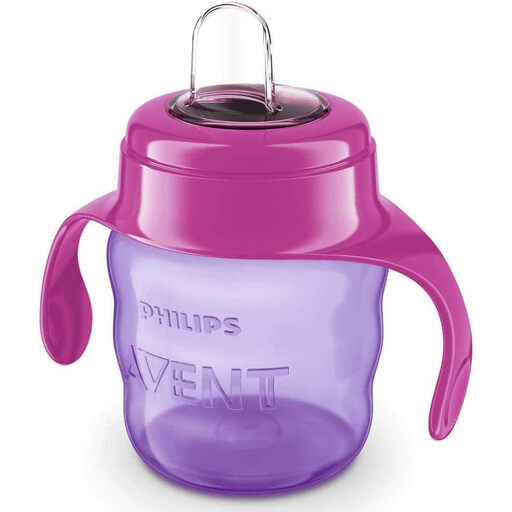
Why it stands out: This cup is specially designed for a child's first sips. The integrated valve and one-piece silicone spout make handling and cleaning straightforward. Liquid only flows when the child applies pressure to the spout, effectively preventing spills.
Benefits:
Who it's for: Ideal for babies from around 6 months who are starting the transition from bottle to cup. The soft spout is gentle on gums and makes the switch easier.
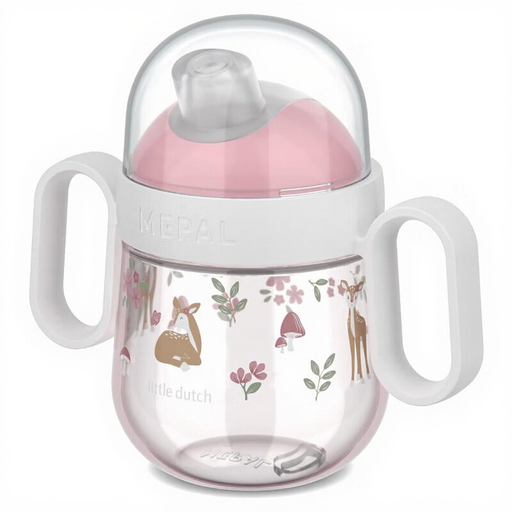
Why it stands out: The Mepal Mio cup combines an attractive design with high functionality. It is not only leak-proof but also impact-resistant, making it a durable companion for the rough and tumble of toddler life. The large, ergonomic handle is perfect for little hands.
Benefits:
Who it's for: Perfect for active toddlers who are exploring their surroundings. The robust and leak-proof design gives parents peace of mind, whether at home, in the garden, or on the go.
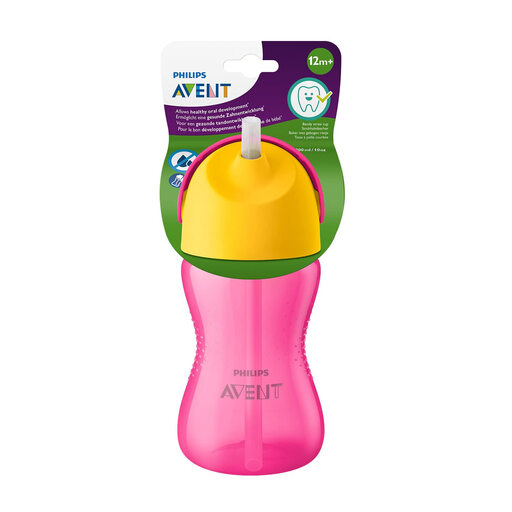
Why it stands out: This toddler straw cup supports healthy oral muscle development. The lower part of the straw is bent, allowing it to easily reach the liquid even when the cup is not full. An integrated anti-leak valve and a convenient flip-top lid make it the ideal companion for on the go.
Benefits:
Who it's for: For toddlers ready for the next step after a spout cup. It promotes a more advanced drinking technique and is perfect for everyday use thanks to its leak-proof design.
Every child develops at their own pace, and the models featured here are just a sample of the available options. If you're looking for other designs, materials, or special features, you're sure to find the right model in our broader product category.
Explore our full range of Toddler Training Cups and find the ideal solution for your child.
Most children are ready for a training cup between 6 and 9 months of age. Signs include your child being able to sit up independently, showing interest in cups, and starting to grasp objects. Start with a spout cup with a soft spout to ease the transition.
For hygienic cleaning, the cup should be disassembled into all its individual parts after each use. Thoroughly wash all components—especially valves, seals, and spouts—with warm, soapy water. Many models are also dishwasher-safe, which simplifies cleaning. Ensure all parts are completely dry before reassembling the cup.
Yes, toddler straw cups can be an excellent choice. They promote the development of oral and tongue muscles in a different way than spout cups and support a natural tongue position. This can have a positive impact on later speech development. They are generally suitable for children who can already drink confidently from a spout cup.