
Lieferung heute & morgen

Qualitätsgarantie

Willkommens-Angebote freischalten: KOSTENLOSE Lieferung | Bis zu 80 % RABATT | Kostenlose 30-Tage-JoyPlus-Testphase
App herunterladen
The transition to solid foods is a major milestone for babies and parents. With the first purées comes the question of the right baby training cutlery. The market offers a wealth of options, but not all products live up to their promises. The wrong cutlery can not only dampen the joy of eating but also pose safety risks. This guide will help you recognise the essential features and make an informed decision.
Many well-intentioned purchases turn out to be impractical or even unsuitable in daily use. Watch out for these three common problems to avoid disappointment:
To avoid the pitfalls mentioned above, you should focus on three objective criteria. These determine whether training cutlery for 6 months+ will effectively support your child's development.
The material is the decisive factor for safety and comfort. Silicone baby cutlery, especially food-grade platinum silicone, has established itself as a leading choice.
A baby's first cutlery must be adapted to their motor skills. The right shape promotes hand-eye coordination and self-confidence.
Your needs will vary depending on your child's developmental stage. While a single spoon guided by a parent is often sufficient at the beginning, a baby spoon and fork set becomes relevant later on as the child practises eating independently.
Instead of making a blanket recommendation, we have identified products tailored to specific user profiles.
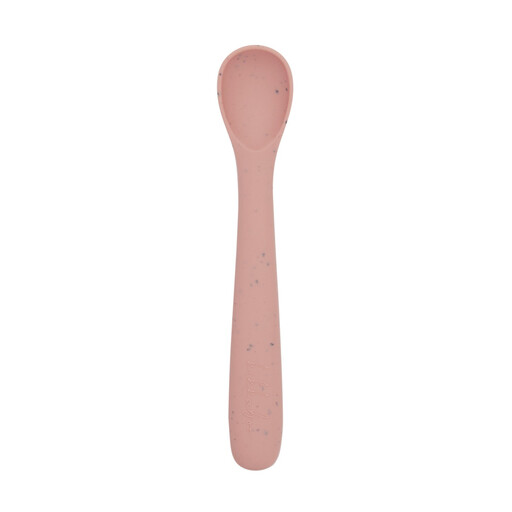
Why This Fits Their Persona: Ideal for the first attempts at feeding with purées, where only a soft, parent-guided spoon is needed. The design focuses on maximum protection for the gums.
The soft platinum silicone prevents gum injuries (Pitfall 1). The flat spoon shape is perfectly adapted to a baby's mouth, avoiding frustration (Pitfall 2).
Made from 100% food-grade platinum silicone; temperature-resistant from -40°C to 230°C and dishwasher-safe.

Why This Fits Their Persona: Perfect for babies who are ready to eat independently. The fork and spoon set specifically supports the development of motor skills and hand-eye coordination.
The ergonomic shape with a short handle is specially designed for small hands (Pitfall 2). The soft silicone and rounded tines ensure safety (Pitfall 1).
Specifically promotes independence; the set is dishwasher, microwave, and steriliser-safe, making it very easy to care for.

Why This Fits Their Persona: Designed for families who are often on the go. The included travel case ensures the cutlery stays clean and hygienic in the nappy bag.
The travel case solves the often-overlooked hygiene problem of loose cutlery in bags. The material is declared BPA-free, thus meeting a key safety standard (Pitfall 3).
Includes a practical storage box for travel; the non-slip, textured handle gives little hands extra grip.
We have compiled a complete, up-to-date list of products that fully meet these strict selection criteria and German safety regulations.
1. When is baby training cutlery useful?Training cutlery for 6 months+ can be introduced as soon as you start weaning. Initially, a soft spoon is guided by the parents. As soon as the baby shows interest in grabbing it themselves (usually between 8 and 12 months), an ergonomically designed baby spoon and fork set is ideal for promoting independence.
2. What material is suitable for a baby's first cutlery? For a baby's first cutlery, soft, flexible materials are preferable. Food-grade silicone baby cutlery is an excellent choice as it is gentle on the gums and contains no harmful substances like BPA. It is durable, easy to clean, and temperature-resistant.
3. How do I clean baby training cutlery correctly? Most high-quality silicone cutlery is dishwasher-safe. Alternatively, it can be hand-washed with warm water and mild washing-up liquid. Some models are also suitable for sterilisers. Always follow the manufacturer's care instructions to ensure the material's longevity. Avoid harsh cleaning agents or abrasive sponges.