
Lieferung heute & morgen

Qualitätsgarantie

Willkommens-Angebote freischalten: KOSTENLOSE Lieferung | Bis zu 80 % RABATT | Kostenlose 30-Tage-JoyPlus-Testphase
App herunterladen
A child's first steps are a significant milestone. A baby walker with an activity centre can be a valuable support during this time, providing security while simultaneously promoting motor and cognitive development. However, the market is crowded, and not every model delivers on its promise. As your Joybuy Product Recommendation Officer, I'll help you recognise the common pitfalls and make an informed decision.
Many parents invest in a baby walker only to find that it creates more problems than it solves. Here are the most common mistakes that lead to a poor purchase:
To ensure you get a durable and safe product, you should focus on three core parameters. These features separate a well-designed play and learn walker from an unsuitable toy.
Safety is the most important criterion. A stable walker is characterised by a wide wheelbase and a solid, often triangular frame that prevents it from tipping sideways. Look for non-slip, rubberised wheels that protect the floor and provide a secure footing. A critical safety feature is a walker with a brake or adjustable speed control on the wheels. This allows you to adapt the rolling resistance to your child's abilities—high resistance for the first uncertain attempts, lower resistance for more advanced little walkers. Rounded edges and the use of non-toxic materials are also essential.
A good activity centre is more than just a baby walker with music. It should specifically stimulate fine motor skills, hand-eye coordination, and logical thinking. Look for models with interactive but not purely electronic elements:
This type of baby activity centre offers real added value, as the child learns through play and develops their cognitive skills.
A baby walker is an investment in your child's development. For it to remain relevant for more than just a few weeks, adaptability is key. The previously mentioned adjustable wheel speed is the most important factor here. It allows the walker to be used as a walking aid from around 10 months, when the child is just beginning to pull themselves up, and supports them until they can walk confidently on their own. Some models also offer removable play panels that can be used separately on the floor, thus extending the product's play value.
Instead of making a blanket recommendation, we have identified models that are tailored to the different needs and priorities of families.
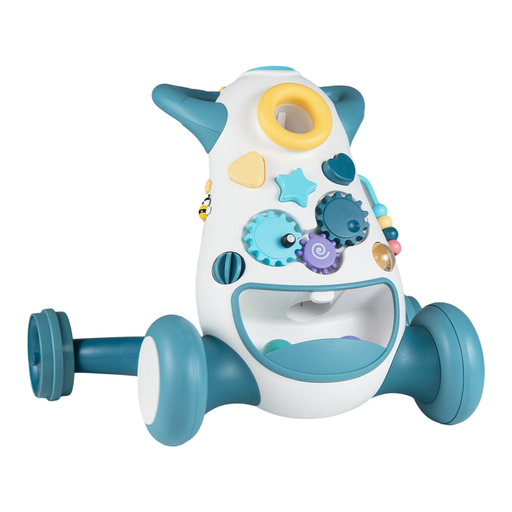
Why This Fits Their Persona: Ideal for parents looking for a safe and functional first model. It combines essential safety features with basic, Montessori-inspired learning games without overstimulating the child.
The stable triangular structure counteracts the risk of tipping. The adjustable speed of the rear wheels directly solves the problem of the walker rolling away uncontrollably.
The speed control on the wheels and the combination of a walking and play station make it an adaptable companion.
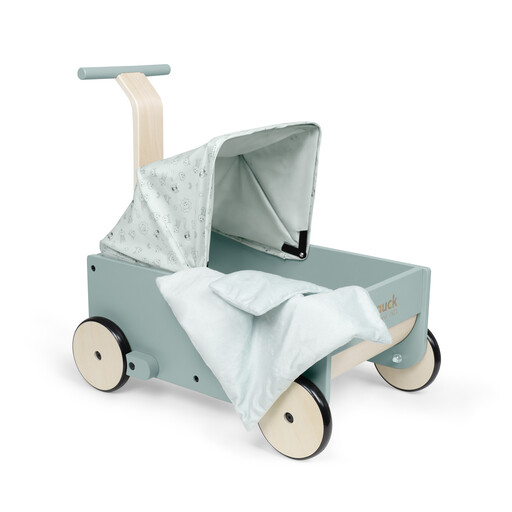
Why This Fits Their Persona: Perfect for families who value imaginative role-play in addition to motor skill development. This wooden model serves as both a walker and a doll's pram, thereby also fostering social skills.
This model completely bypasses the trap of electronic overstimulation, focusing instead on classic play. The individually adjustable brake directly addresses the safety risk of wheels that move too fast.
The 2-in-1 function as a walker and doll's pram offers long-lasting play value. The material, made from FSC-certified wood, is a sustainable choice.
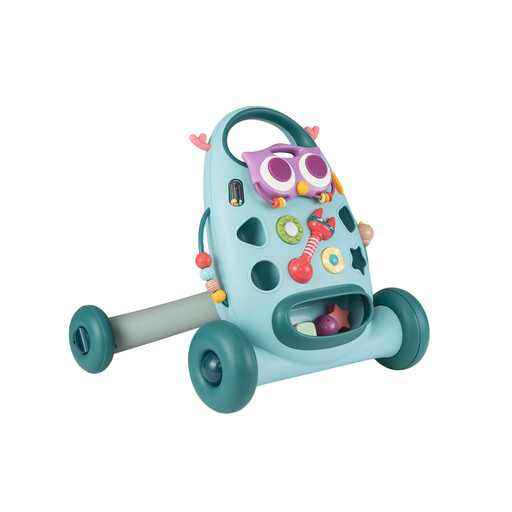
Why This Fits Their Persona: For parents seeking a product with maximum flexibility and a long lifespan. The removable playboard can still be used even when the walking function is no longer needed.
This model avoids the trap of a short usage period. Thanks to the separate playboard, it offers added value beyond the learning-to-walk phase and encourages focused play on the floor.
The removable playboard allows for separate play while sitting and extends the product's lifespan. The integrated shape-sorting game promotes cognitive development.
We have compiled a complete, up-to-date list of products that fully meet these strict selection criteria and UK safety regulations.
A baby walker is generally useful as soon as a child begins to pull themselves up on furniture and takes their first sideways steps. This is often the case at around 10 months of age. However, the child's individual developmental stage is more important than their exact age. The child should be able to stand stably before using such a walking aid.
Start with the highest brake setting or the greatest rolling resistance. This ensures the walker moves slowly, giving your child maximum stability for their first attempts. Observe how confident your child becomes. As soon as they walk more assuredly and begin to push the walker effortlessly, you can gradually reduce the resistance to encourage a more natural walking pattern.
Electronic elements are not unsuitable per se. The key is balance. A model that relies solely on passive stimulation from light and sound is less beneficial. A baby walker with music that uses these effects as a reward for an active task (e.g., inserting a shape block) can increase motivation. Ensure that the electronic functions are supplemented by manual, fine motor skill activities.