
Lieferung heute & morgen

Qualitätsgarantie

Willkommens-Angebote freischalten: KOSTENLOSE Lieferung | Bis zu 80 % RABATT | Kostenlose 30-Tage-JoyPlus-Testphase
App herunterladen
A child's first unsteady steps are an unforgettable milestone. As a parent or grandparent, you want to support this crucial developmental stage in the best and, above all, safest way possible. A baby walker can be a valuable tool, providing stability while motivating your child to keep going. However, the market is flooded with a vast array of models that vary greatly in material, function, and design.
This guide is designed to provide you with clear direction. We'll outline objective criteria to consider when choosing a suitable baby walking aid and present a selection of thoughtfully designed products that combine safety with fun.
To make an informed decision, several key product features should be considered. These will help you find a model that is not only safe but also provides long-lasting enjoyment.
The most important feature of a baby push walker is its stability. The model should have a wide base and a low centre of gravity to prevent it from tipping over sideways. A crucial safety feature is an adjustable brake system. This allows you to adapt the wheels' resistance to your child's developmental stage. Beginners need more resistance to prevent them from moving too fast and losing control, while more advanced walkers can enjoy greater freedom. Also, look for rubber-coated wheels, which are not only quieter but also protect delicate floors like parquet and provide better grip.
Wooden baby walkers are often particularly stable due to their robustness and weight. Models made from FSC-certified wood also represent sustainable forestry. Plastic models, on the other hand, are lighter and often allow for more complex shapes and integrated play features. Regardless of the material, it's essential to ensure it is free from harmful substances, which should be verified by relevant certificates. A toy that grows with your child is distinguished by adjustable elements, such as a height-adjustable push handle. This allows the walker to be used over a longer period and adapt to the child's height.
Many models are more than just a simple baby walking aid; they are also a baby activity centre. Integrated elements like bead mazes, gears, shape sorters, or small xylophones promote fine motor skills, hand-eye coordination, and cognitive development. Such an activity walker keeps your child engaged even when they are taking a break from learning to walk. Consider what type of activities would be most appealing to your child and whether the walker can be used for other play scenarios, such as a doll's pram.
Based on the criteria mentioned above, we have curated a selection of models that stand out for their design and functionality.
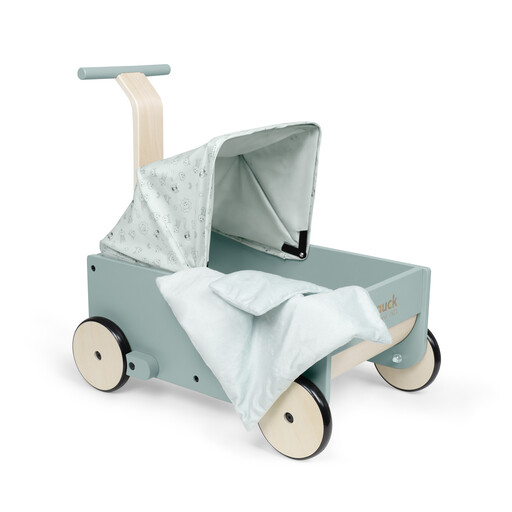
Why it stands out This 2-in-1 model from hauck combines a classic wooden baby walker with a doll's pram. This dual function not only promotes motor skills but also encourages social role-playing. The product is made from FSC-certified wood, making it an eco-conscious choice.
Benefits
Who is it for? This model is ideal for families looking for a durable, sustainable product that combines learning to walk with imaginative play. It is particularly suitable for children who enjoy caring for dolls or stuffed animals.
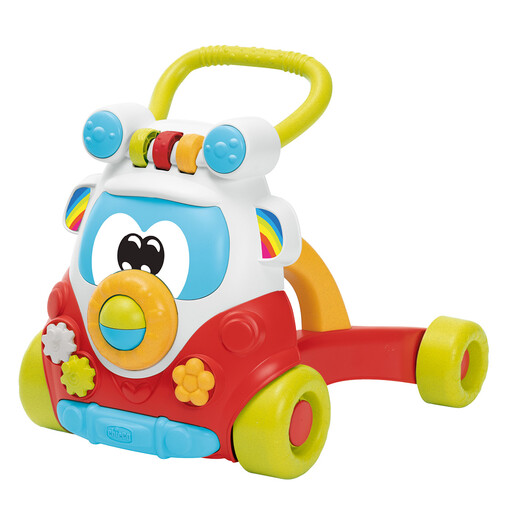
Why it stands out The Chicco Happy Hippy Walker is a colourful activity walker with a retro van design. It serves as a stable support for first steps while also offering a comprehensive baby activity centre on the front, which helps develop fine motor skills and logical thinking.
Benefits
Who is it for? This baby walker is a great choice for parents looking for a lightweight, multifunctional toy. It's ideal for children who are easily captivated by different activities and need an entertaining distraction, even when they're not walking.
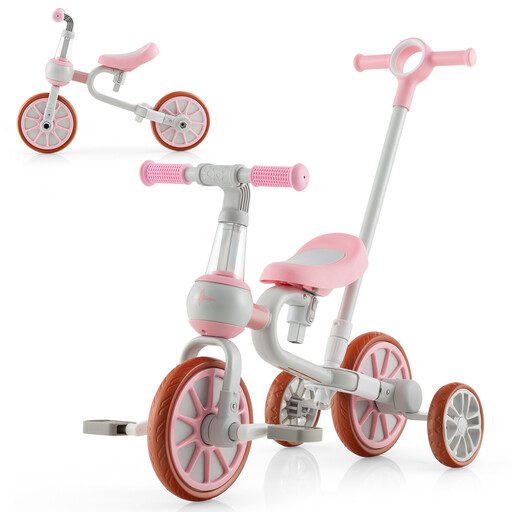
Why it stands out While not a classic baby walker, this 4-in-1 tricycle is an interesting alternative for the next stage of development. It is a toy that grows with your child, accompanying them from toddlerhood to preschool age (approx. 2-4 years). Initially pushed by parents, it can later be converted into an independent tricycle.
Benefits
Who is it for? This tricycle is designed for families seeking a long-term mobility solution that goes beyond the first steps. It is ideal for toddlers who can already walk confidently and are ready for their first vehicle.
A baby walker is often the first step into the world of mobile toys. As your child grows, other toys that further promote motor development will also become interesting.
Discover our wide range of pull-along toys for three-year-olds and find the next favourite toy for your child.
A baby walker is recommended once a child begins to pull themselves up on furniture and take their first sideways steps. This typically happens between nine and twelve months of age. It is crucial that the child can already stand on their own, with the walker serving merely as a support and a source of motivation.
These terms are often confused, but they refer to different products. A baby walker (also known as a push walker) is pushed along by the child. The child stands on their own two feet, actively training their balance and walking motion. A 'seated walker' (often called a baby-walker or exersaucer) is a seat frame on wheels that the child is placed into. Many experts advise against these devices as they can promote an unnatural posture and may hinder the development of independent walking.
Both materials have their advantages. Wood is robust, heavy, and therefore often offers greater stability. It is a natural and durable material. Plastic is lighter, often more affordable, and allows for more complex play and sound features. The decision depends on your personal priorities: if you value sustainability and a classic design, wood is often the preferred choice. If you're looking for a lightweight model with lots of integrated activities, a plastic one might be a better fit.