
Lieferung heute & morgen

Qualitätsgarantie

Willkommens-Angebote freischalten: KOSTENLOSE Lieferung | Bis zu 80 % RABATT | Kostenlose 30-Tage-JoyPlus-Testphase
App herunterladen
A baby walker can make those first steps more fun while also serving as an educational toy. However, models vary considerably in terms of construction, braking performance, wheel material and recommended age. Focusing solely on eye-catching looks or a long list of play features can mean overlooking important details.
A baby walker with activities may seem particularly versatile at first glance. However, what really matters is whether it remains stable enough when your child stands up and pushes it. A narrow frame, small wheels or a high centre of gravity can make it more difficult to handle. So check the base width, the product’s own weight and the arrangement of the wheels.
A baby walker with a brake can limit rolling speed. However, the brake must suit your child’s stage of development and be checked regularly. If it is set too loosely, it may not provide enough resistance; if it is too tight, pushing may become unnecessarily difficult. The product description or instructions should include information on how to adjust it correctly.
The indication ‘from 1 year’ is not a blanket recommendation for every child. Motor skills are also important: in line with the manufacturer’s instructions, your child should be able to sit securely or pull themselves up in a controlled manner. A push-along walker is not intended to be used as a seat or ride-on toy. Children should only use a baby walker under direct supervision and on a level floor free from obstacles.
Look for a wide base, a sturdy handle and wheels that do not roll too freely. The dimensions are particularly important if the walker needs to pass through doorways, between furniture or over specific types of flooring. For those first steps, a controlled pushing speed is usually more practical than a model that rolls very easily.
A stable baby walker should not have any visible sharp edges or loose components. For a foldable or assembly-required product, it is advisable to check all connections before first use.
Rubberised wheels can reduce noise and help protect delicate floors. This is particularly useful on parquet or laminate flooring. Nevertheless, you should check whether the wheels provide sufficient grip on your floor. Carpets, door thresholds and smooth tiles can all affect how easily the walker moves.
With a wooden baby walker, the surfaces, edges and wheel coverings are also important. Check the wood regularly for cracks, splinters or loose screws.
Product details such as BPA-free or phthalate-free materials should be clearly stated in the description. According to the manufacturer’s information, the Chicco Happy Hippy Walker has these properties. Plastic surfaces can generally be cleaned with a soft, damp cloth and mild soapy water. Wooden products should not be left wet for prolonged periods.
The specific safety warnings are also important. According to the manufacturer’s information, the Chicco model is intended for children aged 9 to 24 months, is not suitable for children who can already walk independently and must not be used by children weighing more than 20 kg. The product must not be used near stairs, thresholds, slopes or sources of water.
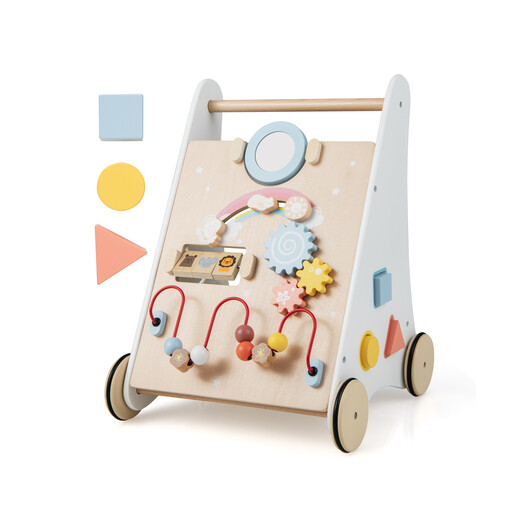
Why this product suits this profile: This walker combines walking support with several play features and, according to the product information, is intended for children aged 12 months and over. It is therefore suitable for families looking for an educational toy with several uses.
The product description specifies the dimensions, material, recommended age and rubberised, non-slip wheels. This means you can check key buying criteria before placing your order.
Wooden construction, several manual activities, storage basket and rubberised wheels according to the product information.
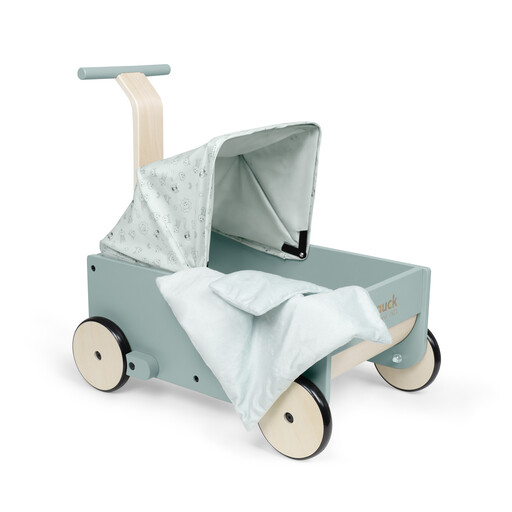
Why this product suits this profile: This 2-in-1 baby walker combines a doll and soft toy function with a height-adjustable handle. The design is particularly appealing to households where role play and pushing are intended to go hand in hand.
The individually adjustable brake addresses the risk of uncontrolled rolling speed. It should be checked before every use and adjusted to suit your child’s development.
FSC-certified wood according to the product information, a height-adjustable handle from 45 to 49 cm and rubberised wooden wheels.
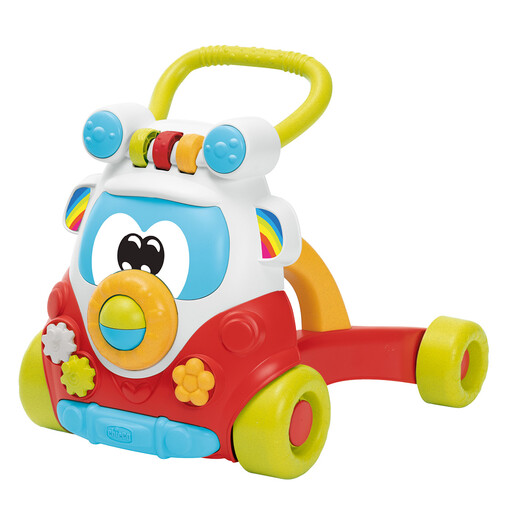
Why this product suits this profile: This model is designed as a 2-in-1 baby walker and activity centre. It is aimed at families who want to keep their child entertained even when they are not pushing the walker.
The product information specifies the age range, maximum weight, four wheels and specific safety instructions. This makes it easier to distinguish the product from unsuitable seats or ride-on aids.
Five manual play features, a wide wheel arrangement, 2-in-1 use, plus BPA- and phthalate-free materials according to the manufacturer’s information.
We have put together a complete, regularly updated list of products that fully meet these strict selection criteria and the safety regulations applicable in the EU.
This depends on the particular model and your child’s development. Many products are intended for children from around 9 or 12 months. However, the age recommendation does not replace supervision and should always be checked against the manufacturer’s specific instructions.
A push-along walker can be used for as long as your child can grip it securely and push it in a controlled manner. For some models, intended use ends once your child can walk independently. You should also regularly check the wheels, frame, handle, brakes and screw connections.
Wooden models often offer a solid construction and rubberised wheels, while plastic models are frequently lighter and include integrated play features. The right choice depends on your flooring, the features you want, the amount of care required and the safety instructions for the specific product.