
Lieferung heute & morgen

Qualitätsgarantie

Willkommens-Angebote freischalten: KOSTENLOSE Lieferung | Bis zu 80 % RABATT | Kostenlose 30-Tage-JoyPlus-Testphase
App herunterladen
When a child takes their first steps, it's a milestone for the whole family. Many parents and grandparents want to support this developmental stage with a suitable walking aid. However, the market is flooded with models whose benefits and safety aren't always apparent at first glance. As a Joybuy Product Recommendation Officer, I see every day which products offer real value and which ones quickly end up collecting dust in a corner. Before you make a decision, you should know the three most common pitfalls that lead to disappointment and unnecessary expense.
A well-designed baby walker is more than just a support—it's a versatile toy that accompanies development on multiple levels.
To avoid a poor purchase, you should focus your attention on three core aspects. These define the safety, utility, and longevity of a baby walker.
Stability is the most important criterion. Look for a stable triangular structure and a wide wheelbase, as this design makes it difficult to tip over sideways. The wheels should be non-slip, ideally with a rubber coating, to provide grip on smooth floors like parquet or tiles. A crucial feature for safety is the option for speed control. On many models, the rolling resistance of the wheels can be adjusted. This allows you to adapt the speed to your child's abilities—slower for the first uncertain attempts, faster for advanced little walkers. Also, pay attention to the use of tested materials like ABS plastic, which are robust and free from harmful substances, as well as rounded edges to prevent injuries.
A modern baby walker should also be a baby activity centre. Models designed as a 2-in-1 baby walker offer significant added value. They often feature a detachable play panel that the child can also use while sitting on the floor. This considerably extends the toy's lifespan, well beyond the phase of learning to walk. Such integrated toys specifically promote development.
A good toy with music and lights integrates these elements interactively. Instead of passive stimulation, an action by the child should trigger a reaction—for example, a sound when a shape block is inserted into the correct opening. Integrated motor skills toys for ages 1 and up, such as shape sorters, rotating gears, or sliding elements, promote hand-eye coordination, logical thinking, and fine motor skills. This turns the baby walker into an educationally valuable companion and a suitable gift for one-year-olds that will bring long-lasting joy.
Based on the criteria mentioned, we have identified some products that address the different needs of families.
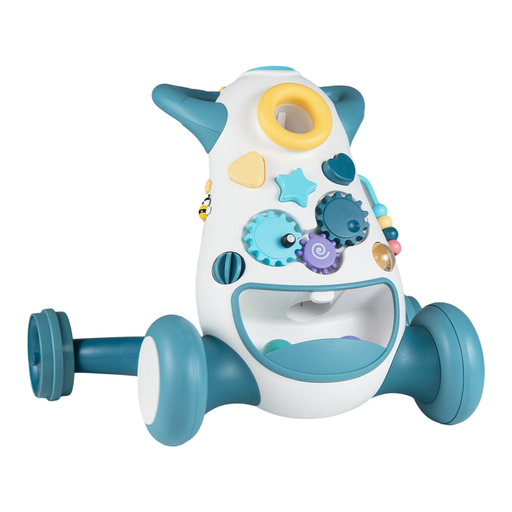
Why This Fits Their Persona: Ideal for parents looking for an all-in-one solution. This model combines a safe baby walker with a comprehensive activity centre, offering long-lasting play and learning value in a single product.
The stable triangular structure and adjustable wheel speed counteract the stability trap. As a 2-in-1 device with Montessori-inspired games, it bypasses the short-lived fun trap.
The adjustable speed of the rear wheels allows it to be adapted to the child's learning progress. The integrated motor skills toy actively promotes cognitive abilities.
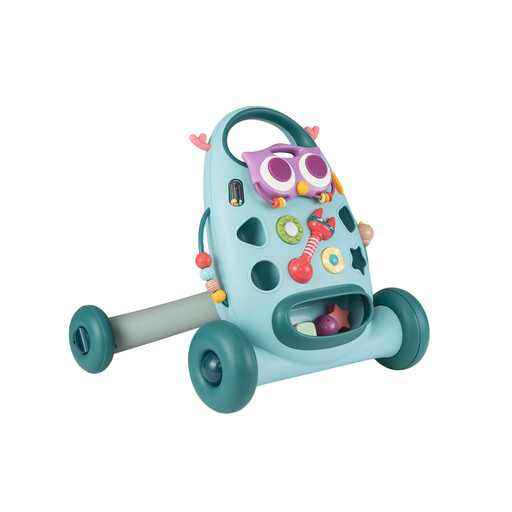
Why This Fits Their Persona: Perfect for families who value flexibility. The play panel can be detached and used separately, which is ideal for travel or for playing on the floor, while the walker itself serves as a dedicated walking aid.
The detachable play panel bypasses the short-lived fun trap, as the activity centre can continue to be used after the child has learned to walk. The interactive elements prevent passive sensory overload.
The 2-in-1 functionality offers a high degree of flexibility. The child can take the play panel anywhere, which allows for varied play situations.
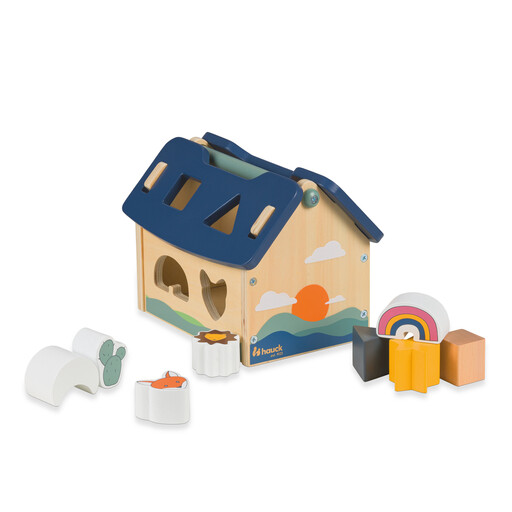
Why This Fits Their Persona: A great choice for parents who focus on classic, screen-free play. This wooden toy concentrates purely on promoting fine motor skills and understanding shapes and colours. It is a supplement or alternative to a baby walker.
This toy completely avoids the sensory overload trap as it has no electronics. It offers a clear, focused play task that promotes the child's concentration.
Made from wood from FSC-certified forests. Specifically promotes hand-eye coordination and the understanding of shapes and colours in a tactile, tangible way.
We have compiled a complete, up-to-date list of products that fully meet these strict selection criteria and rigorous safety standards.
A baby walking aid in the form of a push walker is generally suitable from around 10 months of age. The decisive factor is not age, but the developmental stage: the child should be able to pull themselves up independently and stand securely for a few moments. It is important to emphasize that these walkers do not "teach" walking, but rather provide the child with mobile support to train their balance and coordination and to gain self-confidence.
The wheels are a central safety feature. Look for an adjustable speed or adjustable rolling resistance. This prevents the walker from "rolling away" from the child during their first attempts. Rubber or silicone-coated treads offer better grip on smooth floors and are also quieter. A wide distance between the wheels (wheelbase) significantly increases the walker's stability against tipping.
Both materials have their pros and cons. Plastic models are often lighter and equipped with electronic functions like music and lights. They can offer very versatile activity centres. Wooden baby walkers are valued for their sturdiness, their higher weight (which can increase stability), and their natural, tactile feel. The choice ultimately depends on personal preferences: do you want a multifunctional baby activity centre with electronic features, or do you prefer a classic, robust toy made from natural materials?