
Lieferung heute & morgen

Qualitätsgarantie

Willkommens-Angebote freischalten: KOSTENLOSE Lieferung | Bis zu 80 % RABATT | Kostenlose 30-Tage-JoyPlus-Testphase
App herunterladen
A baby walker is designed to support the transition from sitting to standing and pushing. However, baby walkers, ride-on toys and stroller boards differ significantly in terms of age recommendation, usage and safety features. If you focus only on an attractive design or a long list of functions, you may end up buying a product that no longer fits your daily routine after a short time.
Three common buying pitfalls occur particularly often:
Before buying, you should decide how you intend to use it. A wooden baby walker is primarily designed for pushing around the house. A push-along toy for babies or a baby walker with toys can also provide extra entertainment. A ride-on toy, on the other hand, is mainly used while sitting.
For families with two young children, a stroller board with seat is a different product category. It attaches to the pushchair and allows the older child to ride along during walks. Such a buggy board for siblings does not replace a baby walker for indoor use, but it can make outings with younger siblings much easier.
The statement "baby walker from 12 months" is a guideline, but not a substitute for assessing your child's individual development. Also check:
With the Chicco 3in1 Panda, the ride-on and sorting functions are intended for 12 to 36 months according to the product specifications. The wheelbarrow configuration is recommended for 18 to 36 months and can carry a maximum of 20 kg. The Kikka Boo Ally XL has an age rating from 15 months and a maximum load of 20 kg. These specifications should not be exceeded.
Wheels should run smoothly but must not roll away uncontrollably. Rubberised or shock-absorbing wheels can reduce noise and improve contact with the floor. However, this does not mean a product can be used safely on stairs, slopes or uneven outdoor surfaces.
Look out for:
According to the manufacturer, the Chicco 3in1 Panda does not have a brake. Therefore, it must not be used near stairs, sloping driveways, hills or public roads. An adult must supervise the child at all times.
For a baby walker, handle height, dimensions and manoeuvrability are important. For a stroller board, you also need to consider the dimensions of the pushchair, the attachment points and the available space between the handlebar and the younger child's seat.
With the Kikka Boo Ally XL, the adapter length can be adjusted to three positions and the adapter height to eight positions. The seat is removable, reversible and adjustable to three heights. However, you should still check before buying whether your specific pushchair model is compatible with the universal attachment.
The following recommendations group products by typical everyday situations. What always matters are the manufacturer's instructions, your child's physical abilities and consistent supervision.
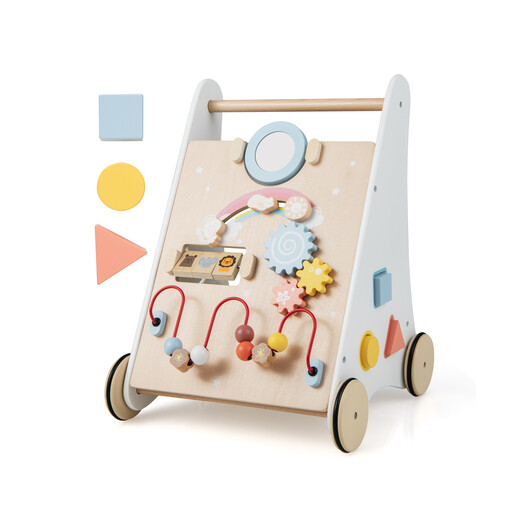
Why this product fits the profile: This wooden baby walker is designed for children from 12 months and combines push-along support with several activity elements for home use.
Rubberised, non-slip wheels and rounded edges address typical weaknesses in grip and build quality. Use remains limited to supervised, level surfaces.
Wooden construction, storage basket, multiple activities and dimensions of 34.5 × 32.5 × 45 cm; net weight 2.2 kg.
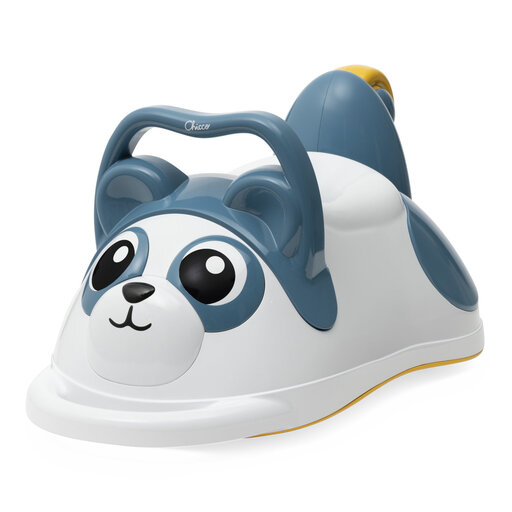
Why this product fits the profile: The three configurations accompany different play situations: ride-on and sorting station from 12 months, and wheelbarrow from 18 months.
The clearly separated age recommendations prevent the wheelbarrow function from being used too early. Before each use, all locks must be fully engaged.
3-in-1 design, ergonomic seat, storage space under the seat, 59 × 33 × 37 cm and maximum load of 20 kg.
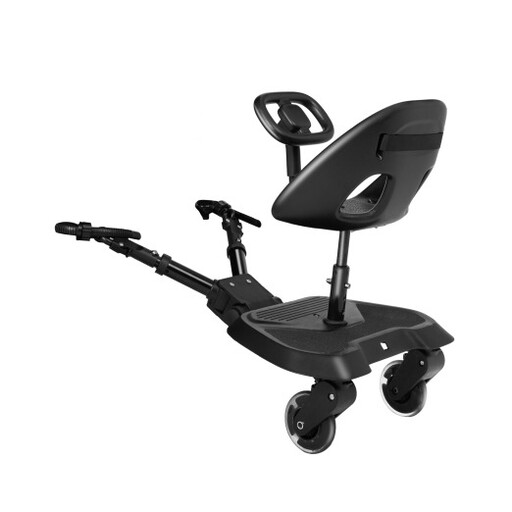
Why this product fits the profile: For parents with siblings from 15 months, this board offers a seating option while the younger child stays in the pushchair.
The adjustable adapters help with fitting different pushchairs. Compatibility must still be checked in advance; the seat belt must be adjusted correctly.
360° swivel wheels with shock absorption, 2-point safety harness, non-slip footrest, plus three length and eight height adjustments.
We have put together a complete, regularly updated list of products that fully meet these strict selection criteria and the safety regulations in force in the EU.
Even a suitable safe baby walker needs clear rules:
A baby walker can provide playful encouragement for movement and support motor development, but it does not replace free movement or adult supervision. Statements about physical development should not be taken as medical guarantees.
Many models are recommended from 12 months, while others – such as a stroller board with seat – are only suitable from 15 months. In addition to the age rating, your child's abilities are decisive: stable sitting, controlled standing and secure holding on.
This depends on the construction and the weight limit. A wooden model can be used as long as your child pushes safely and the maximum load is not exceeded. With 3-in-1 models, different age ranges often apply to individual functions.
A baby walker is designed for practising and playing at home. A buggy board for siblings or a stroller board with seat is suitable for walks when the older child needs to ride along while the younger child is in the pushchair. What matters are pushchair compatibility, seating age, harness and weight limit.