
Lieferung heute & morgen

Qualitätsgarantie

Willkommens-Angebote freischalten: KOSTENLOSE Lieferung | Bis zu 80 % RABATT | Kostenlose 30-Tage-JoyPlus-Testphase
App herunterladen
A child's first unsteady steps are a significant milestone. As a parent or grandparent, you want to support this developmental stage as safely and effectively as possible. A baby walker can be a valuable tool, not only providing stability but also playfully promoting motor skills. However, with so many models on the market, making a choice can be complex.
This guide is designed to provide you with objective information and clear criteria. We'll introduce different concepts and help you make an informed decision that meets your child's needs.
To find the right push walker for your baby, several functional aspects are crucial. These criteria will help you objectively compare the features of different models.
Safety is the top priority. A key feature is a baby walker with a brake system. An adjustable braking system allows you to adapt the wheels' rolling resistance to your child's individual abilities. In the beginning, when the child is still unsteady, a stronger brake setting can prevent the walker from rolling away and provide more stability. As their confidence grows, the brake can be loosened.
Also, look for a tip-resistant design with a wide wheelbase and a low centre of gravity. The materials used should be non-toxic and durable. Certifications like CE and GS can provide guidance here.
The choice of material affects the walker's feel, durability, and weight.
Modern baby walkers are more than just a support. Many are designed as a baby activity centre, offering numerous play options that stimulate fine motor skills, hand-eye coordination, and logical thinking. Features like spinning dials, sliding elements, shape sorters, or small xylophones keep the walker engaging even when the child is taking a break from walking. This type of motor skills toy for ages 1 and up seamlessly integrates playful learning into daily life.
Based on the criteria mentioned, we have compiled a selection of models that focus on different strengths.
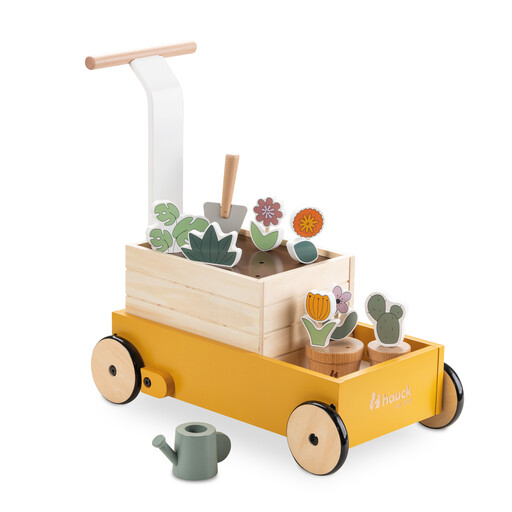
Why It Stands Out This model from hauck combines a classic wooden baby walker with a creative role-playing concept. The included garden accessories spark the imagination and provide long-lasting fun beyond just learning to walk.
Pros
Who It's For For families looking for a sustainable wooden baby walker that not only supports first steps but also fosters the child's creativity and role-playing skills.
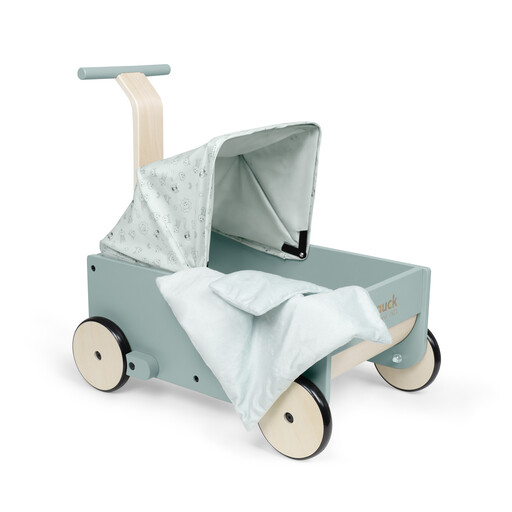
Why It Stands Out The hauck 2-in-1 is a thoughtful combination of a doll pram and a baby walker with a brake system. Its adaptable features, like the height-adjustable handle, make it a long-lasting companion that grows with your child.
Pros
Who It's For Ideal for children who love playing with dolls. This model combines the desire for a doll pram with the practical function of a safe baby walker, making it a space-saving and cost-effective solution.
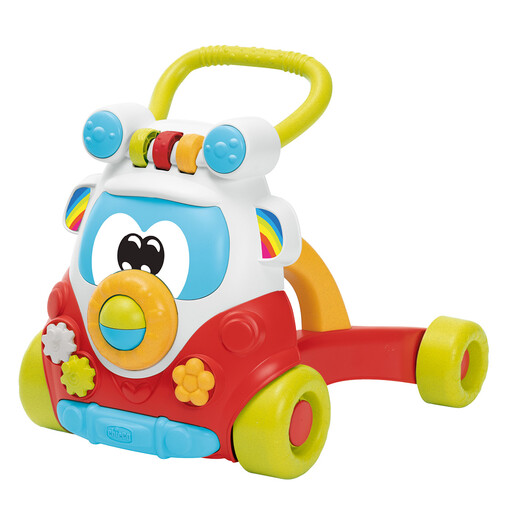
Why It Stands Out The Chicco Happy Hippy Walker stands out with its colourful, retro VW bus design. It's a 2-in-1 solution that functions as a baby walker and a stationary baby activity centre, all while being exceptionally lightweight and easy to handle.
Pros
Who It's For For parents who prefer a lightweight, colourful plastic model with a strong focus on integrated mechanical toys for motor skill development.
The models featured here offer a glimpse into the variety of baby walkers available. Every child develops at their own pace, and you might be looking for a different type of educational toy.
Explore more cognitive development toys for toddlers in our collection
1. From what age is a baby walker suitable? A baby push walker is generally recommended when a child begins to pull themselves up on furniture and take their first sideways steps. This usually happens between 9 and 12 months of age. It's important that the child can already sit up independently and has a stable core posture. Always follow the manufacturer's age recommendation.
2. What safety features should I look for in a baby walker? The most important safety features are a tip-resistant design, adjustable brakes for speed control, and the use of non-toxic materials. The walker should only be used on flat surfaces and always under adult supervision. Areas like stairs, steps, or sloped surfaces must be inaccessible to the child.