
Lieferung heute & morgen

Qualitätsgarantie

Willkommens-Angebote freischalten: KOSTENLOSE Lieferung | Bis zu 80 % RABATT | Kostenlose 30-Tage-JoyPlus-Testphase
App herunterladen
A baby walker should support your child when standing and pushing, or provide age-appropriate activities. In practice, however, many models are not suitable for every child or home. What matters is not the number of colourful features, but the combination of age recommendation, stability, materials, rolling behaviour and intended use.
A baby walker for children aged 12 months and over is not automatically suitable for every child from that age. Some children may not yet be able to stand safely or hold on to the handle securely. Others may already need more freedom of movement. The age recommendation is a guide, but it does not replace an assessment of your child’s individual abilities.
Make sure your child:
A baby walker with activities or an activity centre for babies may include lots of play elements. This alone says little about how stable the baby walker is. Small wheels, a narrow frame or a very lightweight model may behave differently on smooth floors than on carpets.
So check the base first: how wide is the stance? Are the wheels rubberised or designed to prevent slipping? Is there any guidance on using the product over thresholds, on sloping surfaces or near stairs?
A wooden baby walker often appears robust, but it still needs regular checks. Look for rounded edges, a smooth surface, tightly secured screws and undamaged wheels. With plastic models, a closed battery compartment, undamaged connections and easy cleaning are important.
A baby walker with toys should also not be used with loose small accessories within reach of younger children. The manufacturer’s specific warning always takes priority.
A stable baby walker should not tip forwards easily when your child stops. Wide wheels and a well-balanced centre of gravity are more important than an especially low weight. Rubberised wheels can reduce noise and help protect delicate flooring. Even so, the model should be tested on the surface where it is intended to be used.
A braking system or adjustable rolling resistance can be useful when your child is just starting to push. Check whether the adjustment is clearly explained and whether it needs to be checked regularly to make sure it remains secure.
Measure the narrowest passageways in your home. A baby push walker must fit through doors and should not catch on furniture. Children also need enough clear space to avoid bumping into sharp edges, cables or unstable objects.
For smaller rooms, compact models with a manageable number of activities are often more practical than large play stations. A basket or storage space can be useful, but it must not cause the walker to become unevenly loaded.
Compare the age recommendation, maximum body weight and specific safety warnings. A model for children aged 9 to 24 months is not necessarily suitable for use throughout the entire period. With electronic motor skills baby toys, you should also check the battery type, volume, automatic switch-off function and cleaning instructions.
Activities such as rotating elements, sliders, shape games and movement games can encourage children to reach out and explore. However, it is not possible to make a blanket claim about their developmental benefits. What matters is a suitable age, free playtime and support from adults.
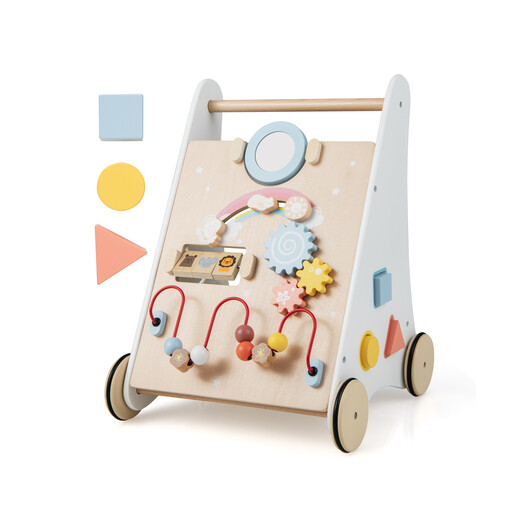
Why this product suits this profile: This wooden baby walker combines a push function with several hands-on activities. According to the product information, it is designed for children aged 12 months and over, making it suitable for families looking for a simple combination of play and movement.
The product description specifies the dimensions, materials and rubberised wheels. This makes it easier to assess the space required and rolling behaviour before buying.
Wooden frame, rounded corners, rubberised wheels and a basket at the back. The set includes three building blocks and instructions.
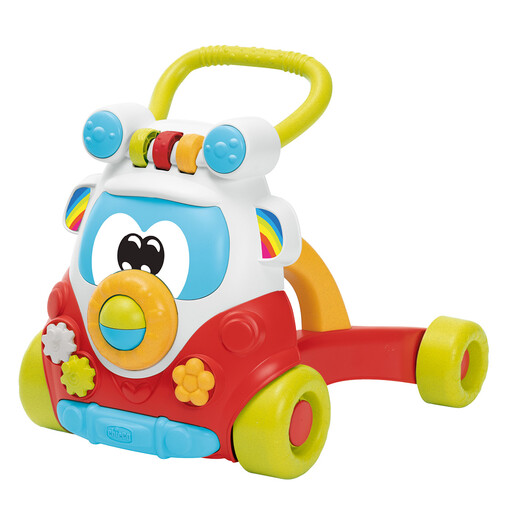
Why this product suits this profile: This 2-in-1 model combines a push aid with a hands-on activity centre. The product information lists four large wheels, five activities and suitability for children aged 9 to 24 months.
The features are clearly specified: a rotating cylinder, moving elements, a sliding ball and cogs. It is more than just a decorative front panel.
Wide wheelbase, 2-in-1 use and materials specified as BPA- and phthalate-free. The wheels and frame should be checked regularly for damage.
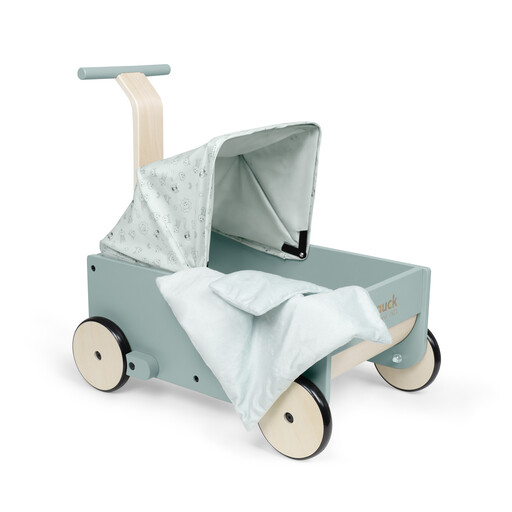
Why this product suits this profile: This model is aimed at families who want to combine a walking aid with imaginative play. It is designed for dolls and toys and must not be used as a seat or transport walker for children.
The product warning clearly defines how it may be used. An adjustable brake and height-adjustable handle allow it to be adapted to the situation.
Height-adjustable handle from 45 to 49 cm, individually adjustable brake and rubberised wooden wheels. The wheels and frame should be checked regularly for cracks and wear.
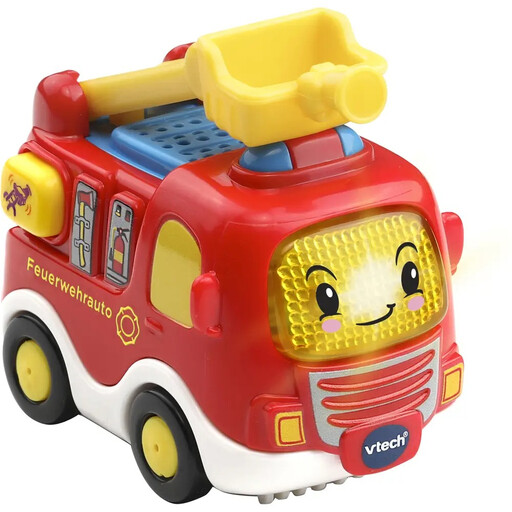
Why this product suits this profile: As an addition to a push walker or activity centre, this interactive vehicle is suitable for children aged one and over. It provides lights, sounds, songs and moving elements for floor-based play.
The age recommendation of one year and over, battery type and cleaning with a damp cloth are specified. However, the vehicle is not a substitute for a baby walker.
Three songs, six melodies, a motion sensor and compatibility with other Tut-Tut Baby Flitzer playsets. According to the product information, two AAA batteries are included.
Place the baby walker only on a level, clear surface. Stairs, door thresholds, cables, hot surfaces and water should be kept out of reach. Even with a model that appears stable, never leave your child unattended.
A quick check before every use is recommended:
A baby walker is not a substitute for unrestricted movement on the floor. Alternate between pushing, sitting, reaching and supervised play. This ensures that the product remains part of the play environment for its intended purpose.
We have put together a complete, regularly updated list of products that fully meet these strict selection criteria and the safety regulations applicable in the EU.
This depends on the specific model and your child’s development. Some products are suitable from 9 months, while others are designed as baby walkers for children aged 12 months and over. The manufacturer’s recommendation, your child’s ability to sit independently and their ability to hold the handle securely are the key factors.
There is no fixed usage period. Use it for as long as your child remains within the stated age or weight limit and the product is undamaged. Once your child can walk independently, an activity centre or another age-appropriate baby toy may be more suitable.
Electronic vehicles and activity centres require replacement batteries depending on how often they are used. A wooden baby walker or purely mechanical model normally does not need batteries. Before buying, check whether batteries are included and which type is required.