
Lieferung heute & morgen

Qualitätsgarantie

Willkommens-Angebote freischalten: KOSTENLOSE Lieferung | Bis zu 80 % RABATT | Kostenlose 30-Tage-JoyPlus-Testphase
App herunterladen
A baby walker can help your child pull themselves up, push along, play or join in with family outings. However, different types of products serve very different purposes: a sit-in baby walker is not the same as a push-along walker for toddlers, an activity centre or a folding trolley. If you focus only on the number of features or the maximum load, you could easily end up with a model that doesn’t suit your daily routine.
A label saying ‘from 6 months’ doesn’t automatically mean that your child can already stand safely or push a wheeled walker. Sit-in walkers, push-along walkers and activity centres all have different requirements. Always check the manufacturer’s guidance and consider your child’s abilities.
A baby walker for children aged 1 and over is often designed as a push-along walker. A model with a seat, steering wheel or ride-on function is usually intended for children who can already sit independently. Your child should always be supervised while using it.
A heavy product isn’t automatically tip-resistant. A very lightweight model may be convenient to carry, but offer less resistance when pushed. A wide base, wheels that can be controlled, a suitable handle height and a well-designed construction are more important.
For a baby walker with activities, check whether the play panel can be removed and whether the product might roll away unexpectedly when your child leans on it.
A 5-in-1 baby walker sounds versatile, but may not suit your family if it’s only suitable for flat indoor surfaces. A large transport trolley, on the other hand, may be too bulky for use around the house. Before you buy, decide whether you need a walker for indoors, for outings or for both.
First, check:
A high maximum load is no substitute for a suitable seat and push-along design. When choosing a model, think about how you’ll actually use it rather than simply looking for the widest age range.
For a baby walker for indoor use, quiet wheels and a controlled speed are particularly important. Models with four 360-degree wheels are easy to steer, but need enough clear, level space. Adjustable or partially lockable wheels can help limit the speed.
Rubberised wheels are a good choice on a wooden push-along walker if you want to protect delicate floors and reduce noise. For outdoor paths, larger wheels, suspension and a reliable parking brake are more important. A transport trolley with a canopy is better described as a children’s trolley or pull-along wagon than a traditional baby walker.
Look for smooth edges, sturdy joints and surfaces that are easy to clean. For toys and activity centres, information on CE marking, the recommended age group and relevant safety standards such as EN 71 can help guide your choice. Check that the marking is clearly shown on the product or in the accompanying documents.
Pushchairs and transport trolleys have different product requirements from toys. Check the relevant instructions, brake function, harnesses and permitted load. A CE marking alone doesn’t prove that every model is suitable for every use.
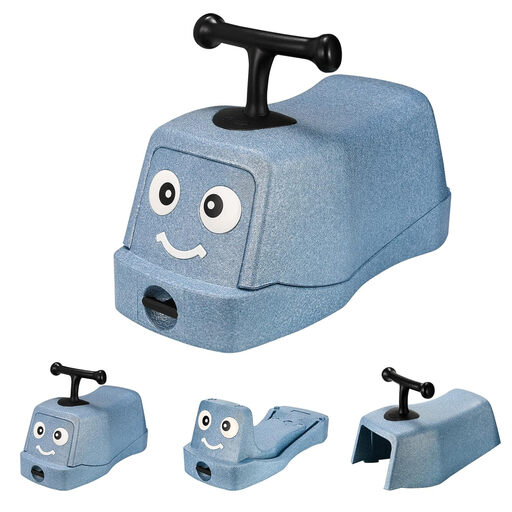
Why it suits this need: This compact model combines a push-along vehicle, rocker, ride-on function and indoor walking aid. It’s suitable for children aged 1 and over, with a maximum weight of 20 kg.
It’s clearly designed for use on flat indoor surfaces only. This helps avoid the mistaken expectation that a small model will be suitable for stairs, uneven paths or outdoor use.
Four quiet 360-degree wheels, a low product weight of 1,5 kg and built-in storage.
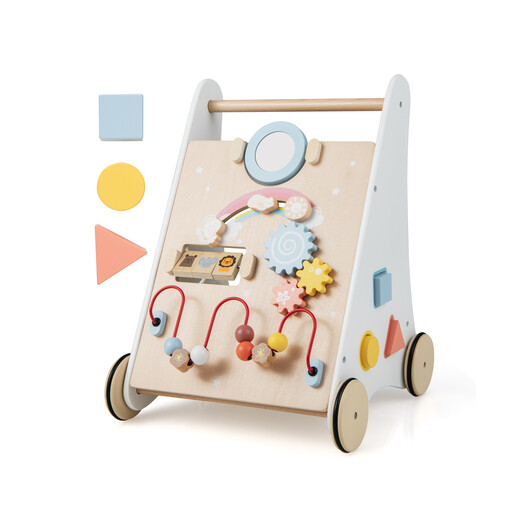
Why it suits this need: This push-along walker combines a limewood and MDF construction with a range of activity features. It’s designed for children aged 12 months and over.
Rubberised, non-slip wheels and rounded edges help address common issues with hard wooden models. Even so, check how quickly it rolls on your own flooring.
A range of activities, a toy basket and dimensions of 34,5 × 32,5 × 45 cm.
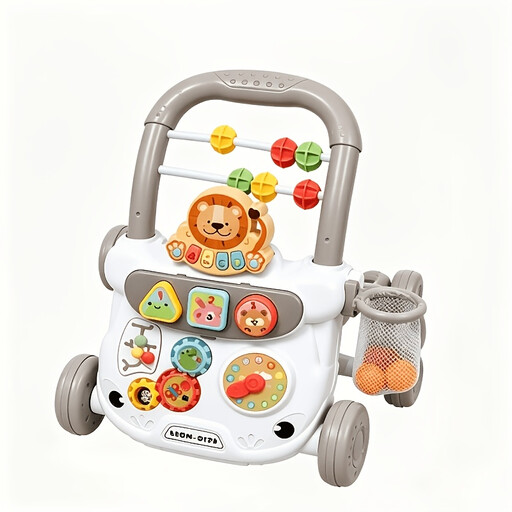
Why it suits this need: The activity centre features buttons, lights and sounds, gears and a ball game. It’s designed for use in a living room or playroom.
According to the product description, the built-in water tank can be filled to add extra weight. The wheels can be partially locked, but supervision is still essential.
Height-adjustable handle, ABS construction and a range of interactive features.
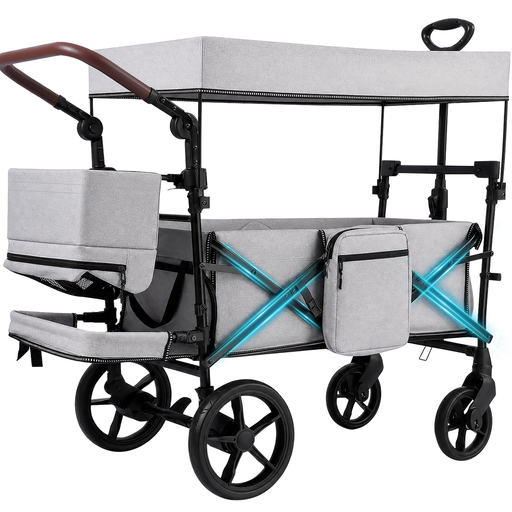
Why it suits this need: For camping, trips to the beach, shopping or longer outings, this trolley offers large wheels, suspension, a canopy and storage space. It’s a transport solution, not a traditional baby walker.
It’s clearly distinguished from a push-along walker designed for use around the home. This helps you decide whether its size and intended use fit your daily routine.
XXL wheels measuring 24 and 20 cm in diameter, suspension, a folding design and a stated load capacity of up to 300 kg for the trolley frame.
We’ve put together a comprehensive, regularly updated list of products that meet these strict selection criteria and fully comply with the safety regulations in force in the EU.
It depends on the type of product. Many push-along walkers are designed for children aged around 12 months and over, while some activity centres are suitable from an earlier age. Always follow the manufacturer’s guidance and take your child’s motor skills into account. Never leave your child unsupervised while they’re using a baby walker.
How long it can be used depends on your child’s age and weight, the seat size and the design. A model with a maximum weight of 20 kg may be suitable for longer than a small wooden push-along walker, provided your child’s height and ability to use it are still a good fit. Regularly check the wheels, handles, screws and joints.
The price depends on the materials, range of activities, folding mechanism, wheels and intended use. A simple wooden model may be enough for indoor use, while a transport trolley with a canopy, suspension and storage space offers a different price and range of features. So compare more than just the purchase price: consider how much space it takes up, how easy it is to clean and which features you actually need.