
Lieferung heute & morgen

Qualitätsgarantie

Willkommens-Angebote freischalten: KOSTENLOSE Lieferung | Bis zu 80 % RABATT | Kostenlose 30-Tage-JoyPlus-Testphase
App herunterladen
Baby walkers and ride-on toys for babies and toddlers are designed to encourage movement, stimulate motor skills and be practical in everyday life. But not every product suits every stage of development or every home. A baby push-along walker for those first steps has different requirements to a ride-on toy for toddlers aged two and over.
‘From 12 months’ is no guarantee that a child can stand or push safely. What really matters includes the ability to sit independently, body weight and how confidently they move. A baby push-along walker should only be used once your child can grasp it with control and pull themselves up on it.
The upper age limit is also important. According to the product details, the Chicco Happy Hippy Walker is designed for children aged 9 to 24 months and is not intended for children who can already walk confidently or weigh more than 20 kg. A bouncy toy like the Chicco Bouncing Unicorn, on the other hand, is aimed at children aged 2 to 5 years, up to 25 kg.
A baby walker with activities can combine different features: spinning elements, shape-sorters, moving wheels or sound effects. Before you buy, however, you should check whether these features suit your child and your home environment.
Electronic, interactive learning toys need batteries and must not come into contact with water. Mechanical motor-skills toys for ages 1 and up are usually easier to clean. Volume, footprint and storage options also matter in a home setting.
A heavy model isn't automatically tip-proof. What's more important is a sufficiently wide construction, a low centre of gravity, grippy wheels and a clear, level walking area. With a wooden baby walker, you should also regularly check the joints, the surface and for any splinters.
Claims like ‘promotes development’ should be taken with a pinch of salt. The toy can offer incentives to move, grasping exercises or sorting games. It doesn't replace individual guidance and should always match your child's current stage of development.
Look at the specific age recommendation, the maximum weight limit and the intended use. A sit-on ride, a baby push-along walker and an activity centre all follow different play concepts.
Practical questions to ask before buying:
Wheels with rubber tread can reduce noise and protect delicate floors. They should still run smoothly and not accelerate uncontrollably. With a model that has a brake, you need to check it's correctly adjusted. According to the product description, the Hauck 2-in-1 Doll and Baby Walker has individually adjustable brakes and an adjustable handle from 45 to 49 cm.
Important: no baby walker should be used near stairs, sloping surfaces, roads or swimming pools. This also applies to a ride-on toy for toddlers. Protective gear may be recommended for certain products, but it doesn't replace supervision.
Plastic models can often be cleaned with a soft, damp cloth. Electronic components must not be submerged in water. With wooden toys, look for smooth surfaces, rounded edges and sturdy fixings.
The Chicco models provided are made from BPA-free and phthalate-free materials. The Chicco Bouncing Unicorn is also stated to comply with toy safety standard EN 71. Such claims should be verifiable in the product description or instruction manual. Also check wheels, axles, fastenings, seams and any small removable parts before each use.
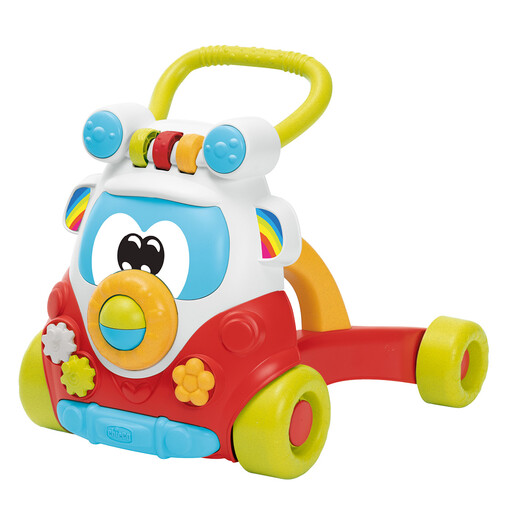
Why this product fits the profile: The 2-in-1 walker combines a push-along aid with five manual activities and is stated to be suitable for 9 to 24 months.
The manual activity panel doesn't need batteries. The wide design with four wheels is intended for pushing on level surfaces.
2-in-1 concept, five mechanical play elements and stated dimensions of 33 × 42.5 × 37 cm.
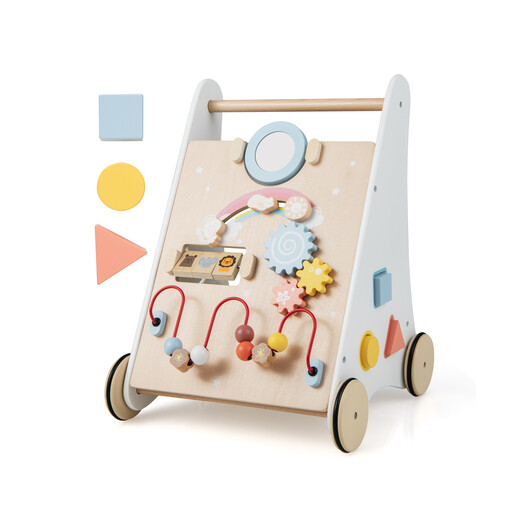
Why this product fits the profile: The wooden baby walker is designed for children aged 12 months and over and offers several activity elements plus a storage basket.
The product details mention rounded edges, a smooth surface and rubberised wheels. You should still check the assembly before use.
Linden wood and MDF, three building blocks, basket and compact dimensions of 34.5 × 32.5 × 45 cm.
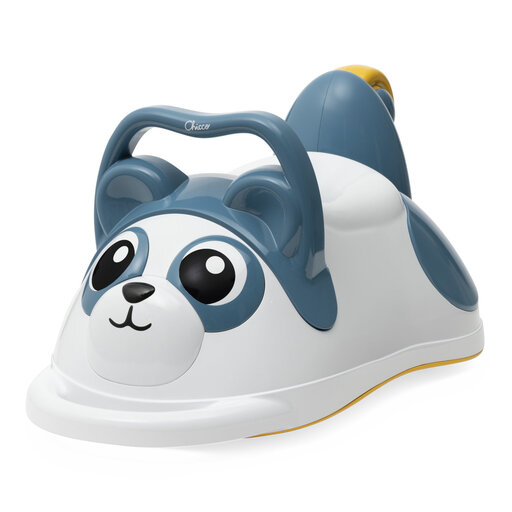
Why this product fits the profile: This model converts between a ride-on, a sorting station and a wheelbarrow configuration, and is stated to be suitable for 12 to 36 months.
The use can be adapted to different play stages. As there is no brake, play must only take place on level, obstacle-free surfaces.
Three ways to play, storage under the seat and a stated weight capacity of up to 20 kg.
We've put together a full, regularly updated list of products that fully meet these strict selection criteria and the safety regulations in force in the EU.
Regardless of the model, parents and grandparents should:
A bouncy toy like the Chicco Bouncing Unicorn also requires checking the air pressure. The manufacturer states it has an ergonomic seat, integrated grab handles and a manual pump. The air plug must sit fully inside the valve and must not be accessible to the child.
It depends on the type of product and your child's stage of development. Some baby walkers are intended from 9 or 12 months, while a ride-on or bouncy toy may only be suitable from 2 years. The age recommendation must always be considered alongside your child's abilities and weight.
The length of use depends on the age range, weight capacity and design. A model with multiple functions can stay interesting across different play stages. What matters is that your child can use each configuration safely and that no parts are damaged.
Most surfaces can be cleaned with a damp cloth and mild soap solution. Electronic components must not be submerged. With interactive learning toys, the battery compartment, closure and batteries should be checked regularly, and replacement should be done by an adult.