
Lieferung heute & morgen

Qualitätsgarantie

Willkommens-Angebote freischalten: KOSTENLOSE Lieferung | Bis zu 80 % RABATT | Kostenlose 30-Tage-JoyPlus-Testphase
App herunterladen
As a Joybuy Product Recommendation Officer, I see the vast number of options available for baby wipes every day. The selection can be overwhelming, especially when it comes to the delicate skin of a newborn. Many products advertise gentle formulas, but not all live up to their claims. This guide will help you see through the marketing promises and make an informed decision based on objective criteria.
Before we dive into the key features, let's address three common issues that often lead to dissatisfaction or skin irritation when choosing wipes.
To find the right wipes for your child, focus on these three verifiable characteristics.
The foundation of a good baby wipe is its lotion. For wipes for newborns and sensitive skin, the rule is: the shorter and more understandable the list of ingredients (INCI list), the better.
The wipe itself plays a major role in cleaning. A good wipe should combine two qualities: it must be soft enough not to irritate the skin, yet tear-resistant enough to handle even heavy-duty messes.
Well-designed packaging not only keeps the wipes moist but also makes them easy to handle—a key factor when you only have one hand free during a nappy change.
Here are some selected products tailored to the different requirements of parents.
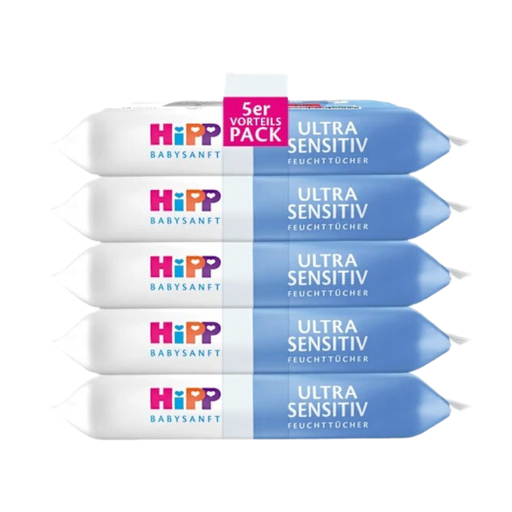
Why it's a great fit: With their minimalist formula, these wipes are specifically designed for the needs of newborns and allergy-prone skin. They provide a very gentle clean without any unnecessary additives.
It doesn't just rely on the term "sensitive"; it proves it with an extremely short ingredient list, 99% water, and the complete absence of perfume and alcohol.
According to the manufacturer, the formula is suitable for skin prone to neurodermatitis, offering a high level of safety for particularly sensitive skin types.
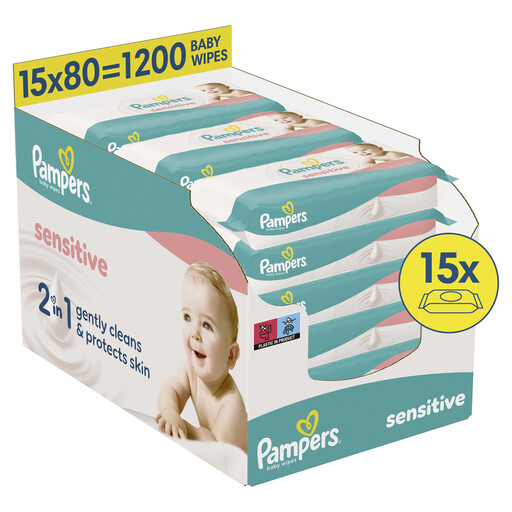
Why it's a great fit: Families who use a lot of wipes need a reliable and cost-effective solution. This bulk pack of Pampers wet wipes combines a large quantity with a proven sensitive formula.
Despite the low price per wipe, the formula isn't compromised. The wipes are explicitly labelled as having 0% alcohol and perfume and are dermatologically tested.
According to the manufacturer, the special formula helps restore the skin's natural pH balance. The bulk pack ensures a long-lasting supply.
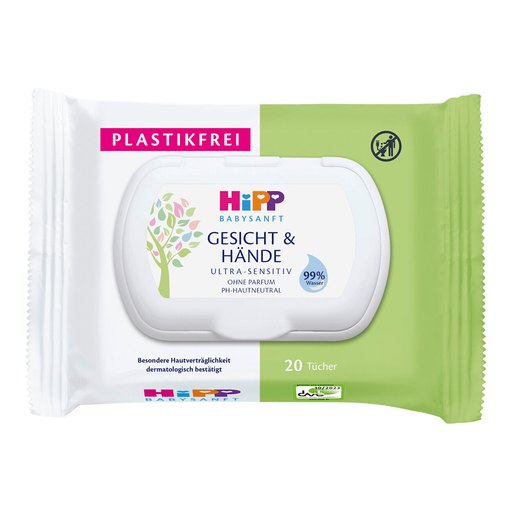
Why it's a great fit: Special wipes are ideal for sticky hands after a snack or a messy face. This product from Hipp comes in a compact pack and is optimised for sensitive facial skin.
It is clearly positioned for a specific purpose—face and hands—and uses an especially mild lotion and extra-soft, lint-free fibres.
The small, resealable pack is perfect for the changing bag and prevents the wipes from drying out, even with infrequent use.
We have compiled a complete, up-to-date list of products that fully meet these strict selection criteria and comply with stringent German safety standards.
1. Can baby wipes also be used on the face? Generally, yes, as long as they have a very mild formula without perfume and alcohol. However, some wipes are designed specifically for the nappy area and may be too rich for facial skin. For regular use on the face, products explicitly labelled "Face & Hands" are often the better choice, as their formula and softness are tailored for that purpose.
2. How should baby wipes be disposed of correctly? Baby wipes must always be disposed of in the general waste. Under no circumstances should they be flushed down the toilet. Most wipes are made of tear-resistant fibres that do not dissolve in water and can cause severe blockages in sewer pipes and water treatment plants.
3. What is the difference between baby wipes and moist toilet tissue? The main difference lies in the material and disposal method. Moist toilet tissue is often made from materials that break down in water and can therefore be flushed (in small quantities). Baby wipes are designed for tear-resistance and are not water-soluble. Additionally, the ingredients in baby wipes are specifically tailored to the needs of sensitive baby skin, whereas moist toilet tissue is developed for adult skin.