
Lieferung heute & morgen

Qualitätsgarantie

Willkommens-Angebote freischalten: KOSTENLOSE Lieferung | Bis zu 80 % RABATT | Kostenlose 30-Tage-JoyPlus-Testphase
App herunterladen
When buying baby wipes, it’s not just the price per pack that matters. What’s crucial is the formulation, suitability from birth, the materials used, and how practical they are for everyday use. Parents often look for baby wipes that can be used for nappy changes, on the go, and for cleaning faces and hands. At the same time, they should be as gentle as possible and offer good value for money, especially in a bulk pack.
As a Joybuy Product Recommendation Officer, I filter the information according to clear criteria and match products to different everyday situations. It’s worth taking a close look, because some marketing claims can easily be misunderstood.
The label sensitive baby wipes is not a binding standard for ingredients. A product can be marketed for sensitive skin and still contain fragrances. If you want to avoid fragrances, you should check for “fragrance-free” or “without perfume” on the packaging, as well as the INCI list.
For example, the HiPP Baby Soft Wipes Gentle Care contain organic almond oil, are alcohol-free according to the product information, but are lightly fragranced. For buyers specifically looking for fragrance-free wipes, products like the HiPP Babysanft Ultra Sensitive Wipes or the Pampers Sensitive Wipes are a better fit for this criterion.
With baby wipes 99% water, this claim refers to the lotion or liquid formulation. The wipe itself is made from a separate non-woven material. Additionally, preservatives, pH-regulating ingredients, or mild cleansing agents may be included.
The HiPP Babysanft Ultra Sensitive Wipes, Pampers 99% Water and Pampers Aqua Soft Touch are marketed with a water-based formulation or 99% water. Nevertheless, buyers should read the full ingredients list, especially if the wipes are intended for a newborn or for sensitive skin.
Biodegradable wipes should generally not be flushed down the toilet. Biodegradability can refer to the wipe material, but disposal should still be in the household waste. The Chicco Biodegradable Wipes are made from 100% biodegradable natural fibres according to the product description, but they also must not be flushed.
Even plant-based or plastic-free wipes can block pipes. The exception is products that are explicitly labelled as flushable. However, baby wipes for nappy changes should always be disposed of in the bin.
For wipes for sensitive skin, clear information is more helpful than general marketing terms. Pay particular attention to:
If a skin reaction occurs, stop using the product and observe the affected area. These products are for external use only and should not come into contact with eyes or mouth.
A soft wipe can be more pleasant to use during daily nappy changes. A textured surface can help pick up messes. The Chicco Soft Wet Wipes have a textured side and a smooth side according to the product information. They are formulated without alcohol and fragrances and are suitable for daily hygiene from birth.
The closure is equally important. Flaps or safety lids should be firmly closed after each use to prevent the wipes from drying out. Opened packs should be stored in a cool, dry place and not exposed to direct sunlight or heat for long periods.
A bulk pack of wipes is practical for households with daily needs. Before buying, it’s worth calculating the “total number of wipes divided by the total price”. However, large supplies need enough dry storage space. Also, the packaging must always be securely closed.
For on the go, smaller packs of 20 to 60 wipes are more convenient. At home, packs of 720, 900, 960 or 1,200 wipes can reduce the frequency of repurchasing. The actual saving depends on the price per wipe and your usage.
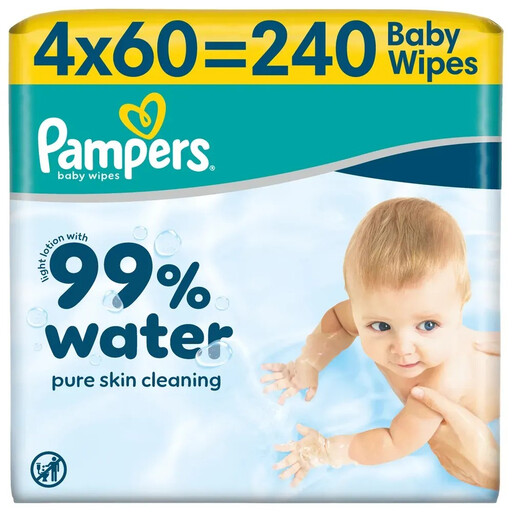
Why this product fits the profile: The pack of 240 wipes is ideal for trying out a 99% water formulation without committing to a very large supply straight away.
The product information states 0% alcohol and perfume, and suitability from the first day of life. However, you should still check the ingredients list before buying.
240 wipes, 99% water in the lotion, alcohol and perfume-free according to the product description.
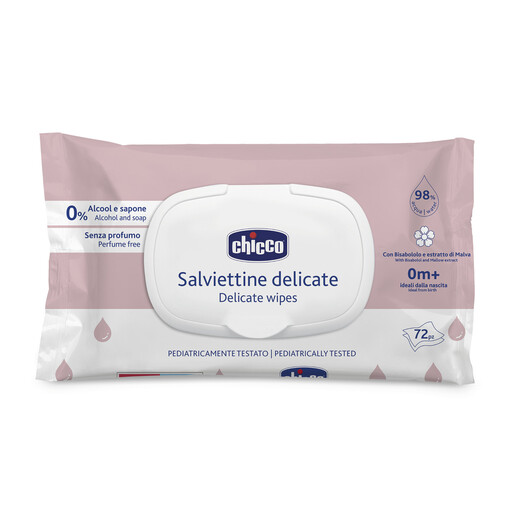
Why this product fits the profile: The combination of two wipe sides, a resealable lid, and suitability from birth supports a structured daily baby care routine.
The information explicitly states 0% alcohol and fragrances. This reduces the confusion between “sensitive” and “fragrance-free”.
864 wipes in total, textured and smooth wipe sides, dermatologically tested according to the product information.
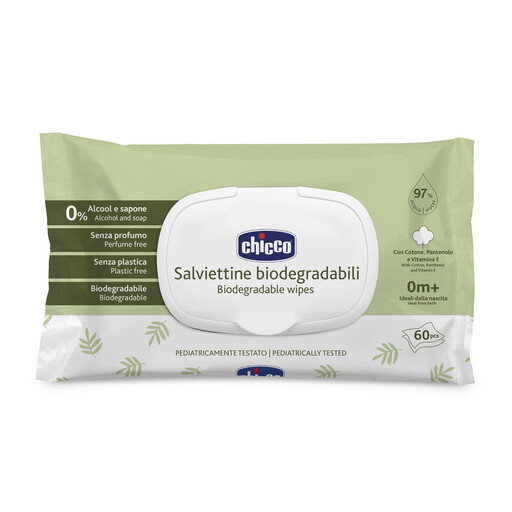
Why this product fits the profile: The pack of 720 wipes is aimed at families with regular needs and buyers who prefer plant-based materials.
The material information states 100% biodegradable natural fibres. At the same time, it highlights correct disposal in household waste.
720 wipes, natural fibres, formulation enriched with panthenol, vitamin E and cotton extract according to the product description.
We have put together a complete, regularly updated list of products that fully meet these strict selection criteria and the safety regulations in force in the EU.
Suitable products are those whose packaging explicitly states use from birth, from 0 months or from the first day of life. Additionally, parents should check the information on fragrances, alcohol and ingredients. For sensitive skin, it can be a good idea to buy a small pack first and observe how your baby tolerates them in daily use.
There is no universal rule that applies to all brands. The instructions on the packaging are what matter. After opening, the wipes should always be kept tightly sealed, stored in a cool, dry place. If they dry out, change in smell or appearance, or cause a skin reaction, they should no longer be used.
Bulk packs can lower the price per wipe, but this isn’t automatic. Compare the price per wipe and consider the storage space you have available. For families with frequent nappy changes, 720 to 1,200 wipes can be practical. For on the go or for trying out a product, a smaller pack is usually more manageable.