
Lieferung heute & morgen

Qualitätsgarantie

Willkommens-Angebote freischalten: KOSTENLOSE Lieferung | Bis zu 80 % RABATT | Kostenlose 30-Tage-JoyPlus-Testphase
App herunterladen
By Joybuy Product Recommendation Officer, August 30, 2026
Choosing a baby's first wooden puzzle can be overwhelming. Colourful packaging and marketing promises make it difficult to find a product that is not only safe but also educationally valuable. Many parents discover after purchase that an expensive toy is either too complicated, causing frustration, or shows quality defects after a short time. This guide will help you avoid common purchasing pitfalls and make an informed decision.
Before we dive into the features to look for, it's important to understand the common issues that lead to a poor purchasing decision.
To ensure you get a durable, safe, and developmentally stimulating product, you should focus on three essential features. These form the foundation of a high-quality wooden motor skills toy.
The most important characteristic is safety. Look for the EN 71 certification. This European standard for toy safety regulates, among other things:
For children from one year of age, a peg puzzle for ages 1 and up is the ideal choice. These puzzles feature large, sturdy knobs or handles on each piece. These knobs allow the child to practice the pincer grasp—a fundamental fine motor skill. A good wooden peg puzzle has:
An educational toy for 12 months and up should challenge the child without overwhelming them. The themes should be drawn from the child's immediate world. Fruits, simple vehicles, or animals are ideal. The colours should be bright and high-contrast to support visual perception. The task—placing the correct piece into its matching slot—should be solvable without significant frustration to create a positive sense of accomplishment.
Here are some product suggestions tailored to different needs and age groups.
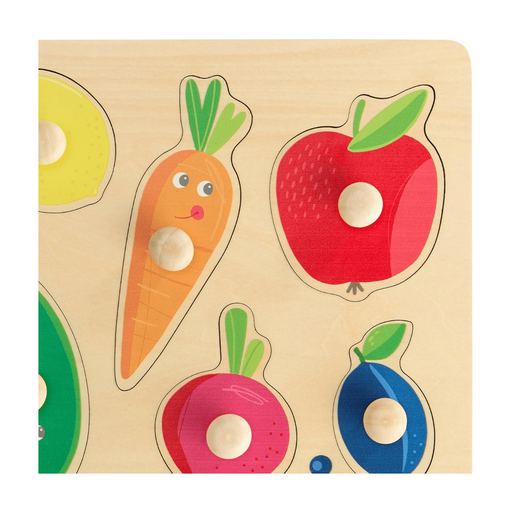
Why This Fits Their Persona: Ideal for parents seeking a safe and educationally valuable first puzzle. It is specifically designed for the motor skills of toddlers from 12 months and up, focusing on the fundamental learning of shapes and colours.
This Haba puzzle avoids the trap of impractical design. The large, easy-to-grip knobs and the few, clearly distinct pieces are perfectly tailored to the target age group, preventing frustration.
Made from high-quality wood with durable, non-toxic graphics. Specifically promotes fine motor skills, hand-eye coordination, and initial shape recognition.
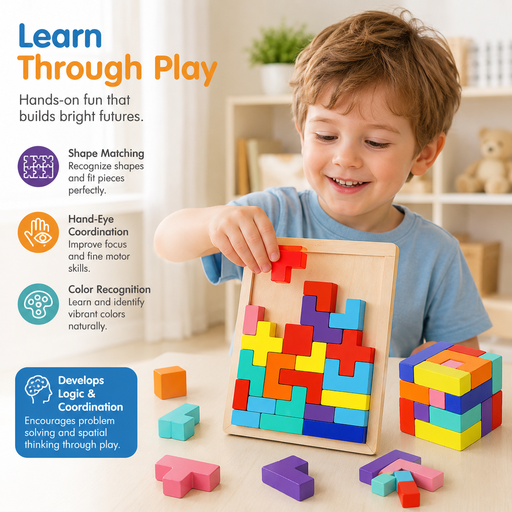
Why This Fits Their Persona: Perfect for families looking to encourage the next step in logical thinking. It's suitable for older siblings or as a more challenging toy for preschoolers once they have mastered the basics of puzzles.
This product avoids the pitfall of an incorrect age rating by being clearly positioned as a game for older children (and the whole family). It is not a wooden puzzle for babies but instead promotes more complex logical thinking.
Promotes pattern recognition and logical thinking. Versatile enough for creative building and as a family game.
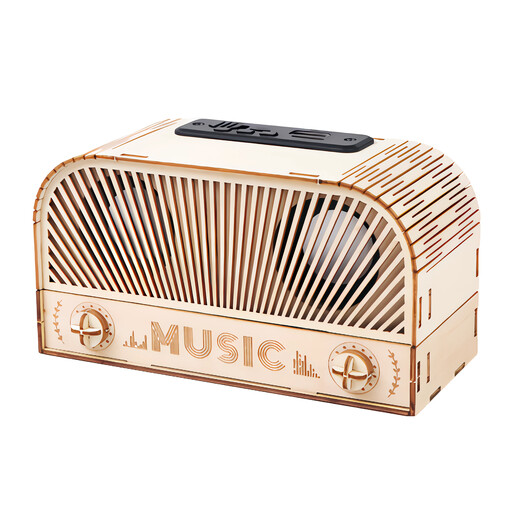
Why This Fits Their Persona: A fascinating project for adults who want to combine craftsmanship and technology. It's a 3D puzzle that becomes a functional Bluetooth speaker—a great gift for DIY enthusiasts.
Important Note: This is not a toy for children. It contains small parts and sharp edges. It is listed here as an example of the variety of wooden puzzles available for adults and must be kept out of the reach of children.
Combines a creative building experience with a practical end product. The finished model is a decorative and functional speaker.
We have compiled a complete, up-to-date list of products that fully meet these strict selection criteria and rigorous safety standards.
A simple peg puzzle or wooden inset puzzle with 2-4 pieces can be beneficial from around 12 months of age. It's important that the child can already sit up independently and purposefully reach for objects. Observe your child's individual abilities and start with very simple shapes.
Wooden toys should never be submerged in water or cleaned in a dishwasher, as the wood can swell and warp. Instead, wipe the surface with a slightly damp cloth and, if necessary, a mild soap solution. Dry it thoroughly immediately afterward.
Look for reliable certifications. The CE mark is mandatory and confirms that the product meets EU requirements. The EN 71 standard is more specific to toy safety. Reputable manufacturers also provide information about the materials used, such as "water-based paints" or "from sustainable forestry (FSC)". When in doubt, you should ask the manufacturer or retailer directly.