
Lieferung heute & morgen

Qualitätsgarantie

Willkommens-Angebote freischalten: KOSTENLOSE Lieferung | Bis zu 80 % RABATT | Kostenlose 30-Tage-JoyPlus-Testphase
App herunterladen
A baby carrier can be practical in everyday life: when going for a walk, travelling or when a pushchair is awkward to use. There’s a wide choice, from an ergonomic baby carrier suitable from birth to models for toddlers. However, not every carrier is right for every age, body shape or situation.
The description ‘from birth to 3 years’ may sound versatile at first. However, what matters is the minimum and maximum weight, your child’s height and whether the seat, leg area and head support can be adjusted. A model rated up to 15 kg isn’t automatically suitable for every child at every stage of development.
Look for a clear weight range, such as 3.5 to 15 kg, and check whether the manual approves each carrying position for your child’s age.
A baby carrier with multiple carrying positions can be worn with your child facing inwards, facing outwards or on your back. This makes it more versatile, but also means there’s more to check. Newborns are usually carried facing the wearer. Many models only recommend back carrying from a certain age.
Only use a forward-facing position if the manufacturer says it’s suitable for your child’s age, height and stage of development. Your child must always sit upright, have adequate support and have clear airways.
A breathable baby carrier may feel more comfortable in warm weather. However, the term alone tells you little about how the carrier is made. More useful details include 3D mesh, polyester mesh or a specific type of cotton fabric. Also check whether the shoulder straps and waist belt are padded, and whether the carrier can be adjusted to suit your child’s height.
In an ergonomic baby carrier, your child should sit upright and close to your body. Their legs should rest in a natural M-position, with their knees roughly level with or higher than their bottom. An adjustable seat width and leg supports can help you adapt the carrier as your child grows.
For newborns, pay particular attention to head and neck support. Your baby’s nose and mouth must remain clear at all times. If your baby was born with a low birth weight or has specific health needs, seek medical advice before using a carrier.
Before buying, compare:
A baby carrier for babies and toddlers should be adjustable as your child grows. Models with a range of around 3.5 to 15 kg are designed for longer-term use, according to their product details. Other models are intended only for smaller babies weighing up to 9 kg.
Wide, padded shoulder straps and an adjustable waist belt can help distribute your child’s weight more evenly. Before each use, check that all buckles click securely into place. Also check the seams, straps and fabric for damage. A baby carrier is not a fall protection system and isn’t designed for activities such as jogging or cycling.
The EN 13209-2:2015 standard sets out requirements for certain baby carriers. If the manufacturer says a product meets this standard or has been tested accordingly, you should be able to verify this in the product description or instructions. However, meeting a standard doesn’t replace correct adjustment and supervision.
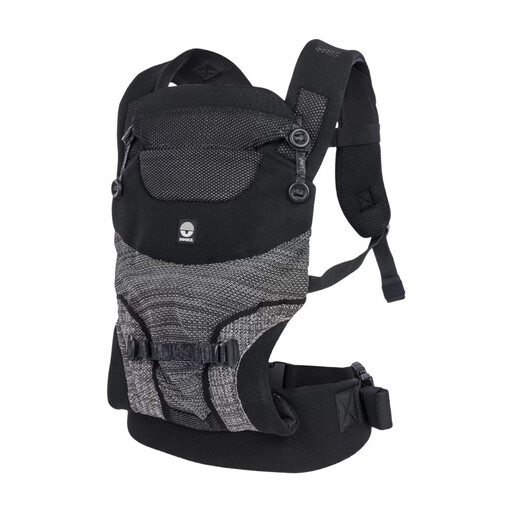
Why this product suits this profile: According to the product details, the carrier is designed for 3.5 to 15 kg, making it suitable for longer-term use. Three carrying positions cater for different everyday situations.
The stated weight range and adjustable M-position seat give you more specific information than an age range alone.
Three carrying positions, padded shoulder straps and an adjustable waist belt that fits up to 159 cm, according to the product description.
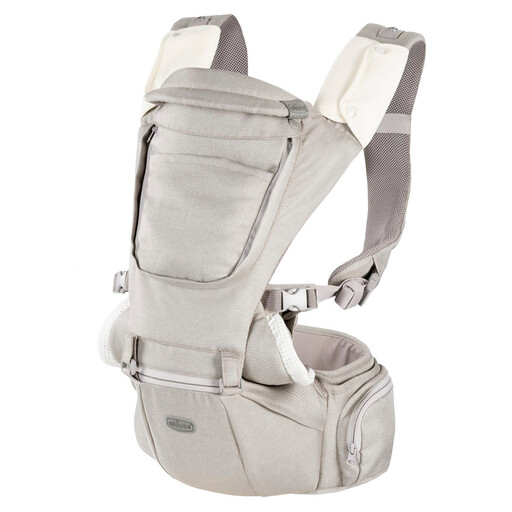
Why this product suits this profile: The 3-in-1 system combines a fabric baby carrier with a hip seat that can be used separately, and offers eight carrying positions according to the product details.
The individual components and maximum load of 15 kg are clearly stated, so you can check that it has the features you need before buying.
A hip seat, front and back carrying options, and a design recognised by the IHDI, according to the product details.
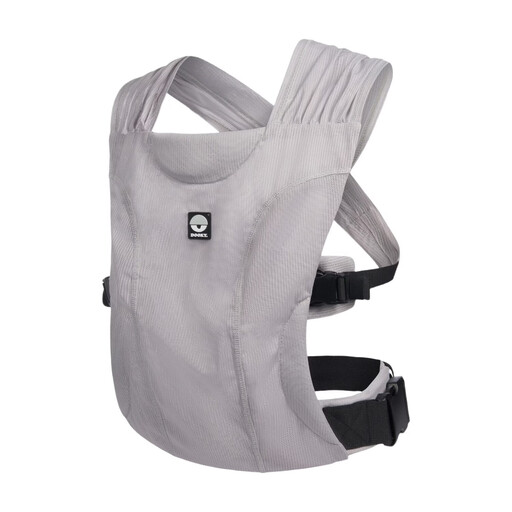
Why this product suits this profile: The water carrier is designed for babies around 56 to 74 cm tall, and is intended for use in the shower or in a shallow pool under constant supervision.
Its specific purpose and limitations are clearly stated: it’s not a life-saving device, shouldn’t be used for bathing without supervision and must not be used in deep water.
Quick-drying stretch fabric and clip fastenings; tested and approved by SGS, according to the product description.
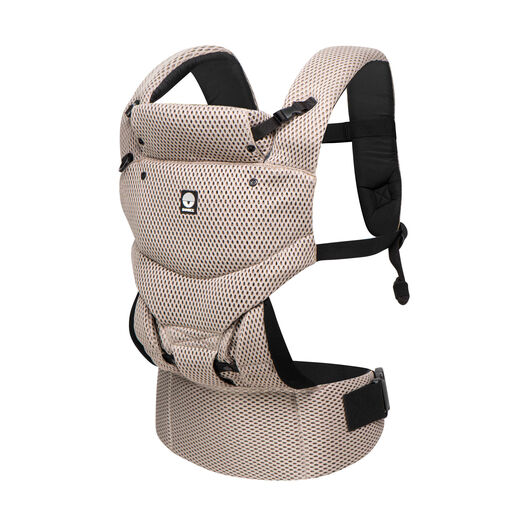
Why this product suits this profile: According to the product description, this version uses 3D mesh fabric and is designed for 3.5 to 15 kg, with a maximum waist circumference of 143 cm.
The material is specifically described as 3D mesh. The weight range, carrying positions and belt size are also provided.
Ventilated fabric, three carrying positions and testing to EN 13209-2:2015, according to the manufacturer.
We’ve put together a complete, regularly updated list of products that meet these strict selection criteria and the safety regulations in force across the EU.
It depends on the model. According to the manufacturers, some products are suitable from a minimum weight of 3 kg or 3.5 kg. Other models are only suitable from around 3 months. Always follow the instructions on weight, height, head control and carrying position in the user manual.
You can use a baby carrier up to 3 years if your child’s measurements fall within the stated weight range. Models with a maximum weight of 9 kg are generally intended for the early months. Don’t continue using a carrier if the straps, seams, buckles or fabric are damaged.
The price depends on factors such as the material, adjustability, carrying positions and extra features such as a hip seat. Don’t just compare the purchase price; also consider the usable weight range, care instructions and how often you expect to use it. A basic model may be enough for occasional use, while adjustable straps and even weight distribution are particularly important if you’ll be carrying your baby every day.