
Lieferung heute & morgen

Qualitätsgarantie

Willkommens-Angebote freischalten: KOSTENLOSE Lieferung | Bis zu 80 % RABATT | Kostenlose 30-Tage-JoyPlus-Testphase
App herunterladen
A haircut at home can be practical for babies and toddlers, but it also presents parents with particular challenges. A baby hair clipper should not only cut hair effectively, but also be easy to control, produce as little noise and vibration as possible, and suit the child’s stage of development.
Many products look similar at first glance. The differences often only become apparent during use. Three common buying misconceptions are particularly likely to result in the wrong purchase:
A quiet hair clipper for babies can reduce noise exposure during a haircut. However, the decibel figure should always be considered in relation to the measurement method and distance. Figures such as 45.6 dB or below 60 dB are product specifications, not a guarantee that every child will find the device comfortable.
You should also look for:
Babies should always be supervised directly during a haircut. A device is an electrical appliance, not a toy.
A hair clipper for children should offer clear, easy-to-understand length settings. Check whether the desired length is adjusted directly on the device or using guide combs. For an even haircut at home, several fixed lengths such as 3, 6, 9 and 12 millimetres are useful. For very short cuts, an additional fine adjustment may be important.
Before using the attachments for the first time, check them for cracks, sharp edges and a secure fit. The instruction manual will also specify whether the cutting head can be cleaned dry, oiled or rinsed under water.
A cordless hair clipper gives you freedom of movement, but it needs to be charged regularly. Compare:
The Babycare ES700 is described as suitable from six months. This information should not automatically be applied to every baby. The manufacturer’s information, the child’s individual development and calm, supervised use are the key considerations.
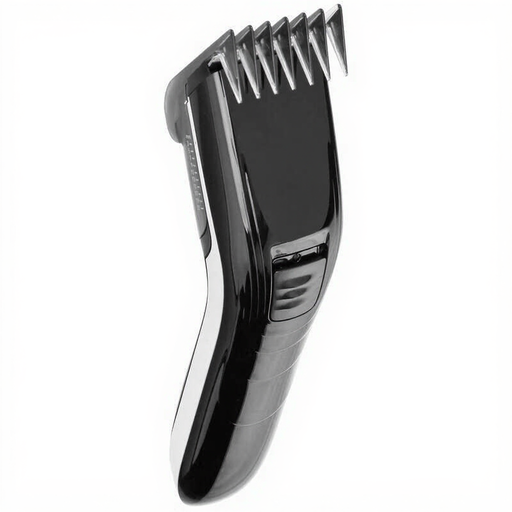
Why this product suits the profile: For families looking for one device for children and adults and who do not need a battery. Mains operation avoids interruptions for charging.
The length adjustment is described as offering 11 settings from 3 to 21 mm in 2-mm increments. This means you do not have to store a large number of loose combs.
Rounded comb and blade tips, a 41-mm cutting unit and dry cleaning with the supplied brush. The device runs from the mains.
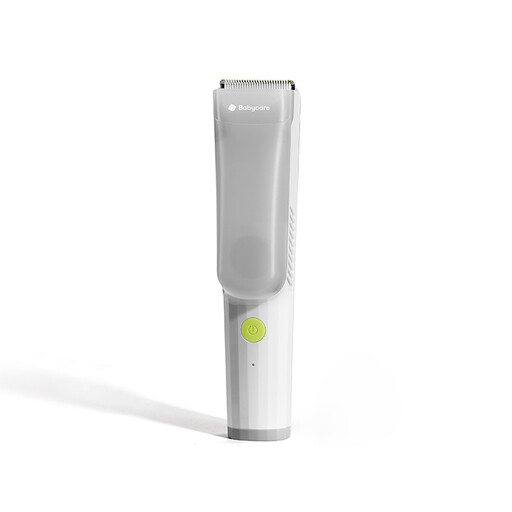
Why this product suits the profile: For parents who prefer a device specifically described as suitable for baby and toddler care, with a low noise rating and compact design.
The product specifications state that it has a 45.6 dB motor, is suitable from six months and comes with instructions for supervised use. Before buying, check that the age recommendation is appropriate for your situation.
ABS plastic, ceramic and stainless steel; compact dimensions of approximately 1.7 × 2.0 × 7.5 inches and a stated weight of 1.25 lb.
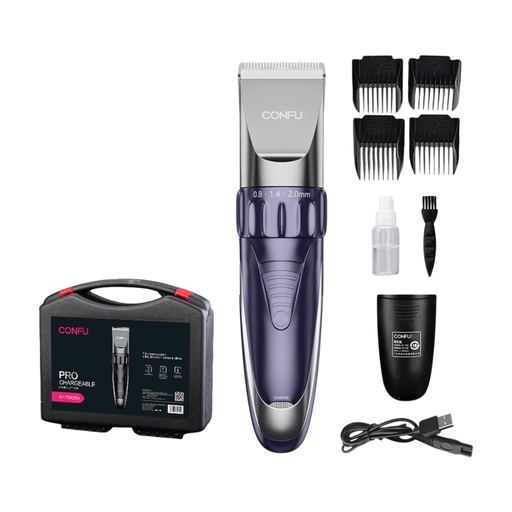
Why this product suits the profile: For households with frequent haircuts, several age groups or changing cutting lengths. The equipment is designed for both children and adults.
Rather than giving an unclear universal specification, the listing states that it offers five fine adjustments from 0.8 to 2 mm, as well as four guide combs measuring 3, 6, 9 and 12 mm.
1,200 mAh lithium battery, USB-C cable, three speed settings and a digital display. The stated charging time is approximately three hours.
An electric hair clipper is not always necessary for babies. A baby hairbrush may be sufficient for daily care of fine hair. Loose bristles, cracks in the wood or damaged plastic teeth should be checked regularly. For longer children’s hair, wide, flexible teeth are useful for gentle detangling.
A baby hairdryer should only be used under direct supervision, at a safe distance and at a low temperature. This also applies to devices with a child or low-temperature mode. High-powered products designed for adults must be kept out of children’s hands and should not be operated near water.
You can find more suitable products for children’s hair care in the Hair tools for children category.
We have put together a complete, regularly updated list of products that fully meet these strict selection criteria and the safety regulations applicable in the EU.
This depends on the model in question. Some products specify a particular age limit, such as from six months. Read the manufacturer’s information and the instruction manual. Regardless of the child’s age, an adult must operate the device and supervise the child throughout its use.
A low manufacturer-stated decibel rating can be one selection criterion, but it is not the only important factor. Motor vibration, distance and the child’s reaction all affect the perceived noise and stress. Initially, let the device run briefly at some distance from the child, and do not start directly on sensitive areas.
A mains-operated model does not need to be charged, but it is less flexible. With a cordless hair clipper, the charging time and battery capacity should suit how often you plan to use it. After each haircut, clean the device according to the instructions. Cutting heads and attachments should be stored dry and must not be used if they show visible damage.